


What are the Veteran Affairs Minimum Property Requirements?
Veterans and active-duty service members using their VA home loan benefit often encounter the term 'Minimum Property Requirements' or MPRs. These are not meant to ensure a home is cosmetically perfect; rather, they are a set of standards established by the Department of Veterans Affairs to guarantee the property is safe, structurally sound, and sanitary. The goal is to protect the veteran from purchasing a home with significant deficiencies and to ensure the property is a secure investment for both the borrower and the lender.
An appraiser, assigned by the VA, evaluates the home against these standards. They are looking for issues that could endanger the occupants or compromise the home's basic livability. Think of MPRs as a baseline for a functional, secure home.
Key areas covered by VA MPRs include:
- Structural Integrity: The foundation must be sound, and the structure must be free from significant defects like large cracks, termite damage, or dry rot.
- Safe Access: The property must have safe and adequate access from the street. This includes year-round access for vehicles.
- Roofing: The roof must be in good condition and provide reasonable future utility. It cannot be leaking and must have sufficient life remaining.
- Mechanical Systems: Electrical, plumbing, and heating systems must be in good working order and safe. For example, a home in Jacksonville must have a functional heating system, even with Florida's mild winters.
- Water and Sanitation: The property must have a reliable supply of safe drinking water and a functioning septic or public sewer system.
- Health and Safety Hazards: The home must be free of hazards such as exposed wiring, lead-based paint, asbestos, or significant water damage and mold.
- Adequate Space: The property must provide sufficient space for living, sleeping, cooking, and sanitation.
Does Peeling Paint or a Worn Roof Automatically Fail a VA Appraisal?
This is one of the most common concerns for homebuyers using a VA loan, and the answer is nuanced. Certain issues are immediate red flags, but they don't necessarily mean the deal is dead. They simply mean a repair is required before the loan can close.

Peeling Paint
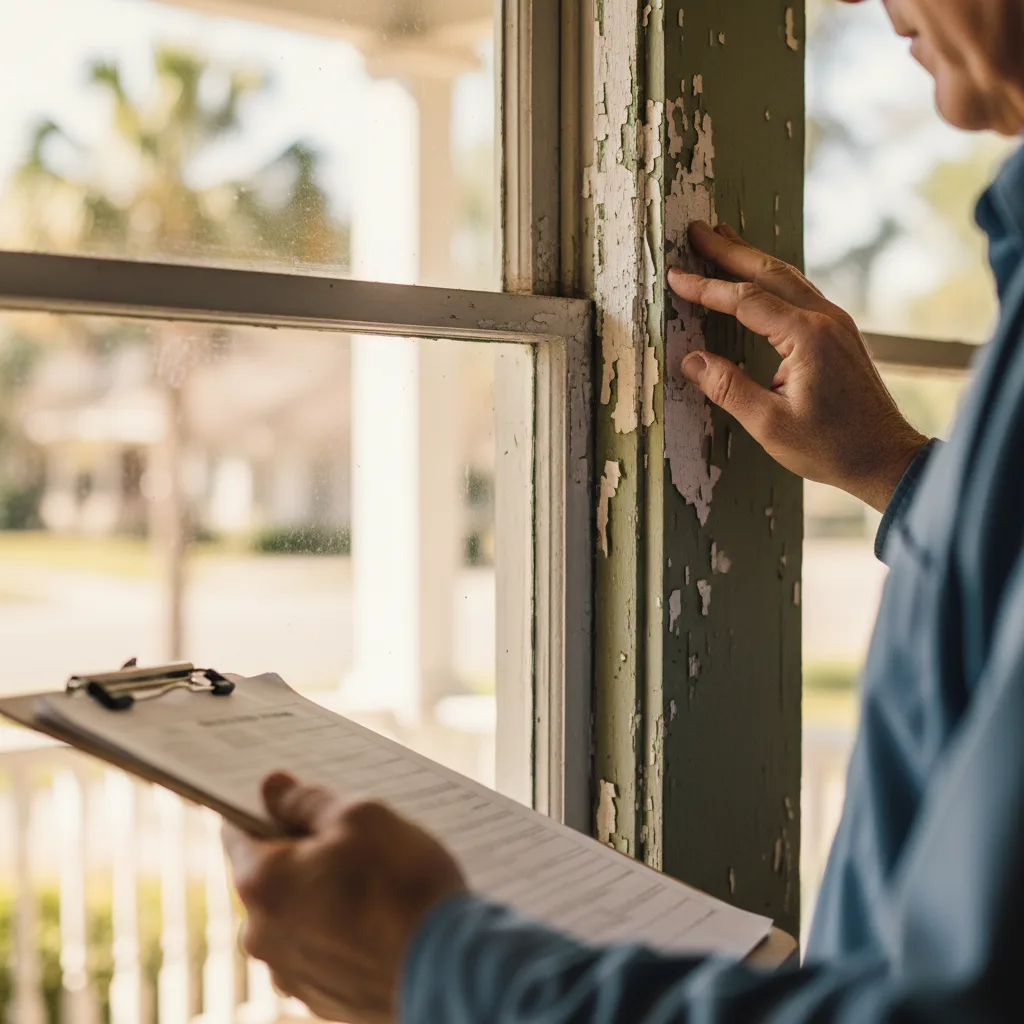
Peeling paint is a significant concern for homes built before 1978. The reason is the potential presence of lead-based paint, which is a serious health hazard, especially for children. If a VA appraiser sees cracking, scaling, or chipping paint on any surface (interior or exterior), they will flag it. The requirement is straightforward: the loose paint must be scraped, the surface properly prepared, and then repainted. This is a non-negotiable safety repair.
A Worn Roof
A worn roof is more subjective. The VA doesn't specify a minimum number of years a roof must have left, but the appraiser must certify that it has a reasonable future lifespan and is in good enough condition to protect the home from the elements. A few missing or damaged shingles might be a simple fix. However, if the roof shows signs of widespread deterioration, active leaks, or is clearly at the end of its life, the appraiser will require a replacement. In a humid, storm-prone area like Tampa, appraisers are particularly vigilant about roof integrity to prevent future moisture issues.
Who is Responsible for Paying for Repairs Required by the VA Appraiser?
When the VA appraisal report comes back with a list of required repairs, the question of payment immediately arises. The VA does not dictate who must pay; this is a point of negotiation within the real estate transaction. There are several possible outcomes:
- The Seller Pays: This is the most common resolution. To keep the sale on track, the seller agrees to hire qualified professionals to complete all repairs noted on the Notice of Value (NOV) before closing.
- The Buyer Pays: While possible, this is rare. Buyers are often hesitant to invest thousands of dollars into a property they do not yet legally own. If a buyer does agree to pay, it's usually for minor repairs, and the funds must come from their own cash reserves, not the loan.
- A Negotiated Split: The buyer and seller can agree to split the cost. For example, if a home in Orlando needs $2,000 in plumbing work, the seller might offer a $1,000 credit at closing, and the buyer covers the rest.
- The Deal is Canceled: If the repairs are too extensive and neither party is willing or able to cover the cost, the purchase agreement may be terminated.
The best approach is to have your real estate agent negotiate with the seller's agent as soon as the repair list is available.
Can Repairs Be Completed After Closing the Loan?
In almost all cases, the answer is no. The Department of Veterans Affairs requires that any repairs necessary to meet Minimum Property Requirements be completed and verified before the loan funds are disbursed and the property title is transferred. The lender cannot close the loan on a home that does not meet the VA's standards for safety and habitability.
The only potential exception is an escrow holdback. This is a special arrangement where the lender sets aside a portion of the loan funds in an escrow account to cover the cost of pending repairs. This is not common, is entirely at the lender's discretion, and is typically reserved for minor repairs that cannot be completed before closing due to factors like weather (e.g., exterior painting in winter). (The data, information, or policy mentioned here may vary over time.) Most lenders prefer that all work is finalized pre-closing to avoid complexity.
How Do I Know if a Property in Jacksonville Will Meet Requirements Before I Make an Offer?
While you can never be 100% certain what a VA appraiser will find, you can take proactive steps to minimize surprises. The key is to view properties with MPRs in mind.
- Work with a VA-Savvy Real Estate Agent: An experienced agent who understands the VA loan process can often spot potential red flags during a showing. They know what appraisers look for and can guide you away from properties with obvious, costly MPR issues.
- Get a Standard Home Inspection: Before making an offer, or as part of your offer contingency, hire a qualified home inspector. While this is separate from the VA appraisal, a thorough inspection will uncover most, if not all, of the structural, mechanical, and safety issues that would be flagged by the VA. This report gives you powerful information for negotiating with the seller before the appraiser even visits.
- Look for Obvious Warning Signs: As you tour homes, keep an eye out for clear issues like water stains on ceilings, a strong musty odor, soft floors, visible foundation cracks, or old and frayed electrical panels.
If you're looking at an older home in a historic Jacksonville neighborhood, for instance, a pre-offer inspection is an invaluable tool for identifying potential MPR violations before you're financially committed.
Is a VA Appraisal More Strict Than a Conventional or FHA Appraisal?
This is a common misconception. While the processes differ slightly, the core standards for government-backed loans are quite similar.
- Conventional Loan Appraisal: This appraisal is primarily focused on determining the property's market value to ensure it's adequate collateral for the loan. While an appraiser will note significant issues that affect value, they are not strictly enforcing a set of livability standards like the VA or FHA.
- FHA Loan Appraisal: FHA loans have their own set of rules called Minimum Property Standards (MPS). These are very similar to the VA's MPRs and also focus heavily on the health, safety, and structural soundness of the home.
- VA Loan Appraisal: The VA's MPRs are designed to protect the veteran. The appraisal confirms both the home's value and its compliance with these safety and livability standards.
In practice, VA and FHA appraisals are both considered more stringent on property condition than conventional appraisals. They are not necessarily 'harder' to pass, but they have a dual mandate: to establish value and to ensure the home is safe and sound for the borrower.
What is a 'Re-inspection' and How Does It Work?
A re-inspection is a mandatory follow-up step in the appraisal process when repairs are required. Once the seller (or other responsible party) has completed the work flagged by the appraiser, the lender must order a re-inspection to verify that the fixes were done correctly and now meet VA standards.
The process is as follows:
- Repairs Completed: The seller hires contractors and completes all items listed on the appraisal report's 'Notice of Value'. They should provide invoices and proof of completion.
- Re-inspection Ordered: Your lender requests the original appraiser to return to the property.
- Verification: The appraiser visits the home specifically to check the completed repairs. They will take photos and confirm the issues have been resolved.
- Final Report: The appraiser issues an updated report or a completion certificate (Form 1004D) confirming the property now meets MPRs.
There is a fee for the re-inspection, typically a few hundred dollars. This cost is usually paid by the borrower but can be negotiated with the seller. (The data, information, or policy mentioned here may vary over time.)
Can I Use a VA Renovation Loan to Finance the Home and the Repairs Together?
Yes, and this is a fantastic but underutilized option. A VA Renovation Loan allows you to purchase a home and finance the cost of repairs, improvements, or upgrades into a single mortgage. This is the perfect solution for buying a fixer-upper that wouldn't otherwise meet MPRs.
With this loan, you can finance not only the required MPR fixes but also cosmetic upgrades you want to make, like a new kitchen or updated bathrooms. The loan amount is based on the 'as-completed' value of the home after the renovations are done.
For example, a veteran finds a home in Tampa for $400,000 that needs $50,000 in repairs to meet MPRs and for desired upgrades. Using a VA Renovation Loan, they could borrow $450,000 to cover both the purchase and the construction costs, all with one loan and one closing. This opens up a wider range of housing inventory and allows you to create the home you truly want. It's important to work with a lender who is experienced in originating these specialized loans.
Navigating VA appraisal requirements doesn't have to be a roadblock. If you're ready to move forward with confidence, our team can help you understand your options, including specialized programs like VA Renovation Loans. Apply now to get a clear, strategic plan for your home loan.
Author Bio
David Ghazaryan is the expert mortgage strategist and founder behind iQRATE Mortgages. With a mission to fund home loans that traditional banks won't touch, David specializes in helping clients with unique financial situations, including those recovering from foreclosure or bankruptcy. He expertly crafts smart, strategic, and stress-free mortgages by leveraging a vast network of over 100 lenders to secure competitive rates for investors and homebuyers alike. Praised for exceptional customer service, David has helped hundreds of families with a 97% satisfaction rate, guiding them to the mortgage they deserve.
References
VA Minimum Property Requirements









