


What is the Real Minimum Credit Score for a VA Loan?
One of the most persistent myths surrounding the VA home loan benefit is the idea of a strict, disqualifying credit score minimum. The truth is simple: the VA itself does not set a minimum credit score. This policy is a core part of the program's mission to help service members and veterans achieve homeownership.
However, it's crucial to understand the difference between VA guidelines and lender requirements. The VA guarantees a portion of the loan, which reduces risk for private lenders who fund the mortgage. In turn, these lenders establish their own internal risk assessments, often called 'overlays'. Most lenders set their own minimum FICO score, frequently starting at 620. (The data, information, or policy mentioned here may vary over time.) This is not a VA rule, but a business practice.
For veterans in competitive housing markets like Las Vegas or Henderson, this distinction is vital. If one lender denies your application due to a 610 credit score, it doesn't mean you're disqualified from using your VA benefit. It simply means you need to find a lender who is more flexible, understands the nuances of VA underwriting, and is willing to look at your complete financial picture.
Why Lenders Have Overlays
Lenders use credit scores as a quick snapshot of a borrower's creditworthiness. A higher score generally indicates a lower risk of default. Setting a minimum score like 620 helps them streamline their automated underwriting systems and manage their overall portfolio risk. But savvy VA-specialized lenders know that a credit score doesn't tell the whole story, especially for service members whose financial lives can be disrupted by deployments, relocations, and transitioning back to civilian life.
How Can I Get a VA Loan With a Score Below 620 in Las Vegas?
Securing a VA loan with a credit score below the typical 620 benchmark requires a more personalized approach called manual underwriting. Unlike an automated system that might issue a rejection based on a single number, manual underwriting involves a human underwriter reviewing your entire loan file.
This process is designed to find reasons to approve the loan, not to deny it. The underwriter analyzes your income stability, employment history, assets, and overall financial habits to determine if you are a reliable borrower despite a lower score. They are looking for a compelling story of financial responsibility, where the low score is an outlier, not the norm. For homebuyers in North Las Vegas, where home values offer great opportunities, this hands-on approach can be the key to getting your offer accepted.
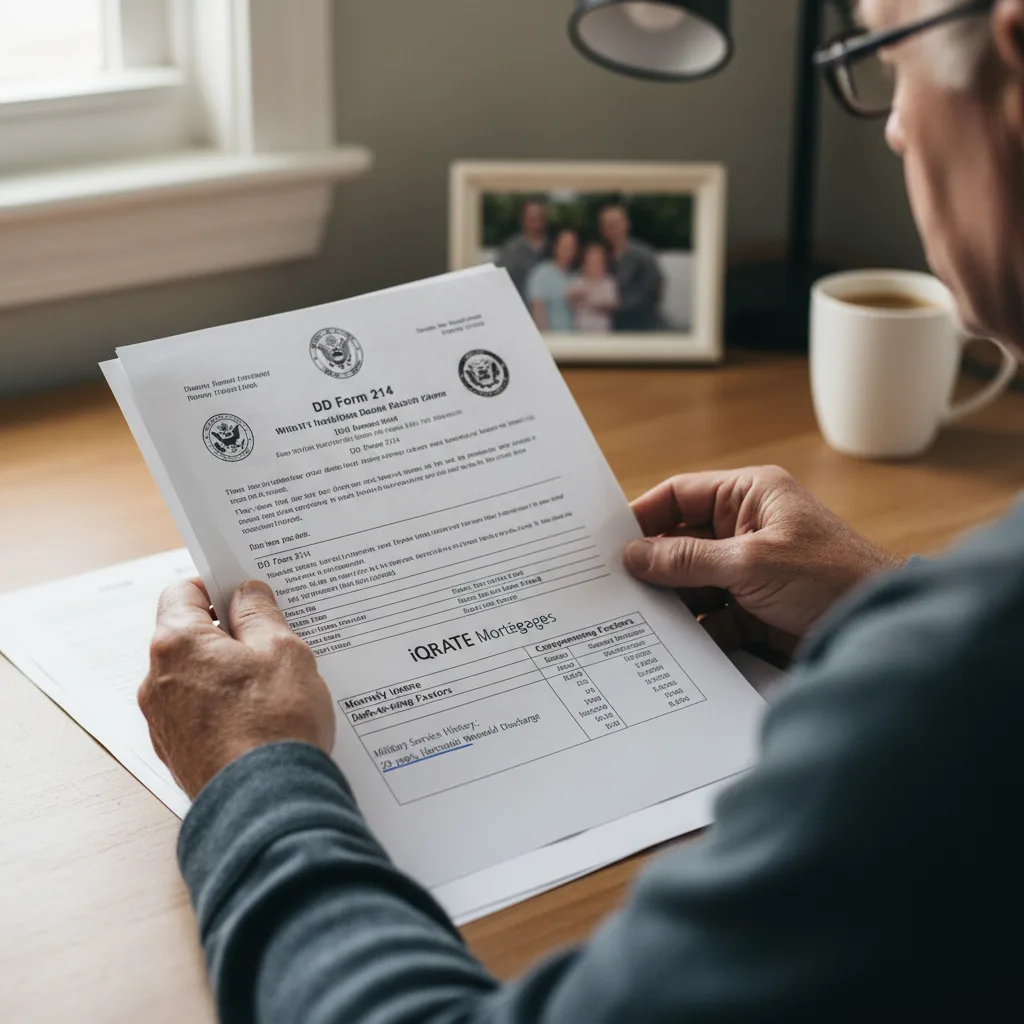
To get approved through manual underwriting, you need to demonstrate strength in other areas. This is where compensating factors become the most important part of your loan application.
What Are Compensating Factors That Help With VA Loan Approval?
Compensating factors are positive elements in your financial profile that offset the perceived risk of a low credit score. They show a lender that you have the financial discipline and capacity to handle a mortgage payment. An underwriter will look for a combination of these factors to build a case for your approval.
Here are some of the most powerful compensating factors for a VA loan:
- Significant Residual Income: This is the VA's unique method of ensuring you can afford your life after paying the mortgage. If your residual income significantly exceeds the VA's regional guideline, it is a massive compensating factor. We'll cover this in more detail below.
- Stable and Reliable Employment: A consistent 2+ year history with the same employer or in the same line of work shows stability. For active-duty military, your service is considered highly stable employment.
- Low Debt-to-Income (DTI) Ratio: While the VA is flexible on DTI, having a ratio below 41% shows that your mortgage payment won't over-leverage your finances. (The data, information, or policy mentioned here may vary over time.) A low DTI proves you manage your debts effectively.
- Cash Reserves: Having savings equivalent to 3-6 months of your proposed mortgage payment (including principal, interest, taxes, and insurance) demonstrates a strong financial safety net. (The data, information, or policy mentioned here may vary over time.)
- Significant Down Payment: Although VA loans offer 100% financing, choosing to make a down payment of 5% or more reduces the lender's risk and shows your commitment to the purchase. (The data, information, or policy mentioned here may vary over time.) This is a strong sign of financial health.
- Excellent Recent Rental History: A clean record of on-time rent payments for the last 12 months is a powerful predictor of your ability to make timely mortgage payments.
Example: An E-6 stationed at Nellis Air Force Base has a 595 credit score due to some medical collections from a few years ago. However, they have been on active duty for 8 years, have a DTI of 35% with their BAH included, and have $15,000 in savings. These strong compensating factors would likely lead to a VA loan approval from a lender skilled in manual underwriting.
Does My Basic Allowance for Housing (BAH) Help Me Qualify?
Yes, absolutely. Your Basic Allowance for Housing (BAH) is a powerful tool in qualifying for a VA loan, especially with challenged credit. Lenders view BAH as stable, predictable, and non-taxable income. Because it's not taxed, lenders can 'gross up' the amount, meaning they count it as being worth more than its face value (typically 115% to 125%). (The data, information, or policy mentioned here may vary over time.)

This grossed-up income directly lowers your DTI ratio, one of the key metrics in underwriting. A lower DTI can be a significant compensating factor, helping to balance out a lower credit score. For a service member looking to buy a home in Las Vegas, their BAH provides a substantial and reliable income stream that underwriters favor.
How Does a Lender View My Rental and Payment History?
Your recent housing payment history is a critical piece of the puzzle. Lenders often require a Verification of Rent (VOR) form, which is sent to your current landlord to confirm your payment record for the past 12-24 months. (The data, information, or policy mentioned here may vary over time.) A perfect VOR, with zero late payments, is one of the strongest possible compensating factors.
Why is it so important? It directly demonstrates your ability to handle the single most important financial obligation you're about to take on: your housing payment. An underwriter may be willing to overlook a 30-day late payment on a credit card from ten months ago if you can prove you have never once been late on your rent. This shows you prioritize your housing payment above other discretionary debts, which is exactly what a mortgage lender wants to see.
Will Past Collections or Late Payments Stop My VA Loan?
Not necessarily. The VA guidelines are more forgiving than conventional loans when it comes to derogatory credit events like collections and late payments. An underwriter's decision will depend on the type, age, and reason for the negative marks.
- Medical vs. Non-Medical Collections: Lenders view medical collections less severely than other types. A medical emergency is often unforeseen and doesn't necessarily reflect poor financial management. In contrast, collections on credit cards or auto loans are viewed more seriously.
- Age of Derogatory Credit: The more recent a negative event, the more impact it has. A collection account from five years ago is far less concerning than one from five months ago. Lenders want to see that your credit issues are in the past and that you've established a positive payment history since.
- Letter of Explanation (LOX): For any significant negative credit, you will be asked to write a brief letter explaining what happened, why it happened, and what steps you've taken to ensure it won't happen again. A well-written, sincere LOX can make a significant difference.
VA guidelines generally require that you have made satisfactory arrangements to pay off any federal debts and are current on any judgments. For non-federal collections, the lender has discretion based on the overall strength of your file.
What is the VA's 'Residual Income' Requirement Near Nellis?
Residual income is perhaps the most unique and important aspect of VA loan underwriting. It is the amount of net income remaining each month after covering all of your major expenses, including:
- Your new mortgage payment (PITI)
- State and federal taxes
- All installment and revolving debt payments (car loans, credit cards)
- Child care and spousal support
- Estimated monthly utilities and home maintenance costs (calculated based on square footage)
The VA establishes a minimum required residual income based on your family size and the region of the country you live in. For a family of four living in the West region, which includes Las Vegas and the area around Nellis AFB, the minimum threshold is currently $1,158 per month. (The data, information, or policy mentioned here may vary over time.)
This isn't just a box to check; it's a critical measure of your financial stability. Exceeding this minimum is a powerful compensating factor. If the guideline for your family is $1,158 and you have $1,800 in residual income, you are demonstrating a significant financial cushion. This tells an underwriter that you can comfortably handle your new mortgage payment and absorb unexpected expenses without risking default, making it much easier for them to approve your loan despite a lower credit score.
Your military service has earned you this benefit. Even with past credit challenges, you may have a clear path to homeownership in Las Vegas. Contact a VA loan specialist to understand your specific compensating factors and get pre-approved.
Your military service has earned you this benefit. Even with past credit challenges, a clear path to homeownership is possible. Apply for a Mortgage to explore your specific options and get pre-approved today.
Author Bio
David Ghazaryan is the expert mortgage strategist and founder behind iQRATE Mortgages. With a mission to fund home loans that traditional banks won't touch, David specializes in helping clients with unique financial situations, including those recovering from foreclosure or bankruptcy. He expertly crafts smart, strategic, and stress-free mortgages by leveraging a vast network of over 100 lenders to secure competitive rates for investors and homebuyers alike. Praised for exceptional customer service, David has helped hundreds of families with a 97% satisfaction rate, guiding them to the mortgage they deserve.
References
U.S. Department of Veterans Affairs - VA Pamphlet 26-7, Chapter 4: Credit Underwriting
Consumer Financial Protection Bureau (CFPB) - What is a credit score?
U.S. Department of Veterans Affairs - VA Home Loan Eligibility Requirements









