
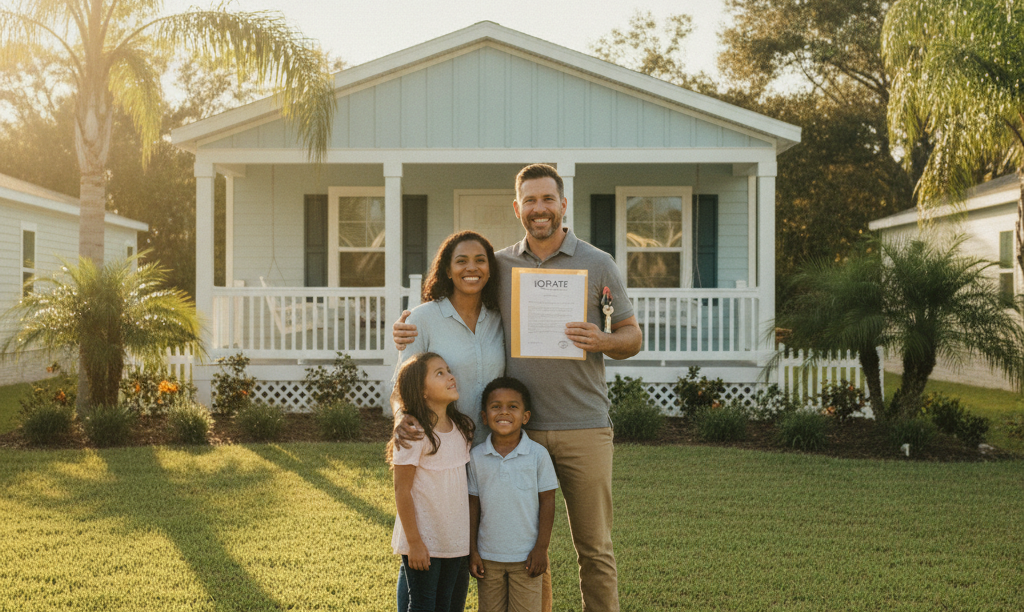

Does the Veteran Affairs loan program finance mobile homes in Tampa?
Yes, the Department of Veterans Affairs (VA) loan program can be used to finance a manufactured home, but there are critical distinctions and requirements. While people often use the terms 'mobile home' and 'manufactured home' interchangeably, for financing purposes, they are very different. The VA loan program exclusively finances manufactured homes, not older mobile homes.
Here’s the breakdown:
- Manufactured Home: A home built in a factory after June 15, 1976, conforming to the U.S. Department of Housing and Urban Development (HUD) code. These homes will have a permanent metal certification label (often called a 'HUD tag') on the exterior of each transportable section.
- Mobile Home: A factory-built home constructed before June 15, 1976, before the federal HUD code was established. These homes are generally not eligible for VA financing due to older construction standards.
For veterans in Tampa and St. Petersburg, this means the first step is verifying the home's build date and ensuring it has the proper HUD certification label. The property must also be classified as 'real property', meaning the home and the land it sits on are a single taxable unit. A home on a temporary chassis or one where the title has not been legally affixed to the land will not qualify.
What are the foundation requirements for a Veteran Affairs manufactured loan?
The foundation is one of the most scrutinized aspects of a VA manufactured home loan. The VA requires the home to be permanently affixed to a foundation that meets specific guidelines outlined in the 'Permanent Foundations Guide for Manufactured Housing' (PFGMH). The goal is to ensure the home is stable, safe, and has the same permanence as a traditional site-built house.
Key foundation requirements include:
- Permanent Construction: The foundation must be made of durable materials like concrete, mortared masonry, or treated wood. Dry-stacked blocks or piers without permanent footings are unacceptable.
- Attachment: The home's chassis must be securely attached to the foundation with anchoring systems (straps or bolts) that can resist wind, seismic, and flood forces specific to Florida's climate.
- Enclosure: The space between the floor of the home and the ground (the crawlspace) must be enclosed by a continuous wall of concrete, masonry, or treated wood that is attached to the foundation.
- Engineer's Certification: A licensed structural engineer must inspect the foundation and provide a certification letter stating that it meets VA and HUD requirements. This is a non-negotiable step in the loan process and is separate from the standard home inspection.
Without this permanent foundation and the engineer's stamp of approval, the property is ineligible for VA financing.
Does the home need to be on land that I own in Brandon?
No, you do not necessarily need to own the land to secure a VA loan for a manufactured home in Brandon. The VA provides options for homes on both owned land and leased land, such as in a manufactured home park, but the rules differ.
- Owned Land (Fee Simple): This is the most straightforward scenario. If you are buying the manufactured home and the lot it sits on together, the process is simpler. The home and land are treated as a single piece of real estate.
- Leased Land (Leasehold): If the home is in a park or community where you lease the lot, the VA has specific requirements for the lease agreement itself. The lease term must be longer than the loan term. For example, for a 30-year mortgage, the lease must extend well beyond that period. The lease must also not contain any clauses that would allow for arbitrary eviction or unreasonable rent increases, providing stability for the homeowner.
Lenders are often more cautious with homes on leased land, so it’s essential to ensure the park's lease agreement is acceptable to both the VA and the lender early in the process. (The data, information, or policy mentioned here may vary over time.)
Are there age restrictions on the manufactured home itself?
The VA itself does not set a maximum age limit for a manufactured home. However, the home must comply with the HUD Manufactured Home Construction and Safety Standards (MHCSS) that went into effect on June 15, 1976. This effectively means any home built before that date is ineligible.
While the VA is flexible, individual lenders may impose their own age restrictions, often called 'overlays'. A lender might, for instance, be unwilling to finance a home built before a certain year (e.g., 2000) due to perceived risks associated with aging materials and systems. The home must also be in good condition and meet the VA's Minimum Property Requirements (MPRs), which ensure the property is safe, structurally sound, and sanitary. (The data, information, or policy mentioned here may vary over time.)
In short, the home must be a post-1976 manufactured home with its HUD tag intact and be in a condition that a lender finds acceptable for a long-term loan.
How does the Veteran Affairs appraisal process differ for a manufactured home?
The VA appraisal for a manufactured home is significantly more detailed than for a site-built home. The VA-assigned appraiser has a specialized checklist to ensure the property meets all unique requirements.
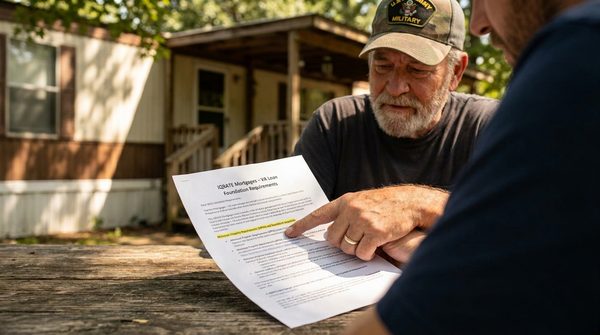
Here’s what the appraiser will specifically look for:
- HUD Data Plate and Certification Label: The appraiser must locate and photograph the red HUD certification label on the exterior and the paper data plate, which is usually found inside a kitchen cabinet, closet, or utility room. If these are missing, the loan cannot proceed.
- Foundation Compliance: The appraiser will visually inspect the foundation to confirm it appears to be permanent and meets general standards. They will note the need for the official engineer's certification in their report.
- Minimum Property Requirements (MPRs): The home must meet all standard VA MPRs, including having adequate living space, a continuous water supply, sanitary facilities, and safe mechanical systems.
- Comparables: The appraiser must find comparable sales of other manufactured homes in the area, such as in Tampa or Brandon, to establish an accurate market value. This can sometimes be challenging if there are few recent sales of similar properties.
This rigorous appraisal protects both the veteran and the lender by ensuring the property is a sound investment.
What is the difference between a manufactured and modular home for loans?
Understanding the distinction between manufactured and modular homes is crucial, as they are treated very differently by lenders.
Manufactured Home:
- Built to the national HUD code.
- Transported to the site on a permanent steel chassis, which remains as part of the support structure.
- Has a 'HUD tag' on the exterior.
- Titled like a vehicle until it is permanently affixed to land and the title is retired.
- Subject to the stricter financing and appraisal rules discussed here.
Modular Home:
- Built to the same local and state building codes as a traditional site-built home.
- Transported in sections on a carrier, not its own chassis.
- Assembled on-site on a permanent foundation.
- Considered the same as a site-built home for financing and appraisal purposes.
For a VA loan, a modular home is financed with the same process and requirements as a standard single-family residence, making it a much simpler transaction.
Can I get a loan for a home in a mobile home park?
Yes, it is possible to get a VA loan for a manufactured home located within a mobile home park, but it adds another layer of complexity. The park itself must be approved by the VA or meet specific conditions.
The lender and the VA will review:
- The Lease: As mentioned, the lease term must be acceptable, and it cannot contain unfair terms.
- Park Amenities and Condition: The park must have reliable utilities, all-weather road access to the site, and be generally well-maintained.
- Lender Approval: Some lenders are not comfortable with financing homes in parks, so you must find one with experience in this specific niche.
Obtaining financing for a home in a park in areas like Tampa can be challenging, but it is achievable if the property, the park, and the lease all align with VA and lender guidelines. (The data, information, or policy mentioned here may vary over time.)
What additional steps are required for this type of property?
Financing a manufactured home with a VA loan involves several steps that are not required for a standard home purchase. Being prepared for them can prevent delays and stress.
- Property Pre-Screening: Before making an offer, verify the home was built after June 15, 1976, and that the HUD certification label is present and legible.
- Find an Experienced Lender: Work with a mortgage professional who has a proven track record of closing VA manufactured home loans. Many loan officers are unfamiliar with the specific rules.
- Order the Foundation Certification: As soon as you are under contract, schedule an inspection with a licensed structural engineer to get the required foundation certification. This can take time, so start early.
- Title Verification and Retirement: In Florida, the 'vehicle' title for the manufactured home must be formally retired and combined with the land deed to create a single 'real property' title. A title company experienced with manufactured homes is essential for this step to be completed correctly. If you're a veteran in Tampa or Brandon exploring manufactured homes, navigating the VA loan process requires expertise. Connect with a mortgage strategist who understands the specific foundation, title, and appraisal requirements to ensure your path to homeownership is clear and successful.
Navigating the specific requirements for a VA manufactured home loan in Florida can be complex. If you're ready to explore your options with an expert guide, Apply now to connect with a mortgage strategist and ensure a clear, successful path to homeownership.
Author Bio
David Ghazaryan is the expert mortgage strategist and founder behind iQRATE Mortgages. With a mission to fund home loans that traditional banks won't touch, David specializes in helping clients with unique financial situations, including those recovering from foreclosure or bankruptcy. He expertly crafts smart, strategic, and stress-free mortgages by leveraging a vast network of over 100 lenders to secure competitive rates for investors and homebuyers alike. Praised for exceptional customer service, David has helped hundreds of families with a 97% satisfaction rate, guiding them to the mortgage they deserve.
References
U.S. Department of Housing and Urban Development - Manufactured Housing
Consumer Financial Protection Bureau - What is a manufactured home?









