

ITIN vs. Foreign National Loans in Orlando
When foreign investors look to purchase property in thriving markets like Orlando, understanding the type of financing available is the first crucial step. The two primary loan types you will encounter are ITIN loans and Foreign National loans, and they serve very different borrowers.
An ITIN loan is designed for a non-U.S. citizen who lives and works in the United States. These individuals may not have a Social Security Number but do have an Individual Taxpayer Identification Number (ITIN) issued by the IRS for tax filing purposes. Lenders use the ITIN to verify U.S.-based income and tax history. This loan is for someone who is a resident for tax purposes, even if they are not a permanent resident citizen.
On the other hand, a Foreign National loan is specifically for non-residents who live, work, and earn their income outside the United States. These borrowers do not have a U.S. credit history, an SSN, or an ITIN. Lenders underwriting a Foreign National loan focus entirely on the borrower's financial stability in their home country. This is the correct path for an investor living abroad who wants to buy a vacation home or rental property in Florida.
Key Distinctions
- Residency: ITIN borrowers reside in the U.S. Foreign National borrowers reside abroad.
- Income Source: ITIN loan qualification is based on U.S. income. Foreign National loan qualification is based on income earned in the borrower's home country.
- Documentation: An ITIN loan requires U.S. tax returns filed with an ITIN. A Foreign National loan requires documentation verifying foreign income and assets.
Required Documents for a Miami Mortgage
Securing a mortgage in a competitive market like Miami requires meticulous preparation. Lenders need to build a complete financial profile to mitigate their risk. While requirements vary slightly between lenders, a foreign national should be prepared to provide the following core documents:

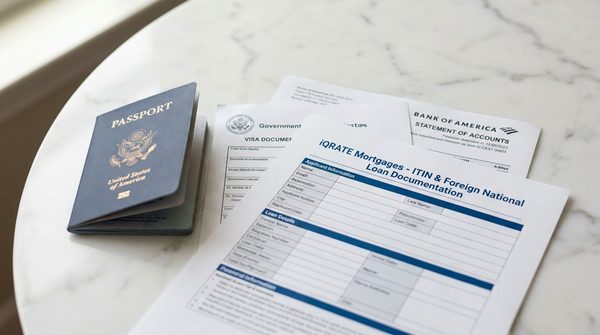
- Valid Passport: A clear, unexpired copy of your passport is mandatory for identity verification.
- Valid U.S. Visa: You will need to provide a copy of your visa. A B-1 (business) or B-2 (tourism) visa is typically sufficient, as it proves you can legally enter the U.S. to conduct property viewings and close the transaction.
- Proof of Foreign Income: This is one of the most critical components. Since you don't have U.S. tax returns, you will likely need a letter from your employer detailing your position, salary, and length of employment. If you are self-employed, a letter from a licensed accountant or chartered professional accountant (CPA) in your home country will be required. This letter should confirm your income for the past two years.
- Verification of Assets: You must provide bank statements—usually for the most recent two to three months—from your foreign financial institutions. These statements must show you have sufficient funds for the down payment, closing costs, and required cash reserves.
- Purchase Contract: A fully executed purchase agreement for the Miami property you intend to buy.
Verifying International Income and Assets
U.S. lenders have established protocols for verifying financial information from other countries. They are not looking at your credit score but rather your capacity to repay the loan based on your global financial standing. The verification process centers on credibility and documentation.
Lenders will require all financial documents, such as bank statements and income letters, to be professionally translated into English if they are not already. They will also need the currency converted to U.S. dollars. The letter from your foreign accountant or employer is paramount. It must be on official company letterhead and include the professional's contact information and license number so the lender can verify their credentials.
For assets, lenders trace the source of the funds. A large, recent deposit in your account will raise a red flag. They want to see that the money for the down payment has been in your account for a period, a process known as 'seasoning'.
Sourcing and Seasoning Your Down Payment
Lenders require that the funds for your down payment be 'seasoned,' meaning the money has been in your bank account for a specific period, typically 60 to 90 days. (The data, information, or policy mentioned here may vary over time.) This requirement helps prove that the funds are legitimately yours and not from an unapproved source like an undisclosed loan.
When transferring money from a foreign bank to a U.S. account for the transaction, a clear paper trail is essential. You must be able to show the money leaving your foreign account and arriving in your U.S. account. For example, if you are buying an investment property in Tampa for $500,000 and need a 30% down payment ($150,000), you must provide:
- Statements from your foreign bank showing the $150,000 (plus funds for closing costs and reserves) has been in the account for at least two months.
- A copy of the wire transfer receipt showing the funds moving from your foreign account.
- A statement from the U.S. bank account showing the corresponding deposit.
This transparent trail proves the legitimacy and source of your funds, satisfying anti-money laundering regulations and lender requirements.
Understanding the Foreign Investment in Real Property Tax Act (FIRPTA)
The Foreign Investment in Real Property Tax Act of 1980 (FIRPTA) is a U.S. tax law that often causes confusion. It is important to understand that FIRPTA applies to the sale of the property, not the purchase.
When a foreign person sells U.S. real estate, FIRPTA requires the buyer to withhold 15% of the gross sales price and send it to the IRS. (The data, information, or policy mentioned here may vary over time.) This acts as a prepayment of any capital gains tax the foreign seller may owe. For example, if you sell your Florida property for $700,000, the buyer is required to withhold $105,000 (15%) and submit it to the IRS.
The foreign seller can then file a U.S. tax return to report the sale. If the actual tax liability is less than the amount withheld, the IRS will issue a refund. Certain exemptions exist, but as an investor, you should consult with a tax professional who specializes in international real estate to plan for this eventuality.
Securing a Loan Without a U.S. Credit History
One of the biggest hurdles for domestic borrowers is their credit score. For foreign nationals, this is not a barrier. Lenders who offer Foreign National loans understand that you will not have a U.S. credit file or FICO score. Instead of credit history, they mitigate their risk through other factors:
- Large Down Payment: Requiring a substantial down payment (typically 25% or more) creates immediate equity in the property, reducing the lender's risk.
- Significant Cash Reserves: Lenders will want to see that you have enough liquid cash remaining after the down payment and closing costs to cover a certain number of mortgage payments (principal, interest, taxes, and insurance). This reserve is often 6 to 12 months' worth of payments. (The data, information, or policy mentioned here may vary over time.)
- Property Type and Value: The loan approval may also depend on the property itself. Lenders prefer standard single-family homes or condos in established markets like Orlando or Miami over unique or difficult-to-sell properties.
Interest Rates and Down Payments for Non-U.S. Buyers
Because Foreign National loans are considered higher risk than conventional U.S. mortgages, the terms are typically less favorable. You should expect both a higher down payment and a higher interest rate.
- Down Payments: While a U.S. citizen might buy an investment property with 20% down, a foreign national should expect a minimum down payment of 25% to 30%. (The data, information, or policy mentioned here may vary over time.) Some lenders may require up to 40%, depending on the property type and loan amount.
- Interest Rates: Interest rates for foreign nationals are generally 1% to 2% higher than the prevailing rates for domestic borrowers. (The data, information, or policy mentioned here may vary over time.) This premium compensates the lender for the additional risk associated with lending to a non-resident with income and assets held overseas.
Purchasing Florida Property Within an LLC
Many foreign investors choose to purchase property through a legal entity like a Limited Liability Company (LLC) for asset protection and potential tax advantages. This is absolutely possible with a Foreign National loan. Holding the property in an LLC can help shield your personal assets from any liability associated with the investment property.
Even if the property title is held by an LLC, the lender will still underwrite the loan based on your personal financial qualifications as the foreign investor. You will be the personal guarantor of the loan. The lender will require you to provide all the same personal income and asset documentation as if you were buying in your own name. It's an important strategy, but it does not change the fundamental requirements for securing the mortgage. Navigating a foreign national mortgage requires specialized knowledge. Partnering with a mortgage expert who understands the nuances of international financing can simplify the process and ensure you find the right loan for your Florida investment.
Navigating the complexities of a foreign national mortgage is the first step to a successful Florida investment. If you're ready to see what you qualify for, you can securely start your mortgage application now.
Author Bio
David Ghazaryan is the expert mortgage strategist and founder behind iQRATE Mortgages. With a mission to fund home loans that traditional banks won't touch, David specializes in helping clients with unique financial situations, including those recovering from foreclosure or bankruptcy. He expertly crafts smart, strategic, and stress-free mortgages by leveraging a vast network of over 100 lenders to secure competitive rates for investors and homebuyers alike. Praised for exceptional customer service, David has helped hundreds of families with a 97% satisfaction rate, guiding them to the mortgage they deserve.









