


Why Getting a J-1 Visa Mortgage in Orlando Is Challenging
Securing a mortgage while on a J-1 visa presents unique hurdles, primarily because this visa category is for temporary exchange visitors. From a lender's perspective, this temporary status introduces a layer of risk. They are cautious about lending hundreds of thousands of dollars to someone who may not have permanent residency rights in the United States.
The core challenges include:
- Temporary Status: The J-1 visa has a defined end date. Lenders worry about what happens to the loan if your visa isn't renewed and you must leave the country. They need assurance of your long-term ability to repay the loan.
- Credit History: As a recent arrival, you may have a limited or non-existent U.S. credit history. Without a robust FICO score, it's difficult for traditional automated underwriting systems to assess your creditworthiness.
- Income Verification: While you have a stable job as a teacher or researcher, lenders must be confident that your income stream will continue. They will scrutinize your employment contract to ensure it's stable and likely to be extended.
Available Loan Programs for Non-Permanent Residents
Despite the challenges, you are not without options. While conventional loans from large banks might be difficult to obtain, specialized products are designed for foreign nationals and non-permanent residents.
Foreign National Loans
This is the most common and suitable path for J-1 visa holders. These are portfolio loans, meaning the lender who originates the loan also services it instead of selling it on the secondary market. This gives them more flexibility with underwriting guidelines. They can manually underwrite your file, taking a holistic view of your financial situation.
Key features often include:
- Flexible Credit Requirements: Lenders may accept alternative forms of credit verification or credit reports from your home country.
- Higher Down Payments: Be prepared for a larger down payment, typically ranging from 20% to 30% or more. (The data, information, or policy mentioned here may vary over time.)
- Focus on Employment: Strong emphasis is placed on the stability and duration of your teaching or research contract.
It's important to note that while government-backed loans like FHA are available to some non-permanent residents, they require proof that the borrower's lawful residency will continue for at least three years, a standard that can be difficult for J-1 visa holders to meet. Your best path is through a lender or broker specializing in foreign national financing.
How Lenders Verify Income and Employment for J-1 Visas
Lenders need concrete proof of stable and continuous income. For a J-1 visa holder, this process is more intensive than for a U.S. citizen. Expect to provide a comprehensive set of documents.

Required Documentation
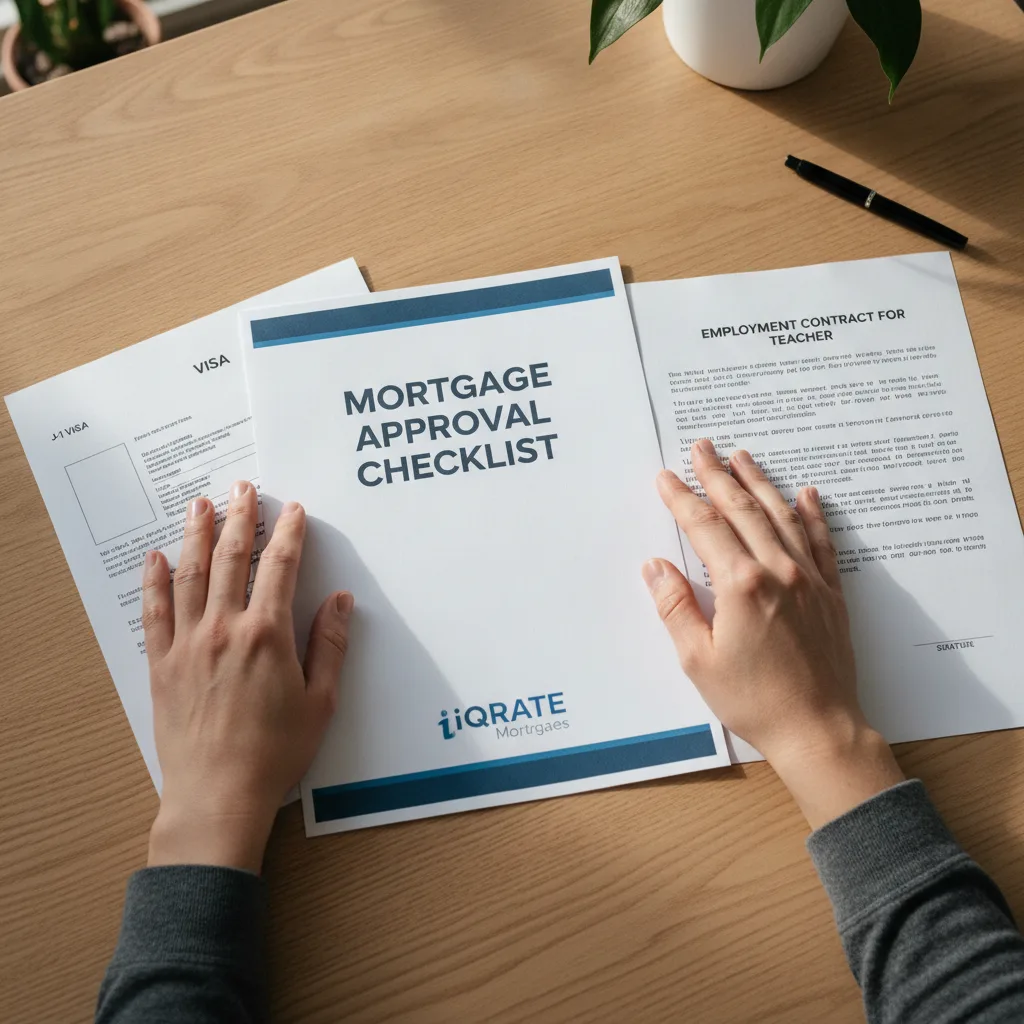
- Employment Contract: Your current and, if available, past employment contracts. The lender will look for the contract's duration, your salary, and any clauses regarding renewal.
- Visa Documentation: A copy of your passport, J-1 visa, and your Form DS-2019, 'Certificate of Eligibility for Exchange Visitor Status'.
- Pay Stubs: At least 30 days of recent pay stubs.
- Bank Statements: Two to three months of bank statements to verify your income deposits and show you have funds for the down payment and closing costs.
- Letter from Employer: A letter from your school or institution in Orlando can be highly beneficial. It should confirm your position, salary, and state that they anticipate your continued employment, subject to visa renewal.
For example, if you are a teacher in Miami with an annual salary of $60,000, the lender will verify this against your contract and pay stubs. They will also look at your DS-2019 to see the program dates and want evidence that your position is not a short-term, one-year appointment with no chance of extension.
Down Payment Requirements for Foreign Professionals
One of the biggest differences you'll encounter is the down payment requirement. While U.S. citizens can often secure loans with as little as 3% down, J-1 visa holders should plan for a significantly larger investment.
Lenders require more 'skin in the game' to offset the perceived risk of your temporary residency status. A larger down payment reduces the loan-to-value (LTV) ratio, making the loan a safer bet for the lender.
- Typical Range: Expect to need a down payment of 20% to 30% of the home's purchase price. (The data, information, or policy mentioned here may vary over time.)
- Example in Miami: For a $400,000 condominium in Miami, a 25% down payment would be $100,000. You will also need to show you have funds for closing costs (typically 2-5% of the purchase price) and cash reserves. (The data, information, or policy mentioned here may vary over time.)
These funds must be sourced and seasoned, meaning they need to have been in your bank account (which can be a foreign or U.S. account) for at least 60 days. Lenders will need to see a clear paper trail to ensure the money wasn't borrowed unexpectedly.
Do You Need a U.S. or Home Country Credit History?
Having a U.S. credit history is highly advantageous. If you have been in the country long enough to establish credit through credit cards, car loans, or other bills, you should have a FICO score. Lenders specializing in foreign national loans can often work with scores in the mid-600s, but a score above 700 will give you more options. (The data, information, or policy mentioned here may vary over time.)
If you have a limited U.S. credit file, some lenders may consider:
- Alternative Credit Data: Proof of consistent payments for rent, utilities, and insurance.
- International Credit Reports: A credit report from your home country can be submitted to demonstrate a history of responsible borrowing.
Building a U.S. credit file as soon as you arrive is one of the most proactive steps you can take toward qualifying for a mortgage.
How Your Visa Expiration Date Affects Loan Approval in Miami
Your visa's expiration date is a critical factor in the underwriting process. Lenders must feel confident that you have a high probability of remaining in the country legally for the foreseeable future. A standard 30-year mortgage term far exceeds the typical length of a J-1 visa.
To approve your loan, underwriters will look for evidence of continuity:
- Remaining Time on Visa: Lenders generally want to see at least one year remaining on your current visa. (The data, information, or policy mentioned here may vary over time.)
- History of Renewals: If you have successfully renewed your J-1 visa or extended your program in the past, it serves as powerful evidence of your stability.
- Employer Support: Your employer's role is crucial. A letter confirming their intent to continue sponsoring you strengthens your application significantly. Lenders understand that professionals in specialized teaching fields are often sponsored for multiple years.
If your visa is set to expire in six months, it will be very difficult to get approved unless you are already in the process of renewal and can provide documentation to the lender.
Finding Lenders Specializing in J-1 Visa Mortgages
Do not expect to walk into a major national bank and find a loan officer familiar with J-1 visa mortgages. The vast majority of lenders do not offer these programs. Your success depends on finding the right lender.
The most effective approach is to work with an experienced mortgage broker or strategist. A broker has access to a wide network of lenders, including portfolio lenders and smaller banks that have developed niche programs for foreign nationals. They understand the unique documentation and underwriting requirements and can match you with a lender who is comfortable and experienced with your situation. They can shop your application to multiple lenders, ensuring you get competitive terms without having to navigate the complex landscape on your own.
What Happens if Your Visa Isn't Renewed?
This is a valid concern for both you and the lender. If your visa is not renewed and you must leave the U.S., your mortgage obligation does not disappear. You are still legally responsible for making the payments.
Should this happen, you generally have a few options:
- Sell the Property: This is the most common solution. You would sell the home to pay off the remaining mortgage balance. If the home has appreciated in value, you could walk away with a profit.
- Rent the Property: You could hire a property management company in Orlando or Miami to rent out the home and use the rental income to cover the mortgage payments. You must first check if your loan agreement has any stipulations against this.
- Refinance: In some rare cases, you might be able to refinance with an international lender, but this is often complicated and costly.
It is essential to have a contingency plan in place before you purchase the property. Discussing these possibilities with your financial advisor and mortgage professional is a prudent step. Buying a home on a J-1 visa requires expert guidance. If you're a teacher or researcher in Florida, connect with a mortgage strategist who can navigate the complexities of foreign national loans and find a lender who understands your unique professional and residency status.
Ready to explore your homeownership options as a J-1 visa holder in Florida? Our specialized team is here to guide you through the complexities. Apply now to find the right mortgage for your situation.
Author Bio
David Ghazaryan is the expert mortgage strategist and founder behind iQRATE Mortgages. With a mission to fund home loans that traditional banks won't touch, David specializes in helping clients with unique financial situations, including those recovering from foreclosure or bankruptcy. He expertly crafts smart, strategic, and stress-free mortgages by leveraging a vast network of over 100 lenders to secure competitive rates for investors and homebuyers alike. Praised for exceptional customer service, David has helped hundreds of families with a 97% satisfaction rate, guiding them to the mortgage they deserve.
References
Consumer Financial Protection Bureau - Know Your Mortgage Options
U.S. Department of State - J-1 Visa Exchange Visitor Program









