
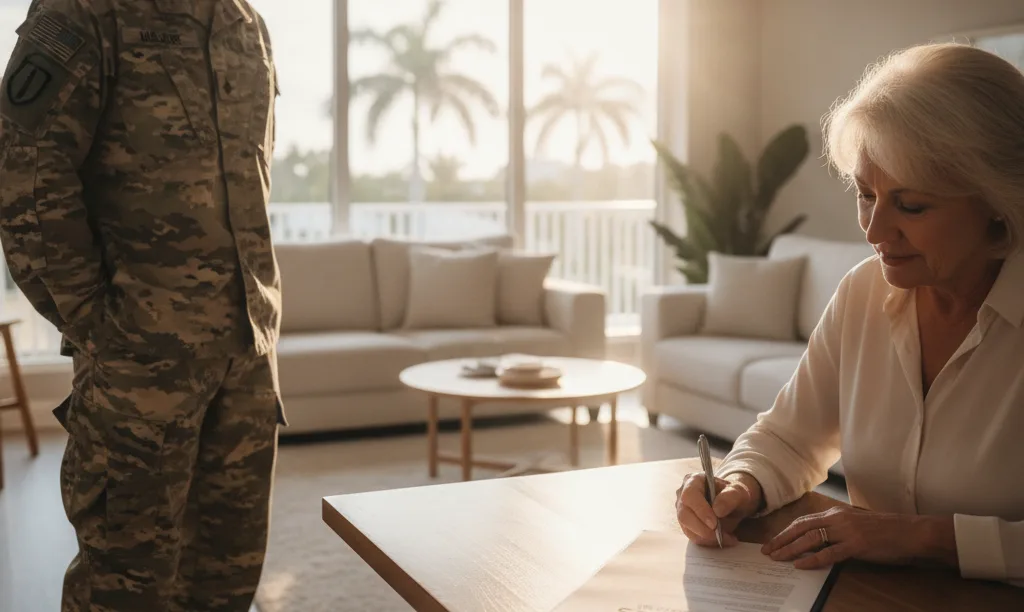

What is the first step I should take if I receive orders during escrow?
Receiving unexpected PCS orders while you are under contract for a home in Florida can feel like a nightmare. You have an accepted offer, an earnest money deposit on the line, and a closing date on the calendar. The absolute first step is to communicate immediately and clearly, but do not panic. This is a common scenario in military-heavy communities like Jacksonville, and lenders and real estate professionals have established procedures to handle it. (The data, information, or policy mentioned here may vary over time.)
Your communication plan should involve three key parties:
- Your Mortgage Lender: Inform them of your new orders, your expected departure date, and your continued desire to close on the property. They need to know immediately to begin coordinating the necessary paperwork, such as approving a Power of Attorney.
- Your Real Estate Agent: Your agent is your advocate on the ground. They will need to communicate with the seller's agent to explain the situation, provide reassurance that the sale is not in jeopardy, and manage any potential timeline adjustments.
- Your Military Legal Assistance Office (JAG): Schedule an appointment immediately to discuss drafting a Power of Attorney. They provide this service for free and will ensure the document is tailored correctly for a real estate transaction. (The data, information, or policy mentioned here may vary over time.)
Delaying this communication can create complications, so make these calls or send these emails the same day you receive your official orders. Your team can only help you if they are informed.
How do I properly set up a military Power of Attorney for a mortgage closing?
A Power of Attorney (POA) is a legal document that grants another person, your 'agent' or 'attorney-in-fact', the authority to act on your behalf in specific matters. For a mortgage closing, you do not want a 'General POA', which gives broad powers. Instead, you need a 'Specific' or 'Special' Power of Attorney.
This document is narrowly focused and grants your chosen person—typically your spouse or a trusted family member—the explicit authority to execute documents related to the purchase of the specific property. For instance, it will list the property address in Jacksonville and state that the attorney-in-fact can sign the promissory note, deed of trust, and other closing paperwork.
Here is the process to follow:
- Consult with a JAG Attorney: Your base's legal assistance office is the best resource. They will draft a POA that meets all legal requirements and is specifically designed for a real estate closing.
- Get Lender Approval: This is a critical step. Before the POA is finalized and signed, you must send the draft to your mortgage lender and the title company for their review and approval. They have specific language they require to ensure the document is valid for the transaction. If they require changes, your JAG officer can easily make them.
- Appoint Your Attorney-in-Fact: Choose a reliable person who will be physically present for the closing. Your spouse is the most common choice.
- Proper Execution: The POA must be signed and notarized. Your legal assistance office will handle the notarization. Once complete, the original document will be needed at the closing table, so ensure it is safely delivered to your attorney-in-fact.

What legal protections does the Servicemembers Civil Relief Act offer me?
The Servicemembers Civil Relief Act (SCRA) provides a wide range of legal protections to active-duty military members, including some related to housing. While the goal is to proceed with your home purchase, the SCRA offers a powerful safety net if closing becomes impossible.
Specifically, the SCRA may allow you to terminate a real estate contract without forfeiting your earnest money deposit if you receive PCS orders that require you to move after you have signed the purchase agreement. The key conditions usually involve the timing of the orders and the necessity of the move.
This is your 'break glass in case of emergency' option. If your orders make it logistically or financially impossible to proceed with buying the home in Tampa, the SCRA is designed to protect you from financial penalty. To invoke this protection, you must provide the seller with written notice of termination and a copy of your orders. (The data, information, or policy mentioned here may vary over time.)
However, in most cases, using a POA is a far better solution that allows you to achieve your goal of homeownership. The SCRA is the fallback plan that ensures you don't lose thousands of dollars if the purchase must be canceled due to your military service.
How should my agent communicate with the seller and lender in Tampa about my orders?
Once you have notified your real estate agent about your PCS orders for your pending purchase in Tampa, they become the primary coordinator. Their communication strategy is key to keeping the transaction on track.
With the Seller's Agent:
- Proactive and Transparent: Your agent should contact the seller's agent immediately. They will explain the situation, emphasizing that you are fully committed to closing on the home.
- Provide Proof: Offer to provide a redacted copy of the PCS orders. This shows good faith and proves the situation is legitimate, not a case of cold feet.
- Explain the Solution: The agent should clearly state that a military-specific Power of Attorney is being prepared, which allows a designated person (e.g., your spouse) to sign at closing. This reassures the seller that a clear legal mechanism is in place to complete the sale on time.
With Your Lender:
- Coordinate POA Approval: Your agent should work directly with your loan officer to ensure the drafted POA is sent, reviewed, and approved by the lender’s closing and legal departments without delay.
- Manage Timelines: The agent will confirm that the closing date is still feasible. If any minor delays are needed to get the POA in place, they will negotiate that with the seller.
- Facilitate Document Flow: They will act as a hub, ensuring the lender, title company, and your attorney-in-fact have all necessary documents and understand the closing process.
Clear, confident communication from your agent prevents the seller from getting nervous and ensures the lender has everything needed to prepare for a POA closing.
Can my spouse close on the Jacksonville home loan without me being present?
Yes, absolutely. This is the most common and effective solution for military members who receive PCS orders mid-transaction. By designating your spouse as your attorney-in-fact in a lender-approved Specific Power of Attorney, you give them the legal authority to complete the purchase of your Jacksonville home on your behalf.
At the closing appointment, your spouse will attend with the original, notarized POA document. They will sign their own name on certain documents and will sign your name on others, followed by '[Spouse's Name], as Attorney-in-Fact'. They will be legally executing the loan and purchase documents for you.
For example, when the title officer presents the promissory note—the document where you promise to repay the loan—your spouse will sign your name as stipulated by the POA. The same goes for the deed of trust or mortgage, which secures the property as collateral for the loan. This process is legally binding and is standard practice in real estate transactions involving deployed or relocating service members.
What documents will the lender require to accommodate my new orders?
To ensure a smooth closing, your lender will require a few key documents to accommodate the change in circumstances. Having these ready will prevent last-minute delays.
- A Copy of Your Official PCS Orders: The lender needs this to verify the reason for the use of a POA. A redacted copy that blacks out sensitive operational details is usually sufficient.
- The Lender-Approved Specific Power of Attorney: This is the most important document. The original, wet-signed, and notarized POA must be provided to the title company before or at closing. A copy will not suffice.
- Valid Identification for the Attorney-in-Fact: Your spouse or designated agent must bring valid, government-issued photo identification to the closing for identity verification.
- Standard Closing Documents: All other required documents, such as proof of homeowners insurance and final pay stubs, are still necessary.
Your loan officer will provide a checklist, but these three items are the core requirements for facilitating a remote closing due to military orders.
Will my deployment affect my final loan approval or interest rate?
Generally, no. Your PCS orders or deployment should not have a negative impact on your final loan approval or your locked interest rate. Military employment is considered one of the most stable forms of income, and lenders understand that relocation is part of the job. Your underlying qualifications for the loan—your credit, income, and assets—do not change because of new orders.
Your interest rate is secured by a rate lock, which is an agreement from the lender to hold a specific interest rate for you for a set period, typically 30 to 60 days. As long as you close within this window, your rate is protected. This is why swift action is crucial. If preparing the POA causes a delay that pushes you past your rate lock expiration date, you could be subject to current market rates, which may be higher. However, by communicating early, your lender can often arrange for a short rate lock extension if needed, sometimes at no cost for military service-related reasons. (The data, information, or policy mentioned here may vary over time.)
How can I manage the final walkthrough and closing from a distance?
Managing the final steps of your home purchase from afar is entirely possible with technology and a trustworthy team.
The Final Walkthrough: This is your last chance to inspect the property before it becomes yours. Your attorney-in-fact (spouse) should conduct the walkthrough. The best practice is to have them use a video call service like FaceTime, Zoom, or Google Meet to walk you through the home virtually. This allows you to see the condition of the property yourself, confirm that any negotiated repairs were completed, and give your final approval in real time.
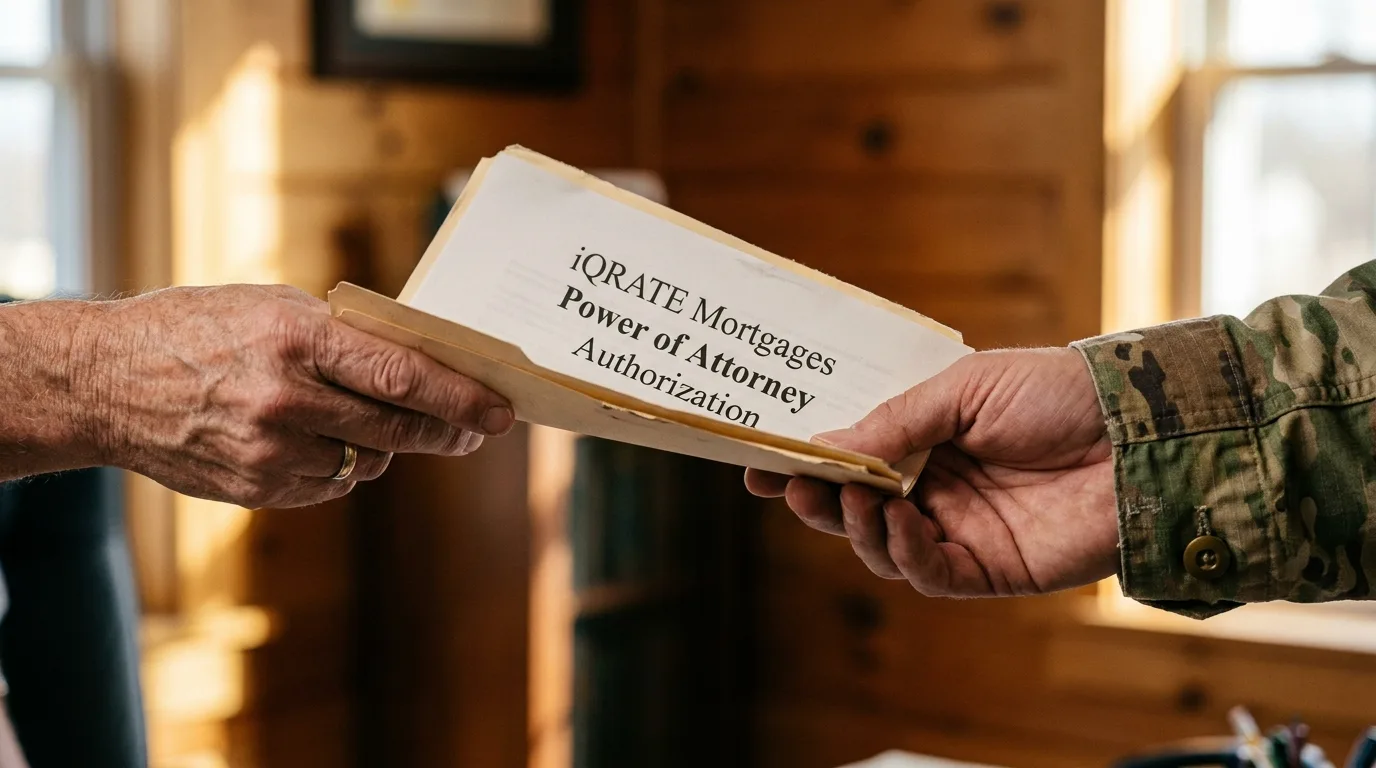
The Closing: Your attorney-in-fact will attend the closing appointment at the title company's office. They will sign all documents on your behalf using the authority granted by the POA. Before the appointment, ask the title company or your lender to send you a digital copy of the closing disclosure and other key documents. Review them carefully so you can address any questions with your spouse or agent before they sign. With these procedures in place, you can confidently close on your new home, even if you are thousands of miles away. Navigating a PCS move and a mortgage at the same time requires a team that understands military life. If you have questions about your VA loan or need a lender who can adapt quickly to your changing circumstances, contact a mortgage professional who specializes in serving military families.
Don't let unexpected PCS orders disrupt your homeownership journey. With the right support, you can close on your home with confidence, no matter where you are. When you're ready to work with a team that understands the demands of military life, Apply now and let's get you home.
Author Bio
David Ghazaryan is the expert mortgage strategist and founder behind iQRATE Mortgages. With a mission to fund home loans that traditional banks won't touch, David specializes in helping clients with unique financial situations, including those recovering from foreclosure or bankruptcy. He expertly crafts smart, strategic, and stress-free mortgages by leveraging a vast network of over 100 lenders to secure competitive rates for investors and homebuyers alike. Praised for exceptional customer service, David has helped hundreds of families with a 97% satisfaction rate, guiding them to the mortgage they deserve.
References
Consumer Financial Protection Bureau - SCRA Protections for Housing









