


How an Energy Efficient Mortgage Works for a Home Buyer
An Energy Efficient Mortgage, often called an EEM or a 'green mortgage', is a specialized loan product that acknowledges a simple truth: an energy-efficient home costs less to run. Lower utility bills mean you have more disposable income, which, in a lender's eyes, increases your ability to make your mortgage payments on time. This loan allows you to borrow money for your home purchase and for the cost of making energy-saving improvements, rolling it all into one convenient mortgage.
The process is straightforward but has a few extra steps compared to a standard mortgage. Here’s the typical journey for a homebuyer in Texas:
- Get Pre-Approved: You start by getting pre-approved for a standard mortgage (like a Conventional or FHA loan). This determines your baseline borrowing power.
- Find a Home: You find a home you want to purchase in Austin, San Antonio, or another Texas city. It might be an older home with great potential but inefficient features, like single-pane windows or an aging air conditioning unit.
- Schedule a Home Energy Audit: This is the critical step. You must hire a certified energy consultant to conduct a Home Energy Rating System (HERS) audit. The auditor inspects the property and produces a detailed report outlining recommended cost-effective energy improvements and their projected monthly savings.
- Finalize Upgrade Costs: Based on the HERS report, you get quotes from contractors for the specific upgrades you want to make, such as a new 16 SEER HVAC system or attic insulation.
- Loan Approval and Closing: Your lender uses the HERS report and contractor bids to calculate the final EEM loan amount. The loan closes, and a portion of the funds for the upgrades is placed into an escrow account.
- Complete the Upgrades: After closing, you have a set period (usually 90 to 180 days) to complete the work. (The data, information, or policy mentioned here may vary over time.) The contractors are paid from the escrow account once the improvements are finished and inspected.
Can I Add the Cost of New Windows or Insulation to My Home Loan?
Yes, absolutely. The purpose of an EEM is to finance 'cost-effective' energy improvements. This means the upgrades must save you more money on utility bills over their lifespan than they cost to install. The HERS report will identify which improvements meet this standard for your specific property.
Common eligible upgrades for homes in hot climates like Austin and San Antonio include:
- High-Efficiency HVAC Systems: Upgrading an old, inefficient air conditioner and furnace.
- New Insulation: Adding or improving insulation in the attic, walls, and crawl spaces.
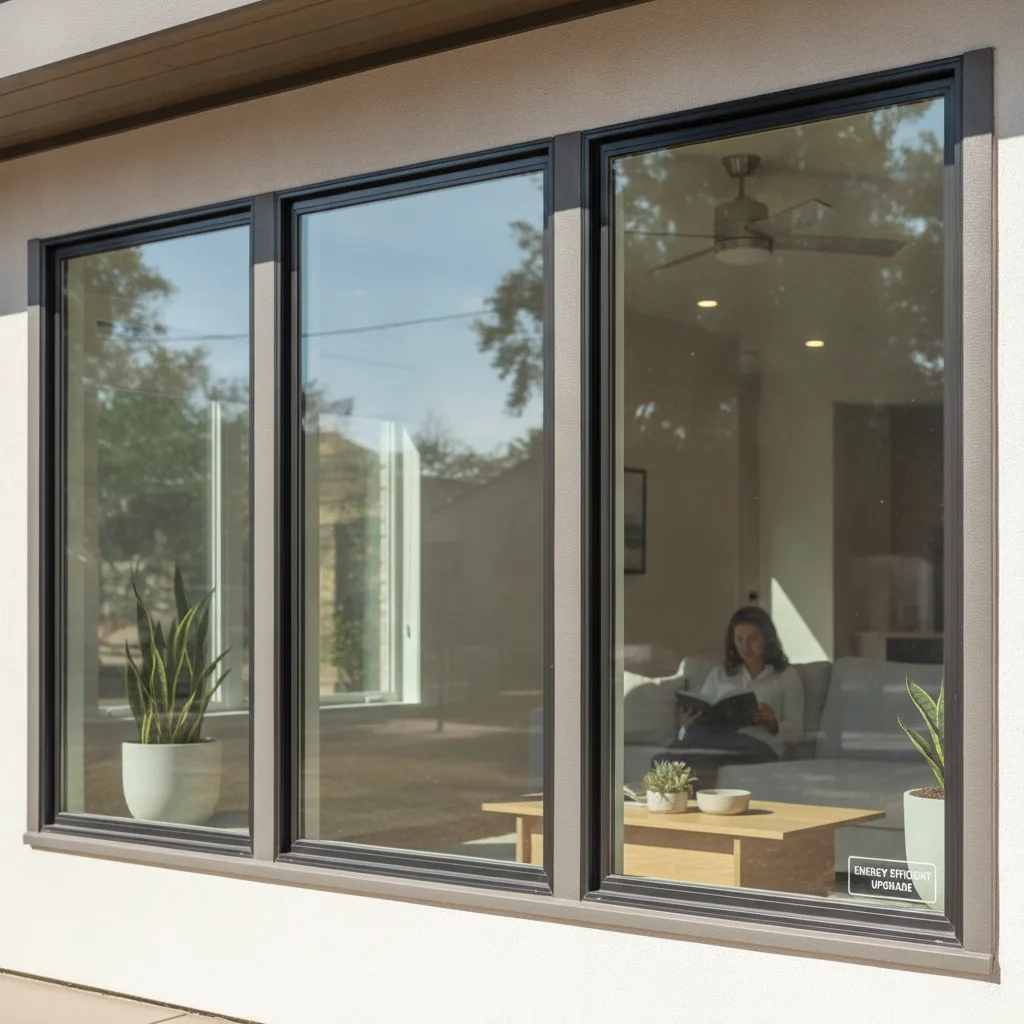
- Energy-Efficient Windows and Doors: Replacing old single-pane windows with modern double or triple-pane units.
- Duct Sealing and Repair: Fixing leaks in your home’s air duct system.
- Solar Panel Systems: Installing solar panels to generate your own electricity.
- Tankless Water Heaters: Replacing old, inefficient tank-style water heaters.
- Caulking and Weather-Stripping: Sealing air leaks around windows, doors, and foundations.
Anything not directly related to energy efficiency, such as a swimming pool, kitchen remodel, or new flooring, cannot be financed with an EEM. Those projects would require a different type of financing, like a renovation loan.
FHA vs. Conventional EEM: What's the Difference?
Both FHA and Conventional loans offer EEM options, but they operate under slightly different rules. The best choice depends on your credit profile, down payment, and the scope of the energy improvements you plan to make.
FHA Energy Efficient Mortgage
The Federal Housing Administration's (FHA) EEM program is popular, especially among first-time homebuyers, due to its flexible credit requirements and low down payment (as little as 3.5%). (The data, information, or policy mentioned here may vary over time.) When you add an EEM to an FHA loan, the amount you can finance for energy upgrades is limited.
The amount you can borrow for the improvements is the lesser of the actual cost from the HERS report or a calculation involving 5% of the home's value. (The data, information, or policy mentioned here may vary over time.)
For most buyers in Texas, the calculation will be based on the cost from the HERS report or 5% of the home's value.
Conventional Energy Efficient Mortgage (Fannie Mae HomeStyle Energy)
Conventional loans, which are not backed by the government, also have EEM programs. The most well-known is Fannie Mae's HomeStyle Energy mortgage. This program is often a better fit for borrowers with higher credit scores and larger down payments.
The key difference is in the financing limit. With a HomeStyle Energy loan, you can finance energy improvements costing up to 15% of the home's 'as-completed' appraised value. The 'as-completed' value is an appraiser's estimate of what the home will be worth after you've made the planned energy-efficient upgrades. This often allows you to borrow more for improvements compared to the FHA EEM.
What Is a Home Energy Rating System (HERS) Report?
A Home Energy Rating System (HERS) report is the foundation of any EEM. You cannot get this type of loan without one. The report is generated by a certified Residential Energy Services Network (RESNET) Rater who conducts a thorough inspection of the home.
The inspector examines features like:
- Insulation levels
- Window efficiency
- HVAC system age and performance
- Duct leakage
- Air leaks in the building's envelope
The result is a HERS Index Score, a number typically between 0 and 150. A lower score is better. A standard new home built to code usually scores around 100. An older, less efficient home in San Antonio might score 130 or higher. The report will then provide a second score: the potential HERS score if you complete a specific list of recommended upgrades. For example, the report might show the home's current score is 125, but it could be lowered to 75 by installing a new AC unit and adding attic insulation. It also projects the annual dollar savings from these upgrades, which is the data your lender needs.

How Much Extra Can I Borrow for Upgrades in Austin?
Let's use a realistic example to see how the financing works. Imagine you want to buy a $400,000 home in Austin that needs significant energy improvements.
Scenario 1: FHA EEM
- Home Price: $400,000
- HERS Report: Recommends $15,000 in upgrades (new HVAC and insulation) with projected annual savings of $1,200.
- FHA EEM Calculation: The lender will determine the maximum amount for upgrades. In this case, 5% of the home's value is $20,000. Since the $15,000 cost of your desired upgrades is less than $20,000, you can likely finance the full amount.
- Total Loan Amount: Your loan would be approximately $415,000 (plus the FHA upfront mortgage insurance premium) to cover both the house and the improvements.
Scenario 2: Conventional HomeStyle Energy EEM
- Home Price: $400,000
- 'As-Completed' Appraised Value: After reviewing the planned $15,000 in upgrades, an appraiser determines the home will be worth $418,000.
- Conventional EEM Calculation: You can borrow up to 15% of this 'as-completed' value for improvements, which is $62,700 ($418,000 x 0.15). This gives you far more borrowing capacity for a larger project, like adding solar panels.
- Total Loan Amount: You could finance the $15,000 for the HVAC and insulation, or even expand the project, as long as it's identified as cost-effective by the HERS rater.
Does This Make It Harder to Qualify for the Mortgage?
This is a common concern, but the answer depends on the loan type. While an EEM increases your total loan amount, some programs offer unique qualifying flexibility. For a Conventional HomeStyle Energy loan, lenders can often use the projected energy savings to help you qualify. For example, if the HERS report projects you will save $100 per month, the lender may be able to add that amount to your qualifying income or use it to offset utility expenses when calculating your debt-to-income (DTI) ratio. This helps offset the higher mortgage payment. However, it's important to note that FHA EEM guidelines do not allow for the projected savings to be added to your income for qualification purposes.
Which Lenders in San Antonio Offer These Specific Home Loans?
Energy Efficient Mortgages are not a standard offering at every bank or credit union. They are considered a niche product that requires specialized underwriting knowledge. Many big-box lenders and retail banks don't have the staff or processes in place to handle the extra documentation, such as the HERS report and escrow management for contractors.
Your best bet for securing an EEM in San Antonio, Austin, or anywhere in Texas is to work with an experienced mortgage broker. A broker has access to a wide network of wholesale lenders, including many that specialize in government-backed loans like FHA EEMs or offer conventional products like the HomeStyle Energy loan. They can identify which lenders are comfortable with the EEM process and can guide you through the specific requirements, ensuring a smooth path from energy audit to closing. An Energy Efficient Mortgage can help you create a more comfortable and affordable home from day one. If you're considering buying a home in Texas that could use some energy-saving upgrades, discuss your options with a mortgage professional who understands the EEM process.
Ready to finance a greener, more affordable Texas home? Explore your EEM options and apply for your mortgage today.
Author Bio
David Ghazaryan is the expert mortgage strategist and founder behind iQRATE Mortgages. With a mission to fund home loans that traditional banks won't touch, David specializes in helping clients with unique financial situations, including those recovering from foreclosure or bankruptcy. He expertly crafts smart, strategic, and stress-free mortgages by leveraging a vast network of over 100 lenders to secure competitive rates for investors and homebuyers alike. Praised for exceptional customer service, David has helped hundreds of families with a 97% satisfaction rate, guiding them to the mortgage they deserve.
References
HUD Energy Efficient Mortgage Program









