


What Specific Roof Conditions Will a Federal Housing Administration Appraiser Flag?
A Federal Housing Administration (FHA) appraiser's primary concern with a roof is its ability to protect the home and its remaining lifespan. The FHA requires that a roof have at least two years of remaining economic life. If it doesn't, repair or replacement will be mandatory before the loan can close. In cities like Tampa, where older homes often face harsh sun and storm seasons, appraisers are particularly vigilant.
Here are specific roof conditions that will raise a red flag:
- Multiple Layers: More than three layers of shingles is a common issue. The appraiser will likely require a complete tear-off and replacement.
- Missing or Damaged Shingles: Significant areas of missing, curling, or broken shingles suggest the roof's integrity is compromised.
- Evidence of Leaks: The appraiser will look for water stains on ceilings, dampness in the attic, and discoloration on the roof sheathing.
- Soft Spots: Walking the roof (if safe) or observing from a ladder, an appraiser will check for sagging or soft spots, which indicate underlying rot or structural damage.
- Improper Flashing: Poorly installed or deteriorated flashing around chimneys, vents, and skylights is a common source of leaks and will be flagged.

Example: A 1950s bungalow in a historic Tampa neighborhood might have a roof that appears okay from the street. However, the FHA appraiser discovers it has three layers of shingles and active leaking around the chimney. The appraisal would be 'subject to' a roof replacement, a potential $10,000 to $15,000 repair, before the loan can be approved. (The data, information, or policy mentioned here may vary over time.)
Are Cracked Windows or Peeling Paint Considered Mandatory Repairs in Orlando?
Yes, in many cases, they are. The FHA adheres to strict 'Minimum Property Standards' that prioritize the health and safety of the occupants. Seemingly minor cosmetic issues can be deemed mandatory repairs if they violate these standards.
Peeling Paint
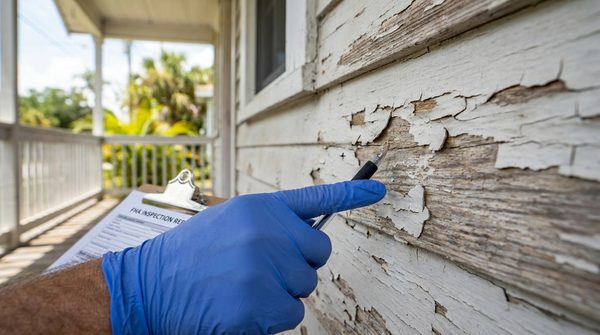
For any home built before 1978, peeling, chipping, or cracking paint is a significant safety hazard due to the potential presence of lead. An FHA appraiser is required to note any defective paint surfaces, both inside and outside the home. The repair typically involves scraping the old paint, priming, and repainting the affected surface. This is a non-negotiable repair for FHA financing.
Example: A charming 1970s home near downtown Orlando has peeling paint on its exterior window sills and porch railing. The appraiser will condition the loan approval on this paint being properly remediated to eliminate the lead-based paint hazard.
Cracked Windows
A cracked window pane can be flagged for two reasons:
- Safety Hazard: A large, sharp crack poses a risk of injury.
- Security/Soundness: A broken window compromises the home's security and its ability to keep out the elements.
A small, hairline crack in a corner might be overlooked, but a significant crack that affects the window's function or stability will be listed as a required repair.
How Do Appraisers Test for Safety Issues With Electrical and Plumbing Systems?
FHA appraisers are not licensed home inspectors, so they do not perform exhaustive, diagnostic tests. Instead, they conduct a functional overview to ensure the home's core systems are working safely and adequately.
Electrical Systems
An appraiser will perform basic checks to identify immediate hazards:
- Operate a sample of light switches and outlets to confirm they work.
- Look for exposed or frayed wiring, which is an immediate 'red flag' for a fire hazard.
- Check for missing cover plates on outlets and switches.
- Ensure Ground Fault Circuit Interrupter (GFCI) outlets are present in 'wet' areas like kitchens and bathrooms, as required by modern safety codes.
- Note any outdated systems, such as knob-and-tube wiring, which may require a specialist's certification that it's safe or may need to be replaced entirely.
Plumbing Systems
For plumbing, the appraiser is checking for function and leaks:
- Run water at faucets and flush toilets to check for adequate water pressure and proper drainage.
- Look for evidence of active leaks under sinks, around toilets, and at water heaters.
- Verify that the water heater is functioning and properly strapped for safety.
- Confirm a safe and potable water source, whether from a municipal supply or a well (which has separate testing requirements).
If an appraiser sees signs of significant issues, like flickering lights or very low water pressure, they may recommend a more thorough inspection by a licensed electrician or plumber.
What Are the Federal Housing Administration Requirements for Functional Heating and Cooling?
The FHA mandates that a property must have a functional, permanent heat source that can provide adequate heating for healthy and comfortable living. In a state like Florida, this can sometimes be overlooked by buyers focused on air conditioning.
- Permanent Heat Source: The heating system must be a permanent part of the property. Space heaters or window units do not qualify.
- Functional Test: The appraiser will turn on the heat, regardless of the outside temperature, to ensure it produces heat and distributes it to the living areas.
- Air Conditioning: While central air conditioning is a standard expectation in Orlando and Tampa, it is not a federal FHA requirement unless it's part of a combined HVAC unit. If the home has a central AC unit, it must be functional, but its absence won't automatically disqualify a property.
If the primary heating system is broken, it must be repaired or replaced before the loan can close.
Can I Use a Federal Housing Administration 203(k) Loan to Finance the Needed Repairs?
Absolutely. The FHA 203(k) loan is specifically designed for this exact situation. It allows you to roll the cost of necessary repairs and renovations into your primary mortgage. This is an incredibly powerful tool for buying an older home that needs work but doesn't meet the FHA's Minimum Property Standards initially.
There are two main types:
- Limited 203(k): For non-structural repairs totaling up to $35,000. This is perfect for things like a new roof, replacing windows, updating electrical systems, or painting. (The data, information, or policy mentioned here may vary over time.)
- Standard 203(k): For major renovations, including structural work, with a minimum repair cost of $5,000. This loan requires a HUD-approved 203(k) consultant to oversee the project.
Using a 203(k) loan, you can finance the purchase and repair of the home with a single loan and one monthly payment, making it possible to buy a fixer-upper that other loan programs would reject.
How Should I Negotiate Appraisal-Required Repairs With the Seller in Tampa?
Negotiating repairs after an FHA appraisal requires a clear strategy, especially in a competitive market like Tampa. Your leverage comes from the fact that these mandatory repairs will likely be flagged by any future FHA appraiser for any other FHA buyer.
Here are the steps to follow:
- Receive the Appraisal Report: Wait for the official report that lists the specific, non-negotiable repairs required by the appraiser.
- Obtain Contractor Bids: Immediately get detailed quotes from at least two licensed contractors for the exact work specified in the appraisal. This provides a clear, documented cost.
- Present the Findings: Through your real estate agent, present the seller with the list of required repairs and the contractor bids. Frame it not as a list of demands, but as a lender requirement to close the loan.
- Negotiate a Solution: You have a few options:
- Seller Pays for Repairs: The seller can hire a contractor and complete the repairs before closing. This is often the cleanest solution.
- Price Reduction: The seller can reduce the purchase price by the amount of the repair costs. You would then use your own funds or an FHA 203(k) loan to complete the work.
- Seller Concession: The seller can agree to provide a credit at closing to cover the repair costs, though lender limits on concessions apply. (The data, information, or policy mentioned here may vary over time.)
In a seller's market, you may have less leverage, but presenting the issue as a barrier to financing for any FHA buyer can motivate the seller to cooperate.
Does a Home Being Sold 'As-Is' Prevent Me From Using a Federal Housing Administration Loan?
No, it does not. This is a common misconception. A home being sold 'as-is' simply means the seller is not willing to perform or pay for any repairs. You can still make an offer and attempt to finance it with an FHA loan.
The conflict arises when the FHA appraisal comes back with mandatory repairs. The 'as-is' clause doesn't override the lender's requirements. If the property condition doesn't meet FHA standards, the loan cannot be funded until the issues are fixed.
Here's the outcome:
- The seller must either abandon their 'as-is' position and pay for the repairs.
- You, the buyer, must find a way to pay for the repairs, typically through an FHA 203(k) loan.
- If neither party can or will fix the required items, the transaction will be cancelled.
Ultimately, an FHA loan can be used to purchase an 'as-is' property, but only if that property meets FHA Minimum Property Standards at the time of closing or if a 203(k) loan is used to bring it up to standard.
Don't let the fear of an FHA appraisal sideline your homeownership dreams. Understanding these potential repairs is the first step toward a successful purchase. When you're ready to explore your options, including powerful tools like the FHA 203(k) loan, our mortgage experts are here to guide you. Apply now to see what's possible and make an offer with confidence.
Author Bio
David Ghazaryan is the expert mortgage strategist and founder behind iQRATE Mortgages. With a mission to fund home loans that traditional banks won't touch, David specializes in helping clients with unique financial situations, including those recovering from foreclosure or bankruptcy. He expertly crafts smart, strategic, and stress-free mortgages by leveraging a vast network of over 100 lenders to secure competitive rates for investors and homebuyers alike. Praised for exceptional customer service, David has helped hundreds of families with a 97% satisfaction rate, guiding them to the mortgage they deserve.
References
HUD Handbook 4000.1 - FHA Single Family Housing Policy Handbook









