


Why Miami Condo Buildings Need Special Mortgage Approval
When you buy a single-family home, the lender's collateral is straightforward: the house and the land it sits on. Financing a condominium in a bustling market like Miami is fundamentally different. You are not just buying the airspace within your unit; you are buying into a shared legal and financial entity—the Homeowners Association (HOA). The lender's risk is therefore tied not only to your personal ability to repay the loan but also to the overall health and stability of the entire condominium project.
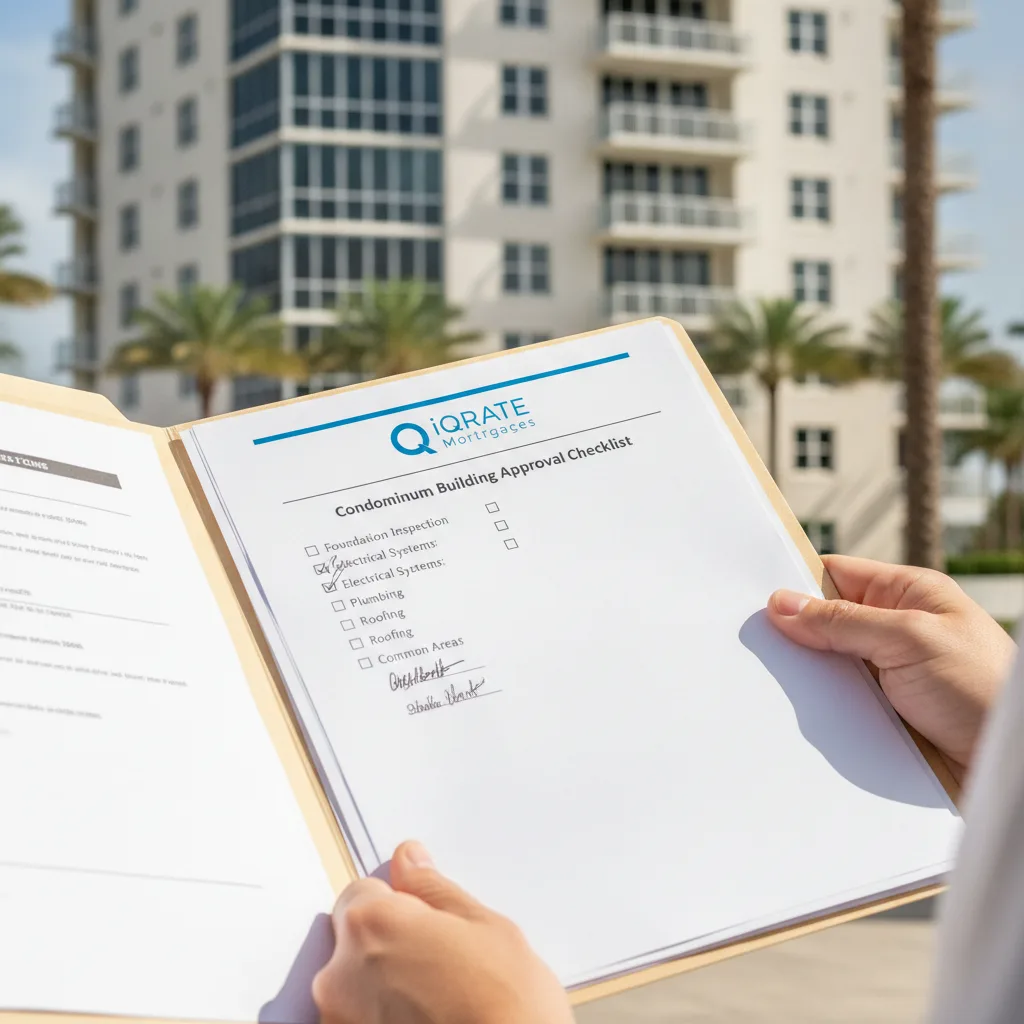
Think of it this way: the value of your unit is directly impacted by how well the HOA manages the building's finances, maintenance, and legal standing. If the HOA is poorly managed, has insufficient reserve funds for major repairs like a new roof or concrete restoration, or is embroiled in a lawsuit, the value of every unit in the building is at risk. A lender in Miami or Fort Lauderdale could find their collateral (your condo) plummeting in value due to factors completely outside your control. To mitigate this risk, both FHA and Conventional loan guidelines impose a second layer of underwriting that scrutinizes the condo project itself.
The Federal Housing Administration Approved Condo List
The Federal Housing Administration (FHA) takes a centralized approach to managing condo project risk. It maintains a master list of approved condominium projects. For a buyer to use an FHA loan to purchase a unit, the entire building must be on this list. This list is publicly searchable on the Department of Housing and Urban Development (HUD) website, allowing you and your real estate agent to verify a building's status before you even make an offer.
Key characteristics of FHA condo approval include:
- Strict Criteria: To get on the list, the HOA must submit an extensive application package and prove it meets strict FHA guidelines regarding financial reserves, owner-occupancy rates, insurance coverage, and restrictions on commercial space.
- Recertification: Approval is not permanent. Projects must be recertified every three years, a process that many HOAs either forget or choose not to undertake due to the cost and administrative burden.
- Single-Unit Approval (SUA): In some cases, it is possible to get an FHA loan for a single unit in a non-approved project through the Single-Unit Approval process. This option requires the specific unit and project to meet a distinct set of criteria and is not offered by all FHA-approved lenders.
For a homebuyer in Miami, this means your pool of potential condos is immediately limited. If your dream condo is in a building that is not fully approved, an FHA loan may still be an option through SUA, but it is not guaranteed.
Are Conventional Loan Condo Requirements More Flexible?
Yes, significantly. Conventional loans, which are those that conform to the guidelines set by Fannie Mae and Freddie Mac, offer much more flexibility. Instead of a single, rigid master list, they allow lenders to approve condo projects on a case-by-case basis through a process called a 'project review'. This opens up thousands of condo buildings in cities like Miami and Fort Lauderdale that may be perfectly stable and well-managed but have simply never gone through the FHA approval process.

The lender will typically use a standardized 'Condo Questionnaire' to gather the necessary information directly from the HOA. This form covers the same key risk areas as the FHA review—finances, lawsuits, renters, and insurance—but the analysis is done by the individual lender's underwriting team. This decentralized approach is a major advantage for buyers, as it provides a pathway to financing a unit in a much wider array of buildings.
Which Loan Is Better if the Building Has High Renter Occupancy?
The ratio of owners to renters (owner-occupancy rate) is a critical metric for lenders. The logic is that owners have a greater vested interest in maintaining the property's condition and value compared to tenants. A high concentration of renters can be a red flag for deferred maintenance and lower property values.
FHA Renter Requirements
The FHA has a firm rule: at least 50% of the units in a project must be owner-occupied. If a 100-unit building in Miami has 51 renters, it is ineligible for FHA approval. This strict 50% threshold is a common reason why many Florida condo buildings do not qualify for FHA financing, especially in vacation-heavy areas where investor ownership is prevalent.
Conventional Renter Requirements
Conventional loans are more nuanced. For a buyer purchasing a condo as their primary residence, Fannie Mae guidelines require that at least 50% of the units be owner-occupied. However, there are important exceptions and flexibilities that are not available with FHA loans. For example, if you are making a larger down payment, some lenders may have programs that can accommodate a lower owner-occupancy ratio. For second homes, the requirements can also be different. This flexibility makes Conventional loans the superior choice for buildings with a significant number of renters.
How a Homeowners Association Lawsuit Affects Loan Options
Pending litigation is one of the biggest deal-killers in condo financing. If the HOA is being sued, lenders become extremely cautious. However, not all lawsuits are created equal, and the type of loan you seek will determine the outcome.
FHA Loans: The FHA has a near-zero tolerance policy for lawsuits. Any pending litigation involving the HOA, other than minor collection or foreclosure issues, will almost always make the entire project ineligible for FHA financing until the suit is resolved.
Conventional Loans: Conventional underwriting can be more forgiving, depending on the nature of the lawsuit. A 'minor' lawsuit, such as a slip-and-fall claim that is fully covered by the HOA's liability insurance and does not exceed the policy limits, may be acceptable. However, litigation related to structural integrity, building safety, or financial disputes with contractors is considered 'material' or 'significant' and will halt a Conventional loan approval just as it would an FHA loan.
Before making an offer on a Fort Lauderdale condo, it is crucial to ask the HOA directly if there is any pending or threatened litigation.
Limited Review vs. a Full Condo Project Review
This distinction applies only to Conventional loans and is determined primarily by your down payment and the property's intended use.
Limited Review Explained
A Limited Review is a streamlined, simplified version of the condo approval process. The lender only needs to verify a few key points, such as confirming the project is not a condotel, there is no significant litigation, and no single entity owns an excessive number of units. To qualify for this easier review, you typically need to meet stricter buyer criteria:
- Occupancy: The property must be your primary residence or a second home; investment properties are not eligible.
- High Down Payment: For a primary residence, you generally need a down payment of at least 10% (Loan-to-Value of 90% or less); requirements for second homes may be higher.
The benefit of a Limited Review is speed and a higher likelihood of approval, as the lender's scrutiny of the HOA's budget and reserves is minimal.
Full Review Explained
A Full Review is a comprehensive, deep-dive analysis of the entire condo project. It is required when the buyer does not meet the criteria for a Limited Review, such as when making a down payment of less than 10% or purchasing the condo as an investment property. During a Full Review, the lender will scrutinize:
- The HOA Budget: They will verify that at least 10% of the annual operating budget is allocated to a capital reserve fund for future repairs.
- Financial Health: The lender will check for a high number of units (typically over 15%) that are delinquent on their HOA dues.
- Insurance Policies: They will confirm the master insurance policy is sufficient.
- Governing Documents: The underwriter will review bylaws and declarations for any unacceptable clauses.
A Full Review is a much higher hurdle to clear and requires a well-managed and financially sound HOA.
Which Loan Has Lower Total Insurance Costs for a Fort Lauderdale Condo?
For most borrowers, a Conventional loan will have significantly lower long-term insurance costs. The reason is the difference between FHA's Mortgage Insurance Premium (MIP) and the Private Mortgage Insurance (PMI) on Conventional loans.
Let's use an example of a $400,000 condo in Fort Lauderdale with a 5% down payment ($20,000).
FHA Mortgage Insurance (MIP): An FHA loan requires two forms of mortgage insurance.
- Upfront MIP (UFMIP): A one-time premium of 1.75% of the loan amount ($380,000 * 1.75% = $6,650), which is typically financed into the loan.
- Annual MIP: Paid monthly. For a 30-year loan with less than 10% down, the annual rate is currently 0.55%. This adds approximately $174 per month to your payment ($380,000 * 0.0055 / 12). With FHA, this monthly MIP is permanent and lasts for the entire life of the loan.
Conventional Private Mortgage Insurance (PMI): A Conventional loan with less than 20% down requires PMI. The rate varies based on credit score, but let's assume it's 0.60% annually. (The data, information, or policy mentioned here may vary over time.)
- This would add approximately $190 per month to your payment ($380,000 * 0.0060 / 12).
- However, the critical difference is that by law, PMI must be automatically canceled once your loan balance drops to 78% of the original purchase price. You can also request its removal at 80%. This means you only pay it for the first several years of the loan.
Over the long term, the ability to cancel PMI makes the Conventional loan substantially cheaper than the FHA loan, where the monthly insurance payment never goes away.
What Documents Should I Get From the Homeowners Association First?
Being proactive is key to a smooth condo purchase. Before you get too far into the loan process, you or your real estate agent should request the following documents from the HOA or property management company. This information will allow your mortgage professional to perform a preliminary analysis to spot any potential red flags.
- A Completed Condo Questionnaire: This is the master document your lender will use. Getting it early provides all the key data in one place.
- The Current Year's Approved Budget: This shows how money is being spent and, most importantly, confirms the 10% reserve allocation required for a Full Review.
- The Master Insurance Policy Declaration Page: This proves the building has adequate hazard, liability, and flood insurance coverage.
- Recent HOA Meeting Minutes: These can provide invaluable insight into any ongoing issues, special assessments, or pending lawsuits that might not be formally documented yet.
- Information on any Pending Litigation: A direct confirmation from the HOA in writing about the status of any lawsuits. If you're considering a condo in Miami or Fort Lauderdale, understanding the building's financial health and eligibility is the first step. A mortgage expert can help you analyze the HOA documents to determine if a property qualifies for FHA or Conventional financing before you make an offer.
Navigating the complexities of condo financing in Miami requires expertise. If you're ready to find the right mortgage for your dream condo, our specialists can provide a clear path to approval. Apply now to get started.
Author Bio
David Ghazaryan is the expert mortgage strategist and founder behind iQRATE Mortgages. With a mission to fund home loans that traditional banks won't touch, David specializes in helping clients with unique financial situations, including those recovering from foreclosure or bankruptcy. He expertly crafts smart, strategic, and stress-free mortgages by leveraging a vast network of over 100 lenders to secure competitive rates for investors and homebuyers alike. Praised for exceptional customer service, David has helped hundreds of families with a 97% satisfaction rate, guiding them to the mortgage they deserve.
References
Search for FHA-Approved Condominiums









