


The Mortgage Insurance Trap: FHA vs. Conventional PMI
At first glance, the low down payment of an FHA loan seems like the clear winner for first-time homebuyers in Reno. However, the real cost lies in the mortgage insurance. Both loan types require it for down payments under 20%, but they function very differently, creating a long-term financial trap for unsuspecting borrowers.
FHA Mortgage Insurance Premium (MIP)
The Federal Housing Administration requires two forms of mortgage insurance:
- Upfront Mortgage Insurance Premium (UFMIP): This is a one-time fee, currently 1.75% of the base loan amount. It's typically rolled into your total loan balance, meaning you pay interest on it for decades.
- Annual Mortgage Insurance Premium (MIP): This is paid monthly. For most borrowers putting down less than 10%, this premium is paid for the entire life of the loan. It does not automatically cancel once you reach 20% equity.
Conventional Private Mortgage Insurance (PMI)
Conventional loans use Private Mortgage Insurance (PMI), which is managed by private companies. The key advantage of PMI is that it's temporary. By law, lenders must automatically terminate PMI when your loan-to-value (LTV) ratio reaches 78%. You can also request to have it removed once you reach an 80% LTV.
The Long-Term Cost Difference in Reno
Let's compare a $500,000 home purchase in Reno, Nevada.
FHA Loan Scenario:
- Down Payment (3.5%): $17,500
- Base Loan Amount: $482,500
- UFMIP (1.75%): $8,444 (added to the loan)
- Total Loan Amount: $490,944
- Annual MIP (0.55% rate): $2,654 per year, or about $221 per month. This monthly payment continues for the life of the loan. (The data, information, or policy mentioned here may vary over time.)
Conventional Loan Scenario:
- Down Payment (5%): $25,000
- Loan Amount: $475,000
- PMI (estimated 0.6% rate): $2,850 per year, or about $238 per month. (The data, information, or policy mentioned here may vary over time.)
While the monthly conventional PMI is slightly higher initially, it cancels out. Assuming home appreciation and regular payments, it might be gone in 7-10 years. The FHA MIP on the other hand, could cost you $66,300 over 30 years. The only way to remove it is to refinance into a different loan type, which comes with its own closing costs.
Building Home Equity Faster in Reno and Sparks
Home equity is your most powerful wealth-building tool. It's the difference between what your home is worth and what you owe on your mortgage. The type of loan you choose directly impacts how quickly you build it.
How Amortization Impacts Equity
Every mortgage payment you make has two parts: principal and interest. The principal portion reduces your loan balance and increases your equity. Conventional loans, especially those with a slightly larger down payment, often allow more of your initial payments to go toward principal compared to an FHA loan with a balance inflated by the UFMIP.
The Role of Mortgage Insurance in Equity Growth
Your FHA MIP or conventional PMI payment does not contribute to your equity. It is purely an insurance cost. Because FHA MIP lasts for the life of the loan, it's a constant drain on your monthly housing budget that could have otherwise gone toward extra principal payments. With a conventional loan, once PMI is gone, you can redirect that $238 (from our example) directly to your principal each month, accelerating your equity growth and shortening your loan term significantly.
Prepayment Penalties: A Non-Issue for Most
Worried about being penalized for paying off your loan early? Fortunately, this is largely a relic of the past for standard home loans. Qualified Mortgages, which include nearly all FHA and conventional loans today, are prohibited from having prepayment penalties. You can make extra payments or pay off your entire loan without facing an additional fee. However, it is always critical to read your loan estimate and closing disclosure documents to confirm this for your specific loan.
Navigating Appraisal Hurdles for Older Sparks Homes
Sparks has a wonderful variety of homes, including many charming older properties. This is where appraisal requirements can create a significant hurdle, particularly for FHA borrowers.

FHA's 'Minimum Property Standards'
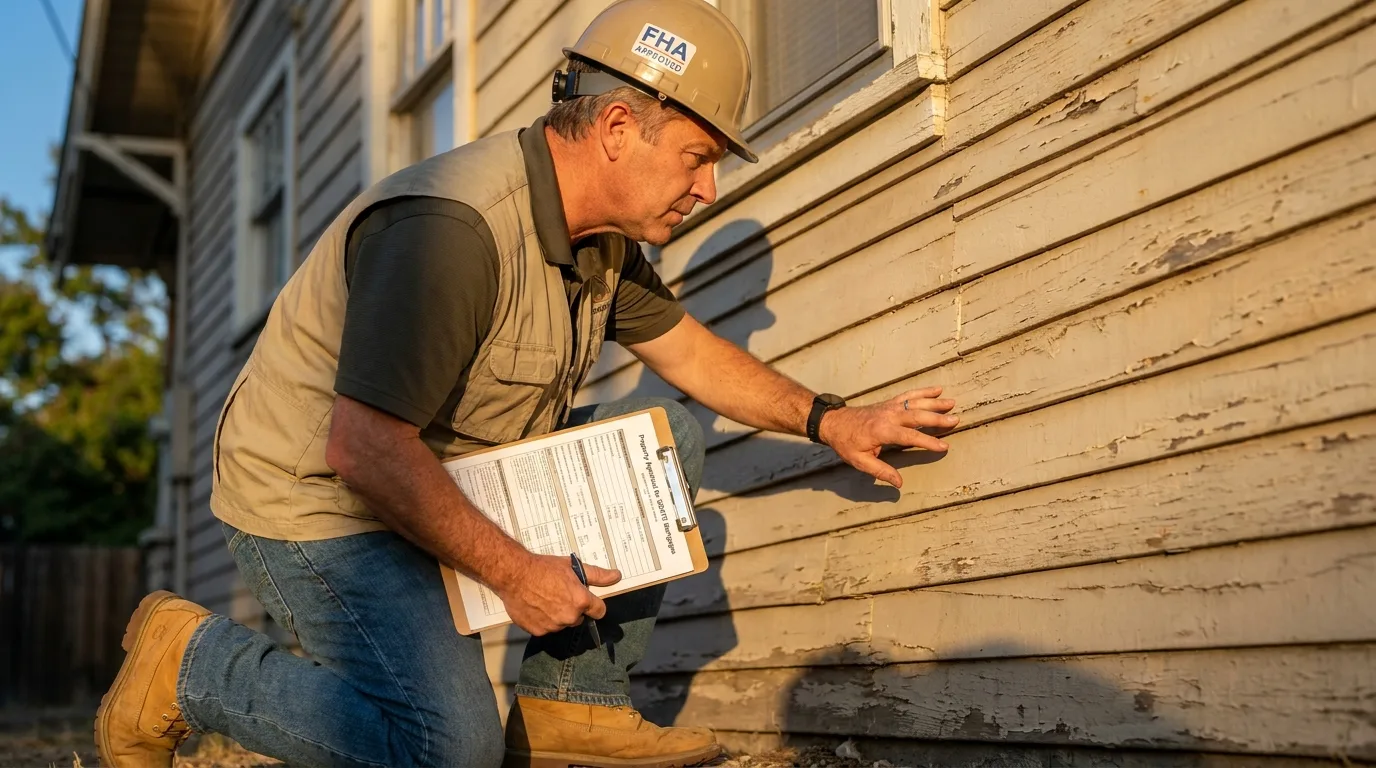
The FHA isn't just insuring your loan; it's also ensuring the home is safe, secure, and sound. FHA appraisers must follow strict 'Minimum Property Standards' set by the Department of Housing and Urban Development (HUD). They will flag issues like peeling paint (a lead-based paint hazard in pre-1978 homes), a roof with less than two years of life left, or missing handrails. A seller may be unwilling to make these required repairs, causing the deal to fall through.
Conventional Loan Appraisal Flexibility
Conventional loan appraisers are primarily concerned with the property's market value to ensure it's sufficient collateral for the loan. While they will note significant structural or safety issues, their standards are generally more flexible than the FHA's rigid checklist. This can make a conventional offer more attractive to a seller of an older home who wants a smoother, faster closing without the risk of mandated repairs.
Refinancing Flexibility: Your Future Financial Freedom
Your first mortgage isn't necessarily your last. Your financial goals may change, or interest rates might drop. Loan flexibility is a key factor that is often overlooked.
FHA Streamline Refinance vs. Conventional Rate-and-Term
The FHA offers a 'Streamline Refinance' program, which allows you to refinance to a lower rate with reduced documentation and sometimes no appraisal. While this sounds great, the catch is that you are refinancing from one FHA loan into another. This means you will likely have to pay a new UFMIP, and your MIP obligations will continue.
Cashing Out Equity: Which Loan Is Better?
As property values in Reno and Sparks appreciate, you may want to tap into your home equity for renovations or investments. Conventional loans are far superior for this. You can typically borrow up to 80% of your home's value in a cash-out refinance. FHA cash-out refinances have become more restrictive, with lower LTV limits, currently capped at 80%. (The data, information, or policy mentioned here may vary over time.)
The Myth of Removing FHA Mortgage Insurance
This is one of the most expensive misunderstandings in home financing. Can you ever remove MIP from an FHA loan?
- If you made a down payment of 10% or more, your MIP will automatically cancel after 11 years.
- If you made a down payment of less than 10% (like most FHA borrowers), your MIP is for the entire loan term. Thirty years.
The only way to get rid of MIP with a small down payment is to refinance the FHA loan into a conventional loan. You'll need to have at least 20% equity in your home to do this without having to pay PMI on the new conventional loan.
Comparing True Cash-to-Close Costs
While the FHA down payment is lower, the total cash needed at closing can be closer than you think.
Down Payment Requirements
- FHA: Minimum 3.5%
- Conventional: Minimum 3-5%
The difference on a $500,000 home between a 3.5% FHA down payment ($17,500) and a 5% conventional one ($25,000) is $7,500.
Upfront Mortgage Insurance Premium (UFMIP) on FHA Loans
Remember, the FHA's UFMIP is a closing cost. While most borrowers roll it into the loan, you can pay it in cash. If you do, it dramatically increases your cash-to-close requirement, making the conventional loan's upfront cost much more competitive.
Seller Concessions and Closing Cost Differences
Both loan types allow for seller concessions (where the seller contributes to your closing costs). However, FHA guidelines are sometimes perceived as more complex, and in a competitive market, a seller might be less willing to offer concessions to an FHA buyer compared to one with a conventional loan.
Which Loan Offer Do Sellers in Reno Prefer?
In a competitive housing market like Reno, a strong offer is about more than just the price. Sellers and their agents often view conventional loan offers as stronger and more likely to close without delays. This perception stems from:
- Stricter Appraisals: The risk of FHA-mandated repairs can scare sellers.
- Financial Scrutiny: A buyer qualifying for a conventional loan, even with a low down payment, is often perceived as having a stronger financial profile (higher credit score, lower debt-to-income ratio).
An offer with conventional financing can give you a competitive edge when bidding against other buyers for the same property. While an FHA loan is a fantastic tool for accessing homeownership, understanding its long-term costs and limitations is crucial for making a smart financial decision. Choosing between an FHA and a Conventional loan depends entirely on your long-term financial goals, not just your initial down payment. To see a detailed cost breakdown for your specific situation in Nevada, it's best to speak with a mortgage strategist who can model your costs over the next five, ten, and thirty years.
Understanding the long-term impact of your mortgage is key to building wealth. If you're ready to see a personalized breakdown for your situation and move forward with confidence, apply now to explore your options.
Author Bio
David Ghazaryan is the expert mortgage strategist and founder behind iQRATE Mortgages. With a mission to fund home loans that traditional banks won't touch, David specializes in helping clients with unique financial situations, including those recovering from foreclosure or bankruptcy. He expertly crafts smart, strategic, and stress-free mortgages by leveraging a vast network of over 100 lenders to secure competitive rates for investors and homebuyers alike. Praised for exceptional customer service, David has helped hundreds of families with a 97% satisfaction rate, guiding them to the mortgage they deserve.
References









