


What is the difference between a leasehold and a fee-simple property?
When you buy a home, you're likely thinking about owning it outright. In most cases, this means purchasing it 'fee-simple', the most complete form of ownership. However, in some communities, particularly condo developments in Tampa and St. Petersburg, you might encounter 'leasehold' properties. Understanding the distinction is the first and most critical step in your homebuying journey.
Fee-Simple Ownership: This is the standard in U.S. real estate. When you buy a property fee-simple, you own both the structure (the house or condo unit) and the land it sits on. Your ownership is indefinite and can be passed down to heirs. You have the full bundle of rights associated with property ownership, subject only to regulations like zoning laws and any HOA covenants.
Leasehold Ownership: With a leasehold property, you purchase the structure itself, but you only lease the land it occupies from the landowner, known as the 'freeholder' or 'lessor'. This arrangement is defined by a 'ground lease', a long-term contract that specifies the duration of the lease (often 50 to 99 years initially), the annual or monthly ground rent, and the terms and conditions of use. Essentially, you are a long-term tenant of the land while being the owner of the building.
This fundamental difference creates significant implications for financing, property value, and your rights as an owner.
Why are lenders in Tampa hesitant to finance leasehold properties?
Mortgage lenders are fundamentally risk-averse. Their primary concern is protecting the capital they lend, and a leasehold property introduces several layers of risk that don't exist with fee-simple real estate. For lenders in competitive markets like Tampa, these risks can make financing a leasehold property a non-starter for many institutions.
The primary concern is the security of the collateral. A mortgage is a loan secured by real property. With a leasehold, the property a lender can claim in case of foreclosure is the structure, but that structure's value is intrinsically tied to the land it sits on—land the borrower doesn't own. Several specific risks make lenders cautious:
- Diminishing Asset Value: Unlike fee-simple properties that typically appreciate, a leasehold is a diminishing asset. As the end of the lease term approaches, the value of the property decreases, often dramatically. A lender underwriting a 30-year mortgage on a property with only 40 years left on its ground lease knows the property will be worth significantly less at the end of the loan term.
- Risk of Lease Default: If the homeowner defaults on the ground lease payments, the landowner can terminate the lease. This action could potentially extinguish the mortgage lender's security interest, leaving them with a massive loss. The lender's collateral is subject to the terms of a contract they are not a party to.
- Limited Marketability: The pool of potential buyers for leasehold properties is much smaller. This lack of liquidity means that if the lender has to foreclose, selling the property to recoup their investment will be more difficult and take longer than selling a standard fee-simple home.
How many years must be remaining on the ground lease for a mortgage?
This is one of the most critical underwriting rules for leasehold financing and often the first hurdle a buyer must clear. Because the property's value is tied to the lease's duration, lenders have a strict minimum requirement for the remaining term.
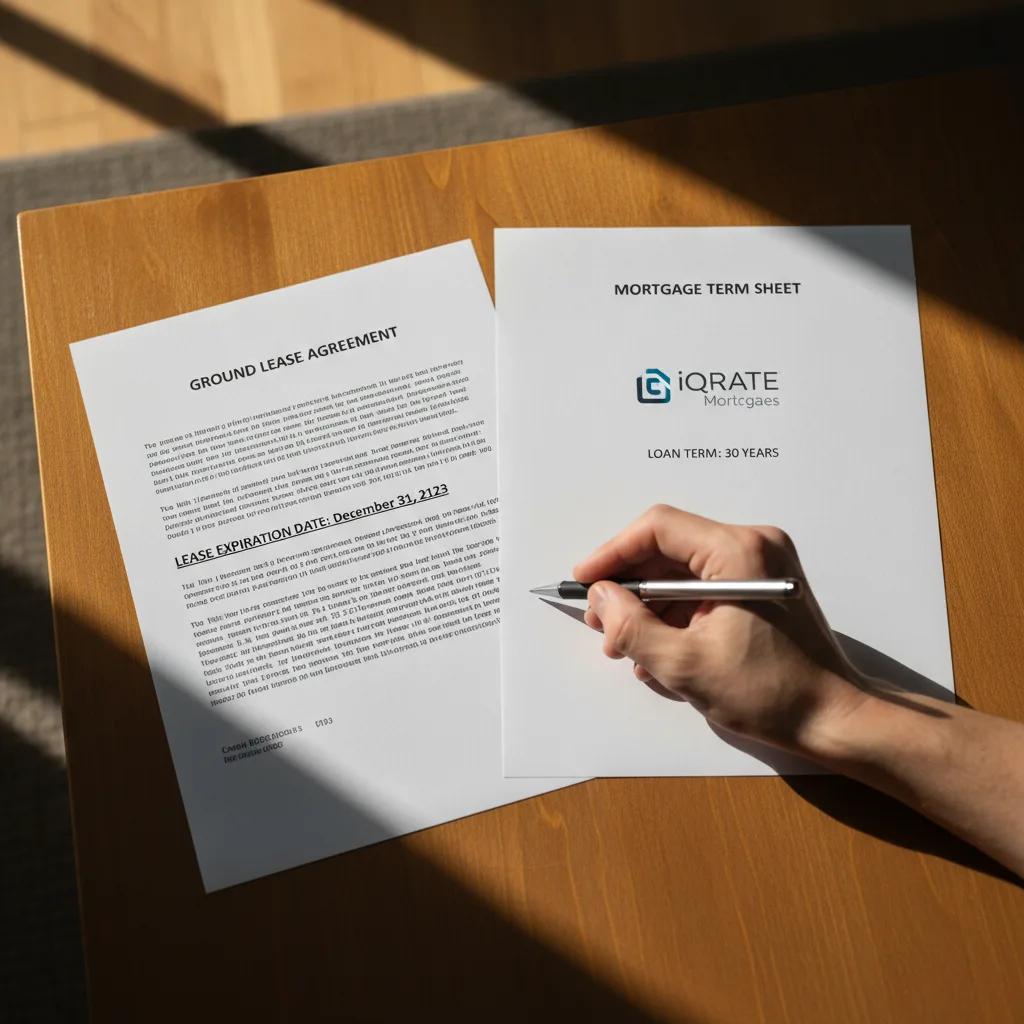
For conventional loans that conform to Fannie Mae and Freddie Mac guidelines, the standard rule is that the ground lease term must extend at least five years beyond the maturity date of the mortgage.
Let's break this down with an example:
- You want to get a 30-year fixed-rate mortgage to buy a condo in St. Petersburg in 2024.
- The mortgage will mature in 2054.
- To meet the lender's requirement, the ground lease on the property must not expire before 2059 (2054 + 5 years).
This means that at the time of your loan application, the ground lease must have at least 35 years remaining. If it only has 30 years left, you will not qualify for a 30-year mortgage from most lenders. You might be able to get a 15-year loan, but that comes with a much higher monthly payment. Lenders view that five-year buffer as a minimum period to allow for a potential foreclosure and resale process without the imminent threat of the lease expiring.
Do leasehold properties require a larger down payment?
Yes, in most cases, you should expect to make a larger down payment when purchasing a leasehold property. Lenders use the down payment, or the borrower's 'skin in the game', to mitigate their risk. Given the elevated risks associated with leaseholds, a higher down payment is a common requirement.
While a buyer might qualify for a 3% or 5% down payment on a conventional loan for a fee-simple property, a lender might require 10%, 20%, or even 25% down for a leasehold. (The data, information, or policy mentioned here may vary over time.) This serves two purposes for the lender:
- Reduces the Loan-to-Value (LTV) Ratio: A lower LTV means the lender has a smaller amount of capital at risk.
- Demonstrates Borrower Commitment: A substantial down payment suggests the borrower is financially stable and less likely to default on either the mortgage or the ground lease payments.
For example, on a $350,000 leasehold condo in Tampa, a lender might require 20% down ($70,000) instead of the 5% ($17,500) you might need for a comparable fee-simple unit.
How do ground lease fees impact my debt-to-income ratio?
Your debt-to-income (DTI) ratio is a cornerstone of mortgage underwriting. It measures your total monthly debt payments against your gross monthly income. The ground lease fee, whether paid monthly, quarterly, or annually (and broken down to a monthly figure), is treated as a fixed housing expense, just like property taxes or homeowners insurance.
This payment is added to your PITI (Principal, Interest, Taxes, and Insurance) to calculate your total housing expense. This combined figure is then used to determine both your front-end (housing) and back-end (total debt) DTI ratios.
Here’s a practical example:
- Gross Monthly Income: $8,000
- Proposed Mortgage (P+I): $2,100
- Property Taxes: $400/month
- Homeowners Insurance: $150/month
- Ground Lease Fee: $350/month
Your total proposed monthly housing payment isn't $2,650 (PITI). It's $3,000 (PITI + Ground Lease Fee). This pushes your front-end DTI from 33% ($2650 / $8000) to 37.5% ($3000 / $8000). For some lenders with strict DTI caps, this increase could be the difference between approval and denial.
Are FHA and conventional financing options available in St. Petersburg?
Yes, both FHA and conventional loans are theoretically available for leasehold properties in St. Petersburg and across Florida, but each comes with a stringent set of rules that can be difficult to meet.
Conventional Financing (Fannie Mae & Freddie Mac): As discussed, conventional loans are possible provided the lease term extends five years beyond the mortgage maturity. Additionally, the ground lease itself must be reviewed by the lender to ensure it doesn't contain unfavorable terms, such as clauses that allow for excessive and unpredictable rent increases or unreasonable restrictions on the use or transfer of the property. The lease must be legally sound and protect the interest of the mortgage holder.
FHA Financing: The Federal Housing Administration (FHA) also insures mortgages on leasehold properties, but its requirements are even more specific. For a condo project, the entire development must be FHA-approved. Key FHA requirements include:
- The lease term must be at least 99 years, or it must extend at least 10 years beyond the mortgage maturity date.
- The ground lease cannot be terminated for anything other than non-payment of the lease fees.
- The lease must give the homeowner the right to mortgage the property without the landowner's consent.
Finding a leasehold condo project in St. Petersburg that is on the FHA's approved list can be a significant challenge, making conventional financing the more common, albeit still difficult, route.

What specific questions should I ask about the ground lease terms?
Before you even make an offer on a leasehold property, you and your real estate agent must perform thorough due diligence on the ground lease. This is a legally binding contract that will govern your ownership for decades. Get a copy of the lease and ask these critical questions:
- 'How many years are left on the lease?' This is the first question to determine if financing is even possible.
- 'What are the monthly or annual ground lease fees?' This impacts your DTI and overall affordability.
- 'Are there any rent escalation clauses?' Many ground leases have clauses that allow the rent to increase periodically, sometimes tied to an inflation index or a market reassessment. You need to know when and by how much your costs could go up.
- 'What are the terms for renewing or purchasing the land at the end of the lease?' Is there an option to renew? Is there a right of first refusal to buy the land if the freeholder decides to sell?
- 'Are there any restrictions on subletting or making improvements to the property?' The lease may limit your ability to rent out your unit or make certain renovations.
- 'What happens if I default on the ground lease payments?' Understand the cure period and the legal process the landowner can take, which could lead to you losing your property.
Does this type of ownership affect the home's resale value?
Absolutely. The impact on resale value is one of the most significant long-term considerations. Leasehold properties face challenges with appreciation and marketability that do not affect fee-simple homes.
First, the buyer pool is inherently smaller. Many potential buyers are unwilling to take on the complexities and risks of a ground lease, and others simply won't be able to secure financing. This reduced demand puts downward pressure on the price.
Second, the property's value is directly and negatively correlated with the remaining lease term. A condo with 80 years left on its lease is far more valuable and easier to sell than the same condo when it has only 25 years left. Once the remaining term drops below the threshold needed for a 30-year mortgage (around 35 years), the property can effectively only be sold to cash buyers, drastically reducing its market value. Buyers in Tampa looking for strong, long-term appreciation may find that a leasehold property works against that financial goal.
Navigating leasehold financing requires expert guidance. If you're considering a property in Tampa or St. Petersburg with a ground lease, let our mortgage strategists help you analyze the lease terms and find a lender suited for these unique properties. To understand your options and take the next confident step in your homebuying journey, Apply now.
Author Bio
David Ghazaryan is the expert mortgage strategist and founder behind iQRATE Mortgages. With a mission to fund home loans that traditional banks won't touch, David specializes in helping clients with unique financial situations, including those recovering from foreclosure or bankruptcy. He expertly crafts smart, strategic, and stress-free mortgages by leveraging a vast network of over 100 lenders to secure competitive rates for investors and homebuyers alike. Praised for exceptional customer service, David has helped hundreds of families with a 97% satisfaction rate, guiding them to the mortgage they deserve.
References
Fannie Mae Selling Guide: Leasehold Estates









