


What is a foreign national loan for a property in Miami?
A foreign national loan is a specialized mortgage product designed for non-U.S. citizens who do not have a green card or permanent resident status. Unlike conventional loans that heavily rely on U.S. credit scores, income history, and tax returns, these loans use alternative documentation to verify a borrower's ability to repay the loan. They are a crucial financial tool for international investors, vacation home buyers, and individuals relocating for work who wish to purchase property in the United States.
In global hubs like Miami and Orlando, foreign national loans are particularly common. Lenders in these markets are experienced in handling international finances and understand the nuances of verifying assets and income from abroad. The primary purpose of this loan is to bridge the gap for creditworthy individuals who simply lack a traditional U.S. financial footprint. Instead of a Social Security Number, these loans often use an Individual Taxpayer Identification Number (ITIN) or sometimes just a valid passport. The focus shifts from domestic credit history to global financial stability, including verifiable income, substantial assets, and a significant down payment.
What types of visas are acceptable for mortgage qualification in Orlando?
Lenders need assurance that you have a legal basis to be in the country and conduct transactions, even if you don't plan to live in the property. The type of visa you hold can influence a lender's decision, as it signals the nature and potential duration of your stay in the U.S. While some lenders focusing strictly on investment properties may not even require a visa, most prefer to see one.
For a home purchase in Orlando or Tampa, lenders typically find the following visas acceptable:
- B-1/B-2 (Business/Tourism): This is one of the most common visas for foreign national buyers. It allows for temporary stays for business or pleasure, making it ideal for those purchasing vacation homes or investment properties they will visit periodically.
- H-1B (Specialty Occupation): This visa is for professionals working in the U.S. and indicates a stable source of U.S. or foreign income, which is highly favorable to lenders.
- L-1 (Intracompany Transferee): For employees of an international company being transferred to a U.S. office, this visa demonstrates employment stability and a strong financial background.
- E-2 (Treaty Investor): This visa is for individuals who have made a substantial investment in a U.S. business. It shows significant financial ties to the country, making these applicants very attractive to mortgage lenders.
- O-1 (Extraordinary Ability): Individuals with this visa have demonstrated extraordinary ability in their field, which often correlates with high and stable income.
It is crucial to provide a clear, unexpired copy of your visa along with your passport. Lenders view the visa as part of the overall risk assessment, and having an acceptable one strengthens your application significantly.
How do I prove my income if it is from another country?
Verifying foreign income is one of the most critical steps in the foreign national loan process. Since you likely don't have U.S. tax returns or W-2s, lenders require a specific set of documents to confirm your earnings. The goal is to create a clear, verifiable picture of your financial capacity.

Here is the standard documentation required to prove foreign-based income for a mortgage in Miami:
Accountant's Letter (CPA Letter): This is often the most important document, especially for self-employed borrowers. You will need a letter from a licensed accountant or chartered accountant in your home country. This letter should:
- Be written on the accountant’s official letterhead.
- Confirm your business ownership or self-employment for at least the last two years.
- State your income for the past two years and the current year-to-date income, converted to U.S. dollars.
- Include the accountant's license number and contact information for verification.
Employer Verification Letter: If you are employed by a company, you will need a letter from your employer. This letter should state your position, your salary, your start date, and the stability of your employment.
Bank Statements: You'll typically need to provide 3 to 12 months of personal and business bank statements to show consistent income deposits.
Foreign Tax Returns: While not always required if you have a strong accountant's letter, providing translated copies of your last two years of tax returns from your home country can bolster your application.
Example: A tech entrepreneur from Argentina wants to buy an investment property in Orlando. They would work with their accountant in Buenos Aires to draft a letter confirming their business has been profitable for three years and that their personal income for 2022 and 2023 was the equivalent of $180,000 USD and $210,000 USD, respectively. This, combined with bank statements showing consistent revenue, would satisfy the lender's income verification requirement.
Can I use a foreign credit report for a mortgage application in Miami?
While a U.S. credit score is the standard for domestic lending, it's understood that foreign nationals won't have one. Lenders specializing in these loans have alternative methods to assess your creditworthiness. You cannot directly use a foreign credit report in the same way a FICO score is used, but you can provide alternative forms of credit history.
Here’s how you can demonstrate a history of financial responsibility:
- International Credit Reports: Some lenders work with services that can access and interpret credit data from certain countries, like the UK or Canada. Ask your mortgage advisor if this is an option.
- Banker's Reference Letter: A letter from your primary banking institution in your home country is powerful. It should state how long you have been a client, the average balances you maintain, and confirm that your accounts have been managed in good standing.
- Credit Reference Letters: Letters from at least three international creditors can be effective. These could include:
- A mortgage company for a property in your home country.
- An auto loan provider.
- A major credit card company (e.g., American Express, Visa).
- Proof of Rental and Utility Payments: Providing 12 months of statements or receipts showing on-time payments for rent, electricity, or telephone services can also serve as proof of creditworthiness.
How are down payment funds verified if they are in an overseas bank?
Lenders must legally verify the source and availability of your down payment funds, a process often referred to as 'sourcing and seasoning'. This is a strict anti-money laundering requirement. For funds held in an overseas bank, the process requires clear documentation and a transparent paper trail.
Follow these steps for smooth verification:
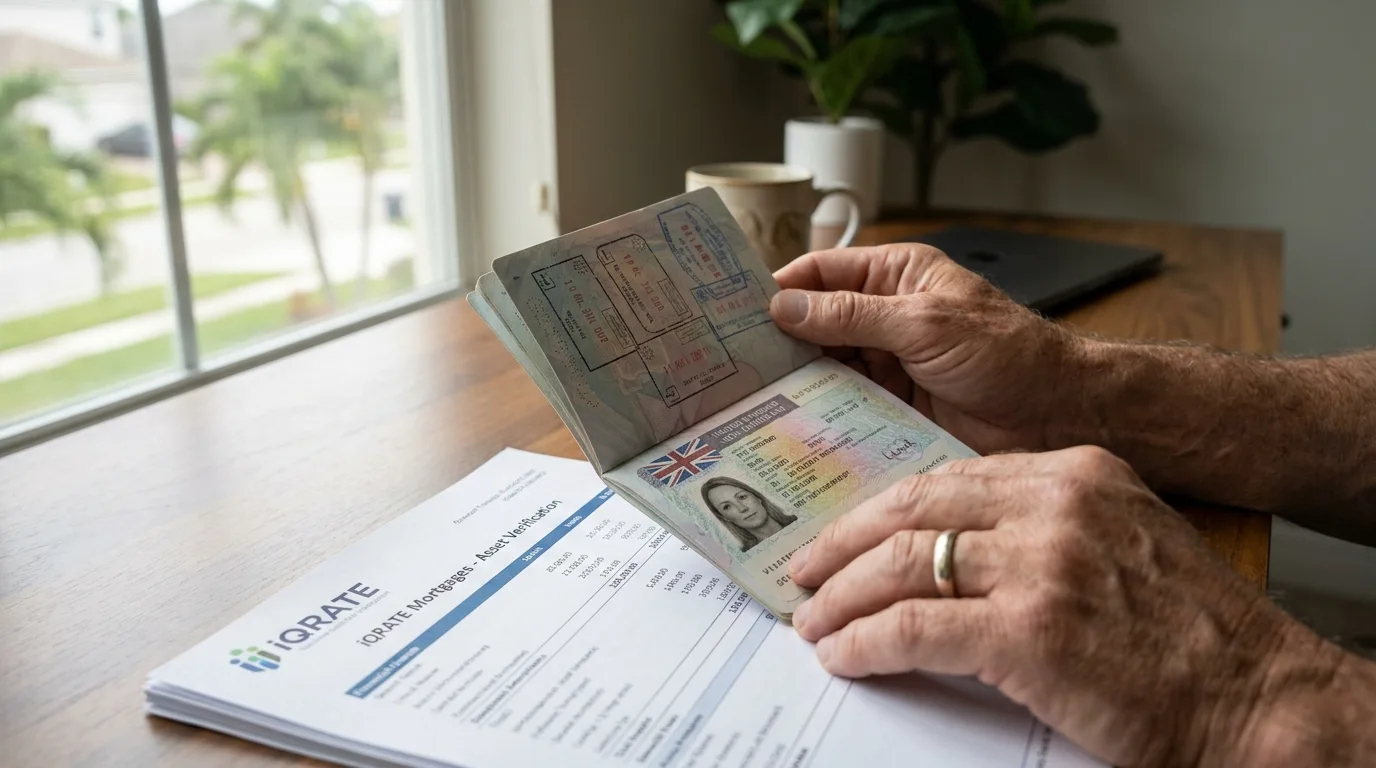
- Provide Bank Statements: You will need to submit at least two to three months of consecutive bank statements from the foreign institution where the funds are held. Every page of the statement must be included.
- Translate Documents: If the statements are not in English, they must be professionally translated. The translator may need to certify the accuracy of the translation.
- Source Large Deposits: Lenders will scrutinize any large, unusual deposits that are not part of your regular income. Be prepared to explain and document where this money came from—for example, the sale of another property, an inheritance, or a business transaction. You will need to provide the sales contract or other legal documents for this.
- Transfer Funds to a U.S. Bank: Before closing, you will need to open a U.S. bank account and transfer the down payment and closing cost funds into it. Provide the lender with the wire transfer receipt and the statement from the U.S. bank showing the funds have been received. This creates a clear, traceable path for the money.
What are the reserve requirements for a non-US buyer in Orlando?
Post-closing reserves are liquid assets a borrower must have left over after the down payment and all closing costs have been paid. For foreign national loans, reserve requirements are typically higher than for conventional mortgages because lenders see these borrowers as a slightly higher risk.
The standard reserve requirement for a foreign national buyer purchasing property in Orlando or Tampa is 12 months of PITI (Principal, Interest, Taxes, and Insurance). (The data, information, or policy mentioned here may vary over time.)
Example: Let's say you are buying a vacation home in the Orlando area. Your total monthly housing payment (PITI) is calculated to be $4,500. The lender will require you to show that you have at least $54,000 (12 x $4,500) in liquid assets remaining in your U.S. or foreign bank accounts after closing. These funds can be in checking/savings accounts, stocks, or mutual funds, and serve as a safety net to ensure you can continue making mortgage payments.
Do I need an Individual Taxpayer Identification Number to get a loan?
An Individual Taxpayer Identification Number (ITIN) is a tax processing number issued by the Internal Revenue Service (IRS) for individuals who are not eligible for a Social Security Number (SSN). While it's not always a strict requirement to obtain the loan, it is highly recommended and often a practical necessity.
Many lenders will require an ITIN to service the loan post-closing. Furthermore, you will almost certainly need an ITIN to open a U.S. bank account, which is essential for transferring funds and making mortgage payments. Having an ITIN also simplifies the process of paying U.S. property taxes and filing any required income tax returns if you rent out the property. Some lenders have programs that do not require an ITIN, but securing one in advance streamlines the entire transaction.
What additional legal documents should I prepare for closing?
Beyond the financial verification, you will need to provide several key legal and personal documents to the title company and lender before your closing date. Having these prepared in advance will prevent delays.
The essential checklist for a foreign national buyer includes:
- Valid Passport: A clear, unexpired copy of the identification page of your passport is mandatory.
- Secondary Photo ID: This could be a driver’s license from your home country or a national identity card.
- Copy of Your U.S. Visa: As discussed, this is required by most lenders.
- Signed Purchase Contract: A fully executed copy of the agreement to purchase the property.
- Proof of Homeowner's Insurance: You must have a homeowner's insurance policy (also known as hazard insurance) in place before the loan can be funded. You'll need to provide the 'declarations page' as proof.
- Corporate Documents (if applicable): If you are purchasing the property through a Limited Liability Company (LLC) or corporation, you must provide the formation documents, operating agreement, and a certificate of good standing. Navigating foreign national loan documents can be complex. If you are planning a purchase in Miami or Orlando, connect with a mortgage strategist to get a personalized checklist and ensure you're prepared for a smooth and successful closing.
Navigating the U.S. mortgage market can seem complex from abroad, but with the right guidance, it's entirely achievable. If you're ready to take the next step toward owning your property in Florida, Apply now to connect with a specialist who can guide you through our streamlined process.
Author Bio
David Ghazaryan is the expert mortgage strategist and founder behind iQRATE Mortgages. With a mission to fund home loans that traditional banks won't touch, David specializes in helping clients with unique financial situations, including those recovering from foreclosure or bankruptcy. He expertly crafts smart, strategic, and stress-free mortgages by leveraging a vast network of over 100 lenders to secure competitive rates for investors and homebuyers alike. Praised for exceptional customer service, David has helped hundreds of families with a 97% satisfaction rate, guiding them to the mortgage they deserve.
References
Individual Taxpayer Identification Number | IRS
Buying a Home | HUD.gov / U.S. Department of Housing and Urban Development (HUD)
What is a mortgage rate lock? | Consumer Financial Protection Bureau









