


What are ITIN loans versus foreign national loan programs?
When you're an international investor eyeing a property in Miami, understanding your financing options is the first step. You'll primarily encounter two paths: ITIN loans and foreign national loans. While they both cater to non-US citizens, they serve very different borrowers.
ITIN Loans
An ITIN, or 'Individual Taxpayer Identification Number', is a tax-processing number issued by the Internal Revenue Service (IRS). It's for individuals who are required to have a U.S. taxpayer identification number but who do not have, and are not eligible to obtain, a Social Security Number (SSN).
- Who it's for: This loan is typically for foreign nationals who reside in the U.S. for part of the year and have a history of filing U.S. taxes. This could include certain professionals, students, or individuals with business ties in the country.
- Key Requirement: You must have an ITIN and a history of filing U.S. tax returns. Lenders use these tax returns to verify your income, similar to how they would for a U.S. citizen.
- Credit: While a traditional U.S. credit score is helpful, some ITIN lenders can use alternative credit verification methods, like rent and utility payment history.
Foreign National Loan Programs
This is the most direct and common route for international investors who do not live or work in the United States. These loans are specifically designed for non-residents purchasing investment properties or second homes.
- Who it's for: A citizen of another country who lives abroad and wants to buy a property in a city like Orlando for investment purposes. The borrower has no U.S. income, no SSN, and no U.S. credit history.
- Key Requirement: The focus is on verifying foreign income, assets, and identity. Lenders offering these programs have established protocols for handling international documentation.
- Flexibility: These programs do not require U.S. tax returns or an ITIN. They are built around the reality of an investor's financial life existing entirely outside the U.S. system.
The Bottom Line: If you live and earn abroad and want to invest in Florida real estate, the foreign national loan is your intended path. An ITIN loan is for those with an established U.S. tax history, which most first-time foreign investors will not have.
How can I prove my income if it comes from another country?
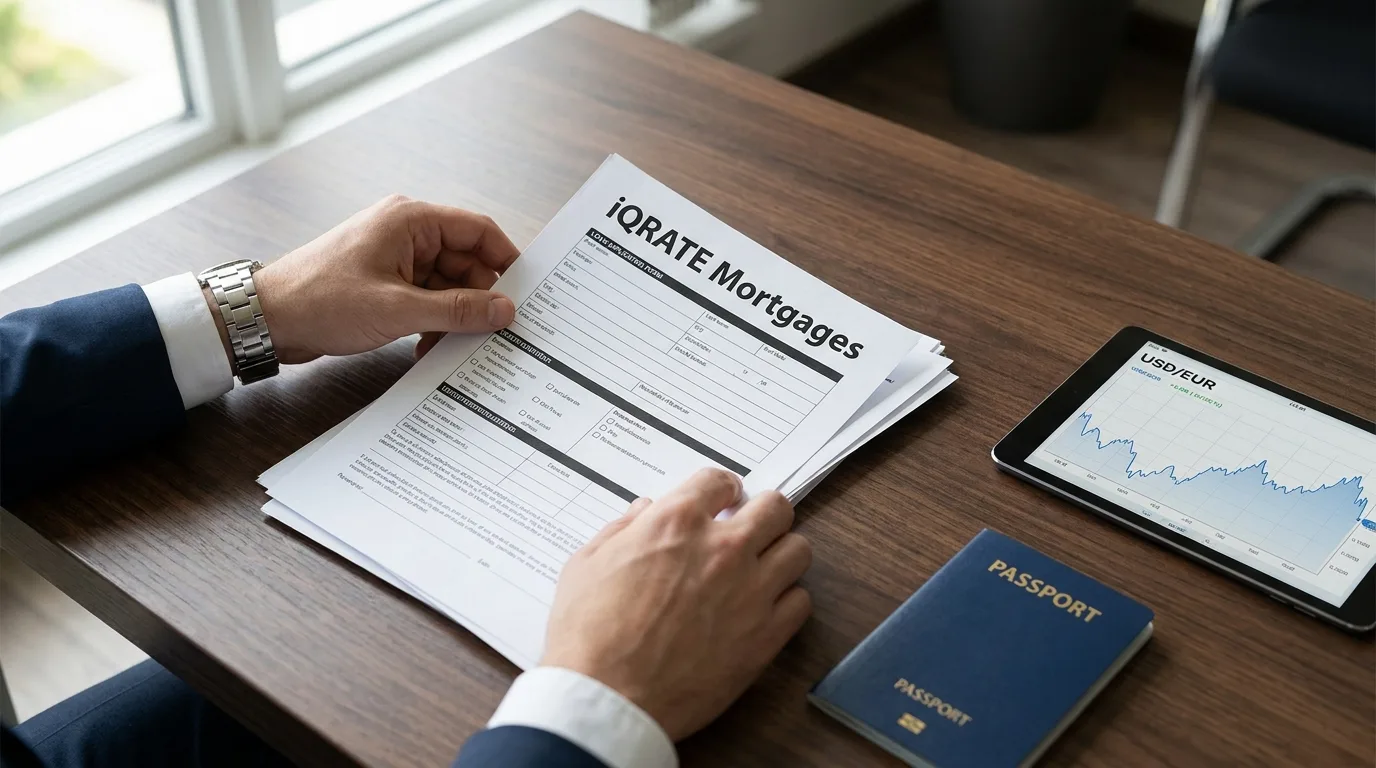
Lenders need absolute certainty about your ability to repay the loan, regardless of where your income originates. Proving income from another country requires clear, verifiable documentation. While specific requirements vary by lender, you should be prepared to provide a comprehensive financial picture.
Standard Documentation Required
- Employment Verification Letter: A letter from your employer on company letterhead stating your position, salary, length of employment, and bonus structure. If you are self-employed, you'll need a letter from your accountant or a certified financial professional.
- Accountant's Letter (CPA Letter): For self-employed individuals, a letter from a certified accountant is crucial. This letter should verify your business's existence, its profitability, and your personal income drawn from it for the last two to three years.
- Foreign Tax Returns: Translated copies of your official tax returns from your home country for the past two years.
- Bank Statements: At least three to six months of personal and business bank statements showing consistent income deposits. These statements help establish a pattern of stable earnings.
Critical Considerations
- Translation: All documents not in English must be translated by a certified, independent third-party service. The lender cannot accept translations done by you or a family member.
- Currency Conversion: Lenders will use a professional service to convert your foreign income into U.S. dollars, typically using an average exchange rate over a specified period to account for currency fluctuations.
- Consistency: The key is consistency. The income reported in your tax returns, verified by your accountant, and shown in your bank statements must all align to create a trustworthy financial profile.
What types of foreign assets are acceptable for a down payment?
Lenders need to see that you have sufficient liquid funds for the down payment, closing costs, and reserves. These funds, known as 'assets', can come from various international sources. The main rule is that they must be legitimate, verifiable, and accessible.
Acceptable Foreign Asset Sources
- Bank Accounts: Funds held in checking or savings accounts in reputable foreign financial institutions.
- Investment Accounts: Stocks, bonds, and mutual funds held with an established international brokerage firm. Lenders will typically only consider a percentage of these assets (e.g., 70%) to account for market volatility. (The data, information, or policy mentioned here may vary over time.)
- Retirement Funds: In some cases, vested funds from foreign retirement accounts may be acceptable, but rules around accessing this money can be complex.
The 'Sourcing and Seasoning' Rule
Lenders will require that your funds be 'sourced' and 'seasoned'.
- Sourcing: You must be able to prove where the money came from. It cannot be an undocumented cash deposit. It should be from income, the sale of an asset, or a properly documented gift.
- Seasoning: The funds must have been in your account for a minimum period, typically 60 to 90 days. (The data, information, or policy mentioned here may vary over time.) This proves to the lender that the money is yours and not a last-minute loan from an unverified source.
For example, if you plan to buy a vacation rental in Orlando, you will need to provide bank statements from your German bank account showing the down payment funds have been in the account since at least July if you plan to close in September. Before closing, these funds must be wired to a U.S. bank account.
Do I need to have a United States bank account to get a loan?
Yes, you will absolutely need to establish a U.S. bank account to secure a mortgage. While you can begin the pre-approval process without one, it becomes a necessity before the loan can be finalized.
Why a U.S. Bank Account is Non-Negotiable
- Fund Transfers: This is the most critical reason. You will need to wire your down payment and closing cost funds from your foreign account to your new U.S. account. The title company handling the closing will only accept funds from a U.S.-based bank.
- Mortgage Payments: Lenders require a U.S. account for automated monthly mortgage payments (ACH debits). This ensures timely payments and avoids the complexities and delays of international wire transfers each month.
- Demonstrating Commitment: Having a U.S. bank account shows the lender that you are serious and organized. It's a sign of good faith and simplifies the entire transaction for all parties involved.
It is highly recommended to open an account with a major international bank that has a presence in both your home country and the U.S. to make the transfer process smoother.
How do lenders verify my identity and credit history from abroad?
Without a Social Security Number or a U.S. credit file, lenders use alternative methods to verify who you are and your history of managing debt.
Identity Verification
- Valid Passport: A clear, unexpired passport from your country of citizenship is the primary form of identification.
- Secondary ID: Lenders will often require a second form of government-issued photo ID, such as a national identity card or a driver's license from your home country.
- U.S. Visa: A copy of your U.S. visa (if applicable, such as a B-1/B-2 tourist visa) is also required to prove you can legally enter the country to sign closing documents.
Credit History Verification
- International Credit Reports: Some lenders partner with services that can pull credit information from certain countries. This is becoming more common but isn't available for all nations.
- Bank Reference Letters: A formal letter from your primary bank in your home country. This letter should state how long you have been a customer, the types of accounts you hold, and that your accounts are in good standing.
- Credit Reference Letters: Letters from other creditors, such as a mortgage lender in your home country, an auto loan provider, or major credit card companies. These should confirm your payment history and outstanding balances.
The goal is to build a portrait of financial responsibility, proving that you have a reliable history of meeting your obligations, even if that history exists outside the U.S. FICO/credit score system.
What are the typical down payment requirements for non-US investors?
Be prepared for a significantly larger down payment than what is typical for U.S. residents. Lenders view foreign national loans as higher risk due to the complexities of international law and the difficulty of recourse if a borrower defaults. A larger down payment reduces the lender's risk.
- Standard Range: Expect down payment requirements to start at 25% and go as high as 40%. (The data, information, or policy mentioned here may vary over time.) The exact amount depends on the lender, the property type, and your overall financial profile.
- Example Calculation: For a $600,000 investment condominium in Miami, a 30% down payment would be $180,000, plus closing costs and required cash reserves.
- Property Type Matters: Financing for a single-family home may require a lower down payment (e.g., 25-30%) compared to a condominium unit, especially in a building with a high concentration of renters, which could require 35-40% down.

These higher down payments demonstrate your financial strength and commitment to the investment, making lenders more comfortable extending credit across borders.
Should I purchase the Miami property in my name or an LLC?
Purchasing a property in your personal name versus through a Limited Liability Company (LLC) has significant legal and financial implications. The right choice depends on your goals for liability protection and estate planning.
Purchasing in Your Personal Name
- Pros: The mortgage process is generally simpler and more straightforward. Lenders are more familiar with lending to individuals, and interest rates may be slightly lower.
- Cons: You have direct, unlimited personal liability. If a tenant is injured on the property and sues, your other personal assets (both in the U.S. and abroad) could be at risk.
Purchasing in a U.S.-Based LLC
- Pros: This is the primary benefit. An LLC creates a legal barrier between the property's debts and liabilities and your personal assets. It also provides anonymity and can simplify estate planning and transferring ownership in the future.
- Cons: Getting a mortgage for an LLC can be more complex, as the loan is technically a commercial one. Interest rates and fees might be slightly higher, and not all lenders offer loans to foreign-owned LLCs. (The data, information, or policy mentioned here may vary over time.)
Recommendation: For any serious investor, the liability protection offered by an LLC is invaluable. It's strongly recommended that you consult with a U.S.-based real estate attorney and a tax advisor who specializes in foreign investment to structure the purchase correctly.
What is FIRPTA and how does it affect my Orlando investment?
FIRPTA, the 'Foreign Investment in Real Property Tax Act of 1980', is a critical U.S. tax law that every foreign investor must understand. It directly impacts you when you decide to sell your property.
How FIRPTA Works
FIRPTA is not an extra tax. It is a withholding mechanism to ensure the U.S. government can collect capital gains tax from foreign sellers. Here’s the process:
- The Withholding Rule: When a foreign person sells U.S. real estate, the buyer is legally required to withhold 15% of the gross sales price.
- Remittance to the IRS: The buyer or their closing agent sends this withheld amount directly to the IRS within 20 days of the closing.
- Example: If you sell your Orlando investment property for $400,000, the buyer must withhold $60,000 (15% of $400,000) and send it to the IRS. You would receive the remaining $340,000 (less closing costs and any outstanding mortgage balance).
Reclaiming Your Funds
This withheld amount is essentially a pre-payment of the taxes you owe on the profit (capital gain) from the sale. To settle the final amount and potentially receive a refund, you must:
- Obtain a U.S. Individual Taxpayer Identification Number (ITIN) if you don't already have one.
- File a U.S. non-resident income tax return (Form 1040-NR) for the year of the sale.
- On this return, you will calculate the actual capital gains tax owed. If the tax is less than the $60,000 that was withheld, the IRS will issue you a refund for the difference.
Planning for the 15% FIRPTA withholding is a crucial part of your exit strategy as a foreign investor in Florida. Navigating a foreign national mortgage requires specialized knowledge. If you're planning to invest in Florida's real estate market, partnering with a mortgage expert who understands international financing can streamline the process and prevent costly mistakes.
Ready to explore your Florida real estate investment? Understanding your unique financial situation is the first step. Apply now to get a clear picture of your mortgage options.
Author Bio
David Ghazaryan is the expert mortgage strategist and founder behind iQRATE Mortgages. With a mission to fund home loans that traditional banks won't touch, David specializes in helping clients with unique financial situations, including those recovering from foreclosure or bankruptcy. He expertly crafts smart, strategic, and stress-free mortgages by leveraging a vast network of over 100 lenders to secure competitive rates for investors and homebuyers alike. Praised for exceptional customer service, David has helped hundreds of families with a 97% satisfaction rate, guiding them to the mortgage they deserve.
References









