


Translating Foreign Financial Documents in Houston
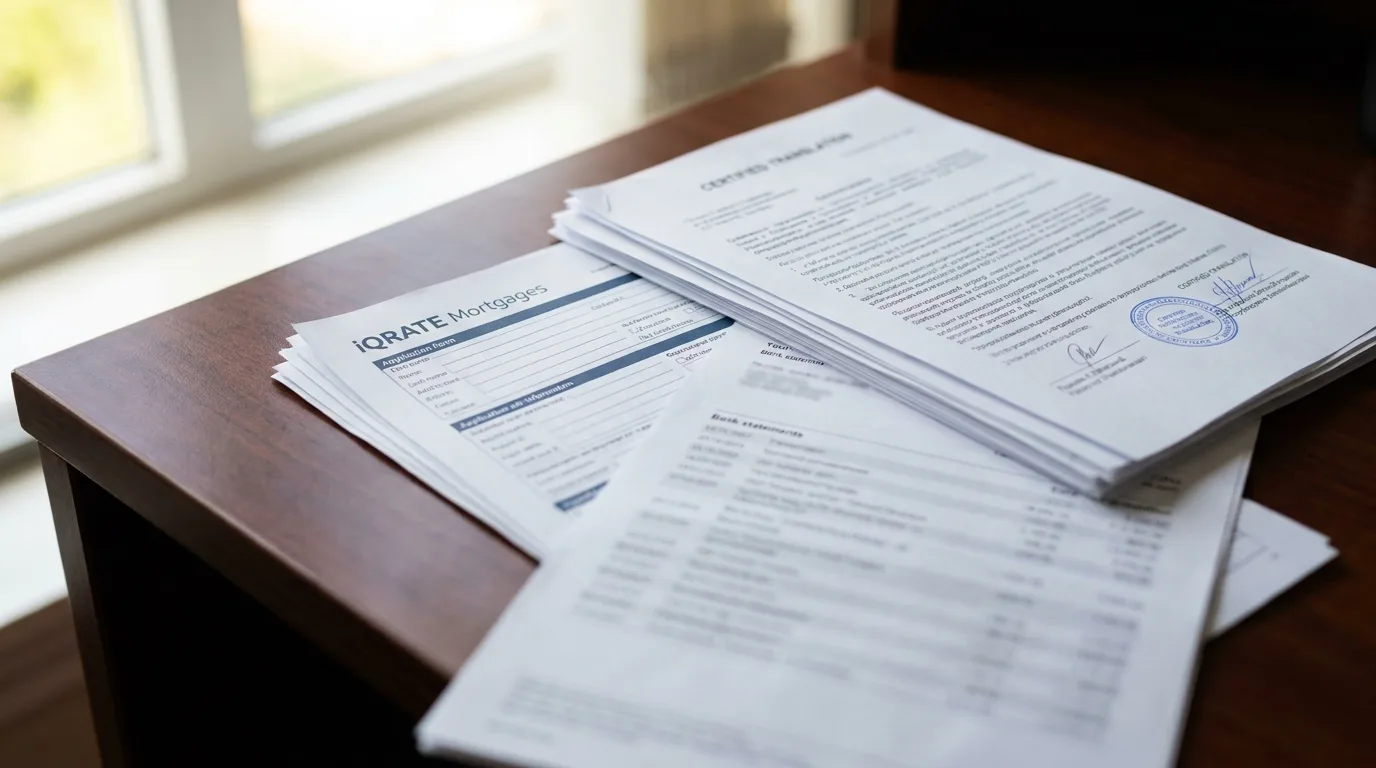
When applying for a jumbo loan in Houston using income or assets from another country, every single document must be presented in English. Lenders will not accept documents in their original language. Furthermore, you cannot simply translate them yourself. Lenders require a certified translation.
This means you must hire a professional, independent translation service. The translator will provide a signed statement, or a 'Certificate of Accuracy', attesting that the translation is a complete and accurate representation of the original document. This applies to:
- Tax Returns: Your home country's equivalent of a U.S. tax return.
- Bank Statements: Statements for any accounts holding funds for the down payment or reserves.
- Employment Contracts: Your agreement with your foreign employer.
- Business Financials: Profit and loss statements or balance sheets if you are self-employed.
Failure to provide certified translations is not a minor issue; it will bring your application to a complete halt. Underwriters cannot and will not attempt to interpret foreign-language documents.
Sourcing a Down Payment with Foreign Bank Statements
Lenders are legally required to verify the source of your down payment to comply with anti-money laundering regulations. For a jumbo loan, which exceeds the conforming loan limit, this scrutiny is even more intense. Typically, you will need to provide two to four months of consecutive, translated bank statements for the account holding the funds. (The data, information, or policy mentioned here may vary over time.)
Let's consider an example. You're buying a $1.2 million home in a competitive Dallas neighborhood and plan to make a 25% down payment ($300,000).
- You must provide statements showing the $300,000 has been in your account for the required period, a process called seasoning. This proves the funds are yours and not a last-minute, un-documentable loan from someone else.
- If a large deposit suddenly appears that isn't from your regular income, you must provide a paper trail explaining its origin. For instance, if you sold stocks to get the funds, you'll need to provide the corresponding brokerage statements.
Lenders need to see a clear, logical path for every dollar being used in the transaction. Unexplained large deposits are one of the most common red flags in underwriting.

The Role of a Certified Public Accountant (CPA) Letter
A Certified Public Accountant (CPA) letter is a crucial document for self-employed borrowers or business owners earning foreign income. Foreign tax systems and business documentation standards can be vastly different from those in the United States. A standard profit and loss statement from your home country might not be sufficient for a U.S. underwriter to accurately assess your income stability.
The CPA letter bridges this gap. A licensed CPA (often one familiar with international accounting) reviews your foreign business's financial records and writes a letter that:
- Confirms your ownership percentage and the date the business was established.
- States the business is currently active and operational.
- Summarizes the business's income for the past two or more years, converted to U.S. dollars.
- Provides a professional opinion on the stability and ongoing viability of the income.
This letter adds a layer of third-party verification that gives the lender confidence in your foreign income stream, making it a powerful tool for your loan application.
Establishing a United States Bank Account
While you can start the mortgage application process using only your foreign bank accounts for verification, you will almost certainly need to establish a U.S. bank account before your loan can close. Lenders require this for several practical reasons:
- Closing Funds Transfer: You will need to wire your down payment and closing costs to the title company or closing attorney from a U.S. account. Transferring large sums internationally directly to a title company can cause delays and complications.
- Mortgage Payments: Your monthly mortgage payments will need to be debited from a U.S. bank account.
- Reserve Requirements: Lenders for jumbo loans often require you to have post-closing reserves—typically 6 to 12 months' worth of mortgage payments—held in a U.S. account as a financial cushion. (The data, information, or policy mentioned here may vary over time.)
It is wise to open an account with a major U.S. bank as soon as you begin your property search in Dallas or Houston to avoid last-minute hurdles before closing.
Verifying Employment with a Foreign Company
If you are employed by a company based outside the United States, the lender must verify your employment just as they would for a domestic applicant. The primary tool for this is a Verification of Employment (VOE) letter.
This isn't just an informal note. The VOE must be:
- Written on official company letterhead.
- Translated into English by a certified translator.
- State your position, start date, and current salary or compensation structure in both the local currency and its U.S. dollar equivalent.
- Include a statement about your likelihood of continued employment.
- Provide contact information for the person who can verify the information (often in Human Resources).
Underwriters may also perform their own due diligence by searching for the company online to confirm it is a legitimate, established enterprise. The more stable and well-known your foreign employer is, the more smoothly this part of the process will go.
Restrictions on Sourcing Assets From Certain Countries
Lenders must comply with federal regulations, including those enforced by the U.S. Department of the Treasury's Office of Foreign Assets Control (OFAC). OFAC maintains a list of countries, entities, and individuals subject to economic and trade sanctions.
This means that assets and income originating from countries on this sanctions list cannot be used to qualify for a U.S. mortgage. It is an absolute restriction. If your down payment funds or income are sourced from a sanctioned nation, the lender will be unable to proceed with your loan.
It is crucial to discuss the origin of your funds with your mortgage advisor at the very beginning of the process. This ensures you do not waste time and money on an application that cannot be approved due to federal regulations.
Understanding the Foreign Investment in Real Property Tax Act (FIRPTA)
The Foreign Investment in Real Property Tax Act of 1980, or FIRPTA, does not directly affect your ability to secure a jumbo loan. However, it is a critical financial consideration for any foreign national purchasing U.S. real estate.
FIRPTA is a tax law that imposes a withholding tax on the sale of property by a foreign person. When you eventually sell your Houston property, the buyer is generally required to withhold 15% of the gross sales price and send it to the Internal Revenue Service (IRS). This is not a final tax but rather a prepayment to ensure any capital gains tax owed is collected.
- Example: If you, as a foreign person, sell your home for $1.5 million, the buyer would be required to withhold $225,000 (15%) for the IRS.
You may be able to have the withholding reduced or eliminated if you can prove that the final tax liability will be less than the amount withheld, but this requires filing specific forms with the IRS. Understanding your future obligations under FIRPTA is a key part of making a sound real estate investment in the United States. Securing a jumbo loan with foreign income documents is a complex process with no room for error. To ensure your application is structured for success, partner with a mortgage expert who specializes in loans for non-U.S. citizens.
Ready to partner with an expert who can simplify your jumbo loan application? Apply now to get personalized guidance.
Author Bio
David Ghazaryan is the expert mortgage strategist and founder behind iQRATE Mortgages. With a mission to fund home loans that traditional banks won't touch, David specializes in helping clients with unique financial situations, including those recovering from foreclosure or bankruptcy. He expertly crafts smart, strategic, and stress-free mortgages by leveraging a vast network of over 100 lenders to secure competitive rates for investors and homebuyers alike. Praised for exceptional customer service, David has helped hundreds of families with a 97% satisfaction rate, guiding them to the mortgage they deserve.
References









