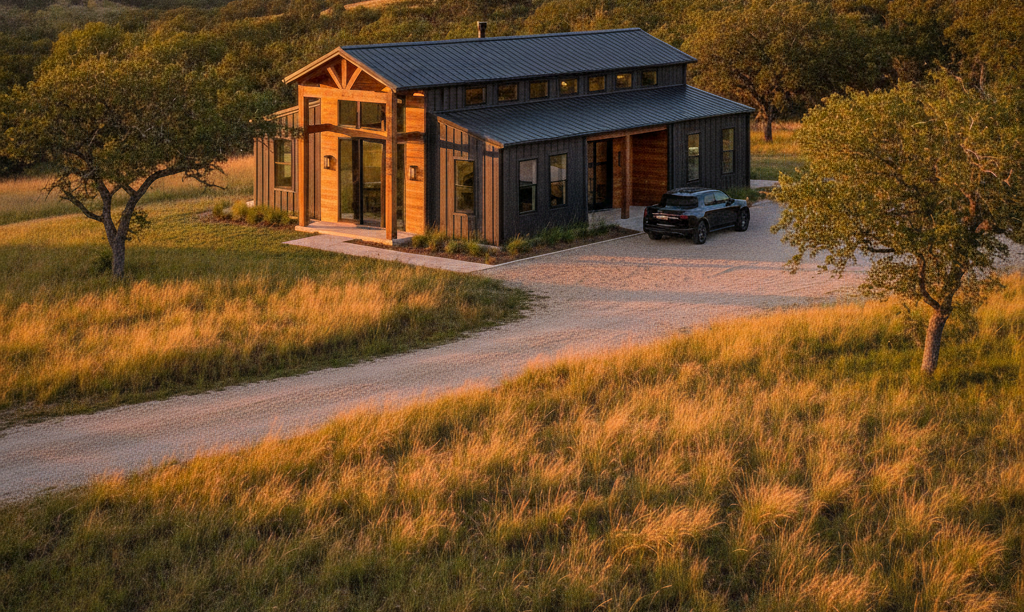

Why Jumbo Lenders Hesitate with Austin Barndominiums
Financing a luxury barndominium with a jumbo loan—a mortgage that exceeds the conforming loan limits set by the Federal Housing Finance Agency (FHFA)—presents a unique set of hurdles. While the Austin and Round Rock areas are hotbeds for custom and unique homes, many jumbo lenders view barndominiums with caution. Their hesitation isn't about the quality or appeal of your property; it's about risk management from their perspective.
The primary challenge is the lack of comparable sales, or 'comps'. Underwriters rely on recent sales of similar properties in the same area to justify a loan amount. A $1.5 million luxury barndominium on five acres in the Texas Hill Country has few direct comparisons. Lenders worry that if you default on the loan, they will have a difficult time selling a niche property to recoup their investment. This perceived lack of marketability, combined with the non-traditional steel-frame construction, can make a lender's risk committee nervous.
Furthermore, underwriters must ensure the property's primary use is residential. If a significant portion of the structure is dedicated to a workshop, large-scale garage, or agricultural use, it may be classified as a mixed-use or commercial property, which falls under different, more stringent lending guidelines than a residential jumbo loan.
Lender Concerns Summarized
- Valuation Difficulty: Without solid comps, proving the property's market value is challenging.
- Resale Marketability: Lenders question how large the pool of potential buyers is for a high-end, non-traditional home.
- Property Classification: The line between a residential home with a large garage and a mixed-use property can be blurry, impacting loan eligibility.
The Unique Nature of a Barndominium Appraisal
A barndominium appraisal is far more detailed than one for a standard home in a subdivision. The appraiser cannot simply pull comps of three-bedroom homes sold last month. Instead, they must build a case for the property's value from the ground up, focusing on specific elements that contribute to its worth.
First, the appraiser will analyze the quality of construction. They will scrutinize the building materials, insulation (is it spray foam?), the grade of windows and doors, and the quality of interior finishes. A luxury barndominium in Fredericksburg with high-end appliances, stone countertops, and custom cabinetry will be valued much differently than a basic metal shell. They must demonstrate that the interior is indistinguishable from a high-end custom-built home.

Second is functional utility. The layout must make sense as a primary residence. This means clear distinctions between living areas and non-living areas like a workshop or oversized garage. A floor plan with bedrooms flowing logically from living spaces is critical. An appraiser might detract value if you have to walk through a garage to get from the kitchen to a bedroom.
Finally, the appraiser must justify the value of the land and any additional structures. The location, acreage, views, and amenities like a pool or outdoor kitchen heavily influence the final valuation, sometimes even more than the structure itself.
Finding Accurate Comparable Sales for Your Lender
Since direct barndominium-to-barndominium comps are rare, you and your real estate team must think creatively. The goal is to provide the appraiser and lender with data that supports your property's value, even if the properties aren't identical in structure.
- Broaden the Search: Look for sales of other custom homes on similar-sized lots in your area. A traditional-construction luxury home on five acres with a large detached workshop can be a valid comp for a barndominium on five acres. The key is to match features, square footage, and land size.
- Document Everything: Provide the appraiser with a detailed list of all custom features, high-end finishes, and construction upgrades. Include the costs if possible. This helps them justify value adjustments when comparing your property to others.
- Use a Knowledgeable Realtor: Partner with a real estate agent who has experience with rural or unique properties in the Austin area. They often have access to private sales data or know of properties that might not appear in a standard MLS search but could serve as strong comps.
Key Features for Jumbo Loan Eligibility
To make your barndominium more attractive to jumbo lenders, it needs to look and feel like a permanent, high-quality residence. Lenders have specific criteria that help classify the property as a 'home' rather than a 'structure'.
- Permanent Foundation: The structure must be on a permanent concrete slab foundation. A building on temporary footings will not qualify.
- Residential Interior: The inside living space must be finished to a standard comparable to other custom homes in the area. This includes drywall, conventional flooring, and modern kitchens and bathrooms.
- Standard Utilities: The property must be connected to standard utilities, including a permitted septic system (or public sewer) and a reliable water source (well or public water).
- Clear Living Space: At least 50% of the total square footage should typically be dedicated to finished, heated, and cooled living area. (The data, information, or policy mentioned here may vary over time.)
- Aesthetic Appeal: The exterior should have residential characteristics, such as porches, residential-style windows, and landscaping. This helps with the 'marketability' concern.

Construction-to-Permanent Loans for Barndominiums
If you are building a barndominium from scratch, a construction-to-permanent loan is often the most efficient financing solution. This is a single loan that covers the cost of construction and then converts into a permanent mortgage once the home is complete. This means you only go through one application and one closing process, saving you time and money.
To qualify for a jumbo construction loan for a barndominium in places like Round Rock, lenders will require an extremely detailed submission package:
- Architectural Plans: Complete, stamped blueprints and architectural drawings.
- Reputable Builder: A licensed and insured builder with a proven track record of completing similar projects.
- Fixed-Price Contract: A detailed contract with your builder that outlines all costs, materials, and a construction timeline. Lenders are wary of open-ended budgets.
- Appraisal Based on Plans: An appraiser will use your plans and specifications to determine the 'as-completed' value of the home, which will be used to calculate your loan amount.
Down Payment Requirements for a Luxury Barndominium
Be prepared for a significant down payment. Because of the perceived risk associated with unique properties, jumbo lenders require more 'skin in the game' from the borrower. While a standard jumbo loan might be available with 10-15% down, financing a luxury barndominium often requires more.
Expect a minimum down payment requirement of 20% to 30% of the appraised value or total project cost. (The data, information, or policy mentioned here may vary over time.) For a $1.2 million barndominium project, this means having between $240,000 and $360,000 in cash for the down payment, plus closing costs and cash reserves. This substantial equity position provides the lender with a protective buffer, making them more comfortable with the loan.
These funds must be sourced and seasoned, meaning the lender will want to see the money in your accounts for at least 60 days prior to the application.
Finding Specialized Lenders in the Austin Area
Major national banks are often the least likely to approve a jumbo loan for a barndominium. Their lending guidelines are typically rigid and designed for standard properties. Your best bet is to work with lenders who have experience with unique, non-conforming properties.
- Mortgage Brokers: An experienced mortgage broker who specializes in jumbo and custom home financing is your greatest asset. They have relationships with a wide variety of lenders, including portfolio lenders and credit unions that are more flexible.
- Portfolio Lenders: These are often smaller community banks or private lenders that hold their loans in-house rather than selling them on the secondary market. This gives them the autonomy to make common-sense underwriting decisions on unique properties that don't fit the standard mold.
- Local Credit Unions: Some regional credit unions, particularly those in areas with a lot of rural or custom properties, have programs specifically for non-traditional homes.
When interviewing potential lenders, ask them directly about their experience financing barndominiums or other steel-frame custom homes. Ask to speak with a loan officer who has successfully closed at least a few of these types of loans. Their expertise will be invaluable in navigating the process from application to closing.
Securing the right financing is a critical step in building your dream barndominium. If you're ready to navigate the jumbo loan process with an expert guide, take the next step. Apply now to connect with a mortgage strategist who can review your project and find the optimal financing for your Texas home.
Author Bio
David Ghazaryan is the expert mortgage strategist and founder behind iQRATE Mortgages. With a mission to fund home loans that traditional banks won't touch, David specializes in helping clients with unique financial situations, including those recovering from foreclosure or bankruptcy. He expertly crafts smart, strategic, and stress-free mortgages by leveraging a vast network of over 100 lenders to secure competitive rates for investors and homebuyers alike. Praised for exceptional customer service, David has helped hundreds of families with a 97% satisfaction rate, guiding them to the mortgage they deserve.