


First Steps After Receiving PCS Orders Mid-Purchase
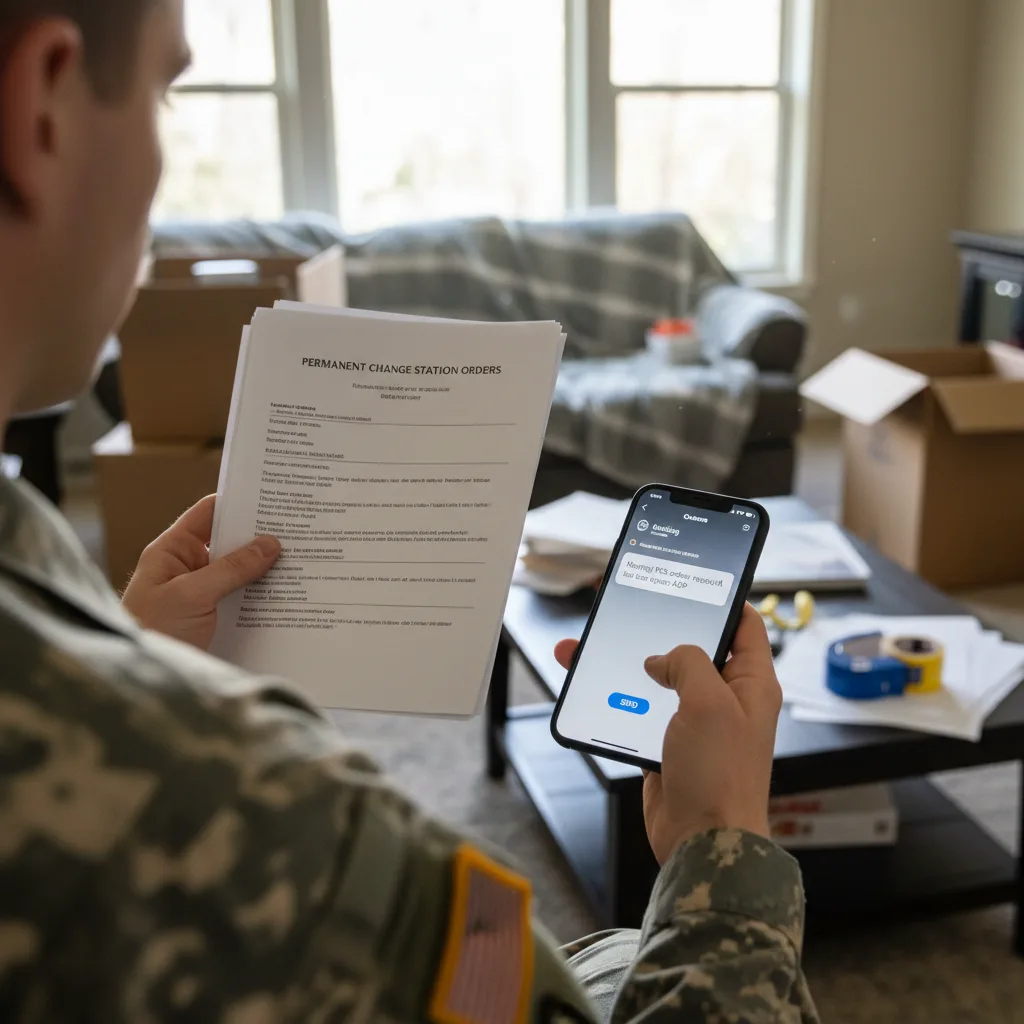
Receiving a Permanent Change of Station (PCS) order while under contract for a home in a military-heavy area like San Antonio or Killeen, Texas, can feel like a major setback. The key is to act swiftly and strategically. Your first priority is communication.
- Notify Your Lender Immediately: Your mortgage lender is a primary partner. Inform them of your new orders, your new duty station, and your report-no-later-than-date (RNLTD). They need to re-verify that your income and employment will remain stable, which is standard for active-duty servicemembers.
- Contact Your Real Estate Agent: Your agent is your advocate with the seller. They need to understand the situation to manage negotiations and contractual obligations, especially regarding the military clause.
- Review Your Purchase Contract: Locate the military clause or contingency. This clause is specifically designed for situations like this and outlines your rights and the steps needed to potentially terminate the contract without losing your earnest money.
Can a Lender Cancel My VA Loan Because of New Orders?
No, a lender cannot automatically cancel your approved Veteran Affairs (VA) loan solely because you received PCS orders. The VA loan program is designed for active-duty military and veterans, and lenders are familiar with the nature of military service. Their primary concern is confirming that the change in duty station does not negatively impact your ability to repay the loan.
The underwriter will need to verify two main things:
- Continued, Stable Income: They will need your new orders to confirm your employment with the military is ongoing. Your Leave and Earnings Statement (LES) will continue to serve as proof of income.
- Occupancy Requirement: The VA loan program requires you to occupy the home as your primary residence. If your PCS orders move you out of state, this can create a complication. However, there are exceptions. A spouse can often satisfy the occupancy requirement on behalf of the active-duty servicemember. If you are single, you may need to prove you can occupy the home within a 'reasonable time', typically 60 days after closing. (The data, information, or policy mentioned here may vary over time.) Your new orders may make this impossible, which could jeopardize the loan if not addressed.

Protecting Your Earnest Money with a Military Clause
The military clause is one of the most important protections for a servicemember buying a home. It is an addendum to the real estate purchase contract that allows you to terminate the agreement without penalty if you receive official military orders that move you away from the area. (The data, information, or policy mentioned here may vary over time.)
How it works: If your PCS orders require you to relocate more than a certain distance (e.g., 50 or 100 miles) from your new home in Killeen, this clause can be invoked. You must provide a copy of your official orders to the seller as proof.
Example: Let's say you are under contract for a $350,000 home near Joint Base San Antonio and have deposited $3,500 in earnest money. You then receive orders to report to Fort Cavazos, which is close enough to potentially commute. However, if you instead get orders to Fort Irwin, California, your military clause would allow you to terminate the contract and have your $3,500 earnest money returned in full. Without this clause, you would likely forfeit that deposit.
Using a Power of Attorney for a Remote Killeen Closing
If your PCS timeline requires you to leave before the closing date, you don't have to abandon the purchase. You can use a Power of Attorney (POA) to appoint someone to sign the closing documents for you.
A POA is a legal document that grants a trusted individual, known as your 'agent' or 'attorney-in-fact', the authority to act on your behalf. For a real estate transaction, you cannot use a general POA. You need a Special Power of Attorney (SPOA).
Executing a Special Power of Attorney for Your Home Purchase
- Select Your Agent: Choose a trusted individual who will be physically present for the closing. This is often a spouse, parent, or close friend.
- Get Lender Approval: Your mortgage lender must review and approve the POA document before closing. They have specific language requirements to ensure the document is valid for the transaction. Do this as early as possible.
- Draft the SPOA: The document must be specific. It should clearly name the property address in Killeen, the parties involved, and the exact actions your agent is authorized to take, such as signing the mortgage, promissory note, and other closing paperwork.
- Proper Execution: The POA must be signed and notarized. For servicemembers, this can typically be done at a base legal office (JAG). The title company will need the original, signed document ahead of the closing day.
Coordinating Closing with Your New Report Date
Balancing your closing date with your RNLTD requires proactive coordination with your entire team: lender, agent, and title company. Share your orders and timeline with everyone immediately.
- Push for an Earlier Closing: Your agent can negotiate with the seller to move the closing date up before you have to depart. Sellers are often motivated to close and may be accommodating.
- Arrange a Mail-Out or Remote Closing: If a POA is not feasible, ask the title company if they can overnight the documents to your new location for you to sign with a local notary. Some states also allow for Remote Online Notarization (RON), where you can sign documents digitally via video conference. (The data, information, or policy mentioned here may vary over time.) Check with your Texas title company to see if this is an option for your specific transaction.
- Plan for Funding Delays: Even if you sign early, remember that the loan doesn't 'fund' and the keys aren't yours until the official closing date. Ensure you have a clear understanding of when you will get possession of the property.
Impact of a New Duty Station on VA Loan Interest Rates
Receiving PCS orders does not directly affect your locked interest rate. Once your rate is locked with the lender, it is secure for the duration of the lock period, typically 30-60 days. (The data, information, or policy mentioned here may vary over time.) The only risk is if the complications from your PCS orders delay the closing beyond your rate lock expiration date. If that happens, you may be subject to the current market rates, which could be higher. This is why it's critical to communicate with your lender immediately to request a rate lock extension if necessary.
Required Documents to Verify Your PCS Orders
To process your VA loan with new PCS orders, your lender will require official documentation to verify the change and confirm your continued employment. Be prepared to provide:
- A complete copy of your official, written PCS orders. Verbal orders or unofficial notifications are not sufficient.
- Your most recent Leave and Earnings Statement (LES) to confirm your pay grade, entitlements, and any changes in station allowances.
- Sometimes, a letter from your commanding officer may be requested to clarify any ambiguities or confirm your report date.
Communicating New Orders to the Home Seller
It is essential to tell the home seller about your new orders, but this communication should be handled strategically by your real estate agent. Do not contact the seller directly. Your agent will present the information professionally, along with a copy of your orders, and explain your intentions.
Whether you plan to proceed with the purchase using a POA or terminate via the military clause, transparency is key. An informed seller is more likely to be cooperative. If you need to ask for a closing date change or other accommodations, being upfront builds the goodwill needed to get the deal done or part ways amicably. Waiting until the last minute can create distrust and may lead the seller to be less flexible. Receiving unexpected orders during a home purchase is challenging, but it doesn't have to derail your plans. If you're facing a PCS and need clear guidance on your VA loan, consult with a mortgage professional who understands the unique needs of military borrowers.
Facing a PCS during your home purchase? Get the expert VA loan guidance you need from a team that understands military life. Apply now and let us help you secure your home base.
Author Bio
David Ghazaryan is the expert mortgage strategist and founder behind iQRATE Mortgages. With a mission to fund home loans that traditional banks won't touch, David specializes in helping clients with unique financial situations, including those recovering from foreclosure or bankruptcy. He expertly crafts smart, strategic, and stress-free mortgages by leveraging a vast network of over 100 lenders to secure competitive rates for investors and homebuyers alike. Praised for exceptional customer service, David has helped hundreds of families with a 97% satisfaction rate, guiding them to the mortgage they deserve.
References
CFPB - What are my rights as a servicemember under the Servicemembers Civil Relief Act (SCRA)?









