


How Lenders Verify Income from Unpermitted Miami Spaces
For real estate investors in competitive markets like Miami, finding a property with an extra, unpermitted rental unit can seem like hitting the jackpot. This additional income stream can significantly improve a property's cash flow on paper. However, when it comes to securing a Debt Service Coverage Ratio (DSCR) loan, lenders view this income with extreme caution. Their primary concern is stability and legality.
A lender’s verification process for rental income is methodical. They will not simply accept a lease agreement and call it a day, especially if they suspect a unit is non-conforming.
Here’s the typical process:
- Appraisal and Form 1007: The lender orders an appraisal. The appraiser is tasked with determining the fair market rent for the legally permitted units. This is documented on a 'Single-Family Comparable Rent Schedule' (Form 1007). If an appraiser identifies an addition that doesn't appear on county records or is clearly not built to code, they will note it in the report. They will likely refuse to assign a rental value to the unpermitted space, meaning it contributes $0 to the income side of the DSCR calculation.
- Lease Agreement Review: Lenders will review existing lease agreements. While a lease for an unpermitted unit shows that income is being collected, it doesn't make it legitimate in their eyes. An underwriter knows that a tenant in an illegal unit could be forced to vacate by city officials at any moment, making the income stream unstable.
- Public Record Search: Underwriters often cross-reference property details with public records from the Miami-Dade County Property Appraiser. If the property is listed as a 3-bedroom, 2-bathroom home but you're claiming rental income from a fourth bedroom and third bathroom in a converted garage, a red flag is immediately raised.
Ultimately, a DSCR lender is financing an asset based on its ability to generate sustainable income. Income from an illegal unit is, by definition, not sustainable. It can be terminated instantly by code enforcement, making it an unacceptable risk for the lender.
Does an Appraiser Count Square Footage from Unpermitted Additions?
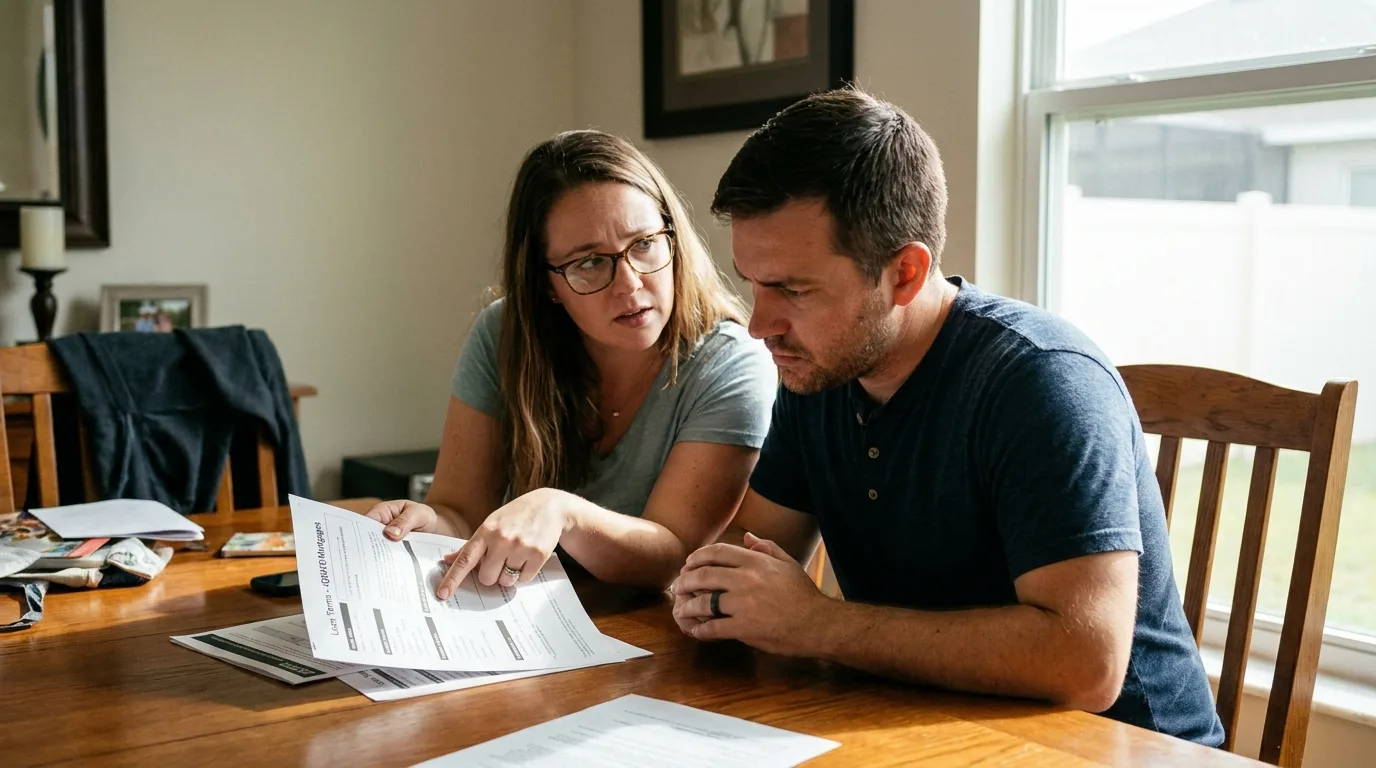
This is a critical point of confusion for many investors. An appraiser's job is to report what they see, but they must distinguish between different types of square footage. They will measure the unpermitted addition, but they will not include it in the property's main 'Gross Living Area' (GLA).
Instead, the appraisal report will:
- Separate the Square Footage: The unpermitted area will be noted separately, often with a comment like 'unpermitted garage conversion' or 'non-conforming addition'.
- Assign Little to No Value: While the space has practical utility, its contribution to the property's appraised value is minimal, if any. Appraisers cannot use comparable sales ('comps') that also have unpermitted additions to justify a higher value. They must compare the subject property to other legal properties. A 2,000 sq. ft. home with a 400 sq. ft. unpermitted addition will be valued against other 2,000 sq. ft. homes, not 2,400 sq. ft. homes.
- Note 'Cost to Cure': In some cases, the appraiser may be required to estimate the 'cost to cure' the issue, which is the potential cost to either demolish the unpermitted space or bring it up to code and have it legally permitted. This can sometimes reduce the property's value.
For an investor in a city like Tampa or Orlando, this means you cannot count on the extra space to boost the appraisal, which is a key component of the loan-to-value (LTV) calculation for your investor loan.
What Are the Risks of Using a DSCR Loan for a Home in Orlando With Illegal Units?
Attempting to finance a property in Orlando with an unpermitted rental unit using a DSCR loan introduces significant financial and legal risks. These go far beyond just being denied the loan.
Key Risks:
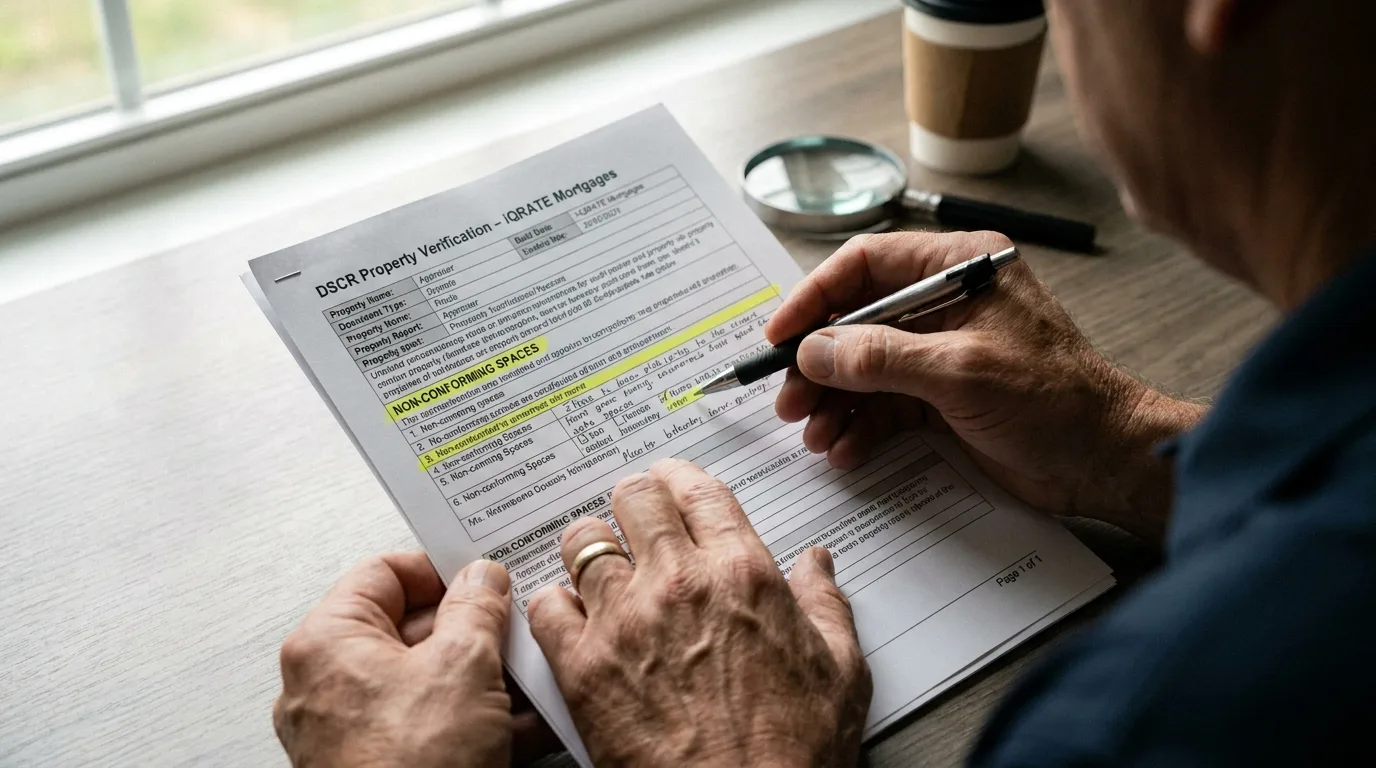
- Loan Denial and Lost Costs: The most immediate risk is that the loan will be denied late in the process after you have already paid for the appraisal and inspection. This means losing your due diligence money.
- Insurance Complications: Property insurance carriers can deny a claim for damage that originates in or affects an unpermitted part of the structure. A fire starting from faulty wiring in an illegal kitchen could lead to the entire claim being rejected.
- City Fines and Liens: The City of Orlando's Code Enforcement can levy daily fines for unpermitted structures until they are brought into compliance or removed. These fines can accumulate and result in a lien on your property, jeopardizing your ownership.
- Forced Removal of Tenants: If the city deems the unit unsafe or illegal, you will be legally required to terminate the lease and evict the tenant, often on a very short timeline. This not only cuts off your cash flow but could also expose you to legal action from the tenant.
- Liability Exposure: If a tenant is injured due to a defect in an unpermitted unit (e.g., a collapsed ceiling or an electrical issue), your liability as the landlord is magnified. The illegal nature of the unit weakens your legal standing significantly.
For a DSCR loan specifically, the primary risk is the math. A DSCR loan is approved if Gross Rental Income / PITI >= 1.0 (many lenders require 1.25 or higher). (The data, information, or policy mentioned here may vary over time.) If the income from the illegal unit is excluded, your DSCR will plummet, leading to an automatic denial.
Example: An Orlando property has a total PITI (Principal, Interest, Taxes, Insurance) of $3,000/month. The main house rents for $2,800, and an unpermitted garage apartment rents for $1,200. You believe the DSCR is ($2,800 + $1,200) / $3,000 = 1.33, which looks great. However, the lender will only use the permitted income, making the actual DSCR $2,800 / $3,000 = 0.93. This is an instant failure.
Can I Use a Bank Statement Loan Instead if the DSCR Loan is Denied?
A bank statement loan is another non-QM (non-qualified mortgage) product often used by self-employed borrowers and investors. It verifies income by analyzing bank deposits over 12 or 24 months instead of tax returns. While it might seem like a clever workaround, it generally won't solve the core problem of an unpermitted unit.
Here’s why:
- Source of Deposits: Even with a bank statement loan, the lender will still order an appraisal. When the appraisal comes back noting an illegal unit, the underwriter will connect the dots. They will question the source of the consistent monthly deposits and can still refuse to consider them as stable income if they are tied to an unpermitted structure.
- Property Eligibility: The fundamental issue isn't just income verification; it's about the collateral itself. Lenders are hesitant to secure a loan with a property that has significant legal and safety liabilities. The unpermitted unit makes the property ineligible for financing under most guidelines, regardless of the loan type.
A bank statement loan could potentially work if the deposits are co-mingled with other business income, making it harder to isolate the source. However, this is a risky strategy that underwriters are trained to detect.
Are There Specific Investor Loans for Properties With Accessory Dwelling Units?
Yes, but the key distinction is between a legal Accessory Dwelling Unit (ADU) and an unpermitted addition. Lenders, including conventional financing giants like Fannie Mae, have become more accommodating of properties with legal ADUs. An ADU is a secondary housing unit on a single-family residential lot that is fully permitted and built to code.
To qualify for financing, an ADU must:
- Be Legally Permitted: It must have the proper permits and certificates of occupancy from the local municipality.
- Meet Zoning Requirements: The property must be zoned to allow for a second unit.
- Have Essential Utilities: It needs its own kitchen, bathroom, and entrance.
If the property has a legal, conforming ADU, many lenders will allow the rental income from it to be used for qualification, including for DSCR loans. This is a game-changer for investors. The path forward for a property with an unpermitted unit is often to explore the cost and feasibility of getting it legally permitted, turning it from a liability into a financeable asset.
How Does Property Insurance Work for Homes With Unpermitted Construction?
Navigating property insurance for a home with unpermitted work is treacherous. Insurance is based on the principle of known risk, and unpermitted construction introduces unknown variables that carriers are unwilling to cover.
- Policy Invalidation: Most insurance policies contain a clause stating that any misrepresentation on the application can void the policy. Failing to disclose an unpermitted addition is a significant misrepresentation.
- Claim Denial: If a loss occurs, the insurance adjuster will investigate. When they discover the unpermitted work, especially if the loss originated from that area, they have solid grounds to deny the claim. For example, if a poorly installed water heater in an unpermitted laundry room leaks and floods the house, the entire claim could be rejected.
- Coverage Gaps: A standard policy covers the legally described structure. It may not extend to the unpermitted addition, leaving you with no coverage for that portion of the property.
Securing a policy in the first place can be difficult. If the insurance inspector identifies the unpermitted work during their initial assessment, they may refuse to issue a policy altogether or demand the issue be remediated before coverage can begin.
What Documentation Can Help Prove the Rental Income from the Space?
If you are trying to convince a lender to consider income from a space that is in a gray area or that you are in the process of permitting, strong documentation is key. However, for a truly unpermitted unit, no amount of documentation can override an appraiser's and underwriter's refusal to accept it.
For a unit that is permitted or you're trying to prove a rental history while seeking permits, you can provide:
- Executed Lease Agreements: Signed leases for the past 1-2 years.
- Proof of Deposit: Bank statements showing consistent, on-time rental payments from the tenant.
- Utility Bills: If the unit is separately metered, providing utility bills in the tenant's name can add credibility.
- Form 1007: The appraiser's completed Comparable Rent Schedule is the most powerful document, but it will only include income for legal units.
For investors in Miami and Orlando looking at properties with these types of additions, the best strategy is to factor in the cost and time to legalize the unit before purchasing. Base your offer and your financing application on the property's value and income from its permitted state only. Any income from the unpermitted unit should be seen as a potential bonus after you've taken the steps to make it legal, not as a reliable source for qualifying for your loan. If you're a real estate investor navigating the complexities of financing a property with unique income streams, don't leave it to chance. Contact our team of non-QM loan experts to explore safe, reliable financing options tailored to your investment strategy.
Financing a property with an unpermitted unit presents unique challenges, but the right guidance can make all the difference. Our non-QM loan experts specialize in complex investment scenarios. Apply for a Mortgage to explore safe, reliable financing options tailored to your real estate goals.
Author Bio
David Ghazaryan is the expert mortgage strategist and founder behind iQRATE Mortgages. With a mission to fund home loans that traditional banks won't touch, David specializes in helping clients with unique financial situations, including those recovering from foreclosure or bankruptcy. He expertly crafts smart, strategic, and stress-free mortgages by leveraging a vast network of over 100 lenders to secure competitive rates for investors and homebuyers alike. Praised for exceptional customer service, David has helped hundreds of families with a 97% satisfaction rate, guiding them to the mortgage they deserve.
References
Fannie Mae - Accessory Dwelling Units (ADUs)
Consumer Financial Protection Bureau (CFPB) - The Property Appraisal Process









