

What Does 'Asset Seasoning' Mean for Funds from a Foreign Bank Account?
Asset seasoning is the period a mortgage lender requires your funds to remain in a bank account before they can be used for a home purchase. For international buyers using foreign assets, this process is a critical step in proving the legitimacy and stability of your down payment and closing cost funds. Lenders need to see that the money is genuinely yours and wasn't borrowed at the last minute just to qualify for the loan. An unseasoned, large deposit is one of the biggest red flags for a mortgage underwriter.
Typically, lenders require funds to be seasoned for at least 60 to 90 days. (The data, information, or policy mentioned here may vary over time.) This means the full amount you intend to use for your home purchase must be visible in your foreign bank account statements for two to three consecutive months before you even begin the transfer process to a United States account.
Practical Example of Seasoning
Let's say you plan to purchase a vacation home in Kissimmee for $450,000 and need a $112,500 down payment (25%).
- Incorrect Process: You move $112,500 from various accounts or receive it from family into your primary foreign bank account in May. You then apply for a mortgage in early June. The lender will see a large, recent deposit and will likely halt your application until that $112,500 has been seasoned for at least two more months.
- Correct Process: The $112,500 is already sitting in your foreign bank account by March. Your bank statements for March, April, and May all show the funds present. In June, you apply for the mortgage. The lender can clearly see a consistent history for the funds, creating a clean and verifiable paper trail.
How Many Months of Foreign Bank Statements Are Required for a Kissimmee Mortgage?
For most mortgage applications in Kissimmee or greater Florida, you will need to provide a minimum of two to three consecutive months of complete foreign bank statements. (The data, information, or policy mentioned here may vary over time.) Some lenders, particularly for jumbo loans or more complex financial profiles, may request up to six months of statements. It's essential that you provide all pages of each statement, even if a page is blank or only contains legal disclaimers. Lenders scrutinize these documents for any inconsistencies.
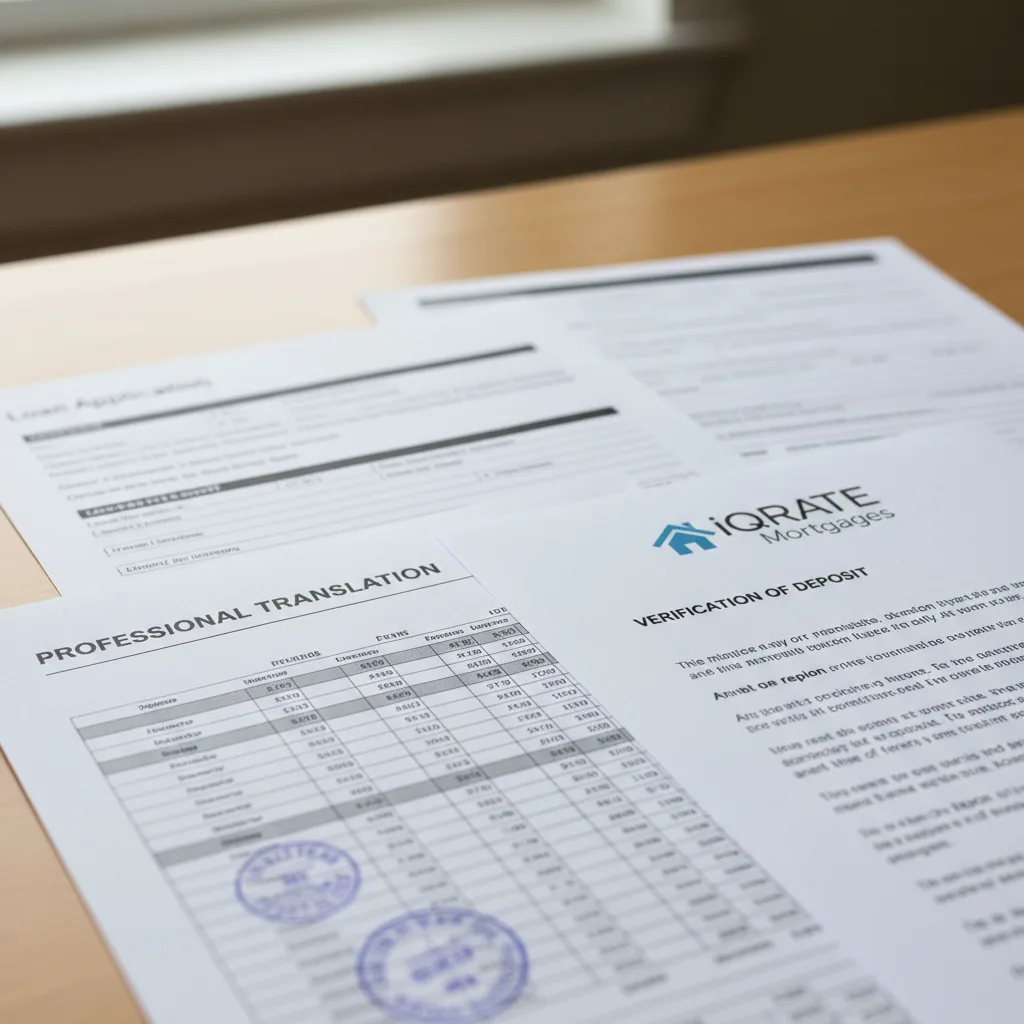
Here’s what underwriters are looking for:
- Account Ownership: Your name must be clearly printed on the statement, matching your loan application exactly.
- Consistent Balances: The statements should demonstrate a stable balance that is sufficient to cover the down payment and closing costs.
- No Large, Unexplained Deposits: Any deposit that is not from a regular, identifiable source (like your salary) will be questioned. If you did receive a large gift, for example, it would need its own separate paper trail and a gift letter, which adds another layer of complexity.
What Is the Best Method to Transfer Large Sums for an Orlando Home Purchase?
The most reliable and lender-friendly method for transferring a large sum of money for an Orlando home purchase is a direct bank-to-bank wire transfer. While alternative currency exchange services may offer slightly better rates, they can create documentation issues. A traditional wire transfer from your foreign bank directly into your newly opened United States bank account produces the cleanest and most traceable paper trail, which is what underwriters prioritize above all else.

Follow this exact procedure:
- Open a U.S. Bank Account: Before you can transfer funds, you must establish an account with a reputable U.S. bank. You will likely need to do this in person.
- Initiate the Wire Transfer: Work with your foreign bank to send the funds directly to your new U.S. account. Be prepared for transfer limits or additional verification steps from your home bank.
- Document Everything: This is the most important step. You must obtain a receipt of the completed wire transfer. This document should clearly show the sending bank's name, the receiving bank's name, the date, and the exact amount transferred in both currencies. You will also need the corresponding foreign bank statement showing the money leaving the account.
This creates an undeniable link: the money left Account A overseas and the exact same amount arrived in Account B in the U.S. This simple, documented path is what satisfies underwriting requirements.
Do All My Foreign Financial Documents Need to Be Professionally Translated?
Yes, without exception. Any document that is not issued in English must be accompanied by a complete and certified translation. This isn't a step where you can cut corners. A lender will not accept a translation done by you, a friend, or a family member.
Translation Requirements:
- Certified Translator: The translation must be performed by a neutral, third-party professional translation service.
- Letter of Certification: The translated documents must come with a letter from the translation company certifying their accuracy and completeness.
- Full Document Translation: You must translate the entire document, not just the summary pages. This includes bank statements, tax documents, employment verification letters, and any other financial records requested by the lender.
- Currency Conversion: Ensure the translation clearly indicates the currency on the original documents and, if possible, provides a conversion to U.S. dollars as of the statement date.
What Type of Verification Letter Will My Lender Need from My Foreign Bank?
In addition to bank statements, lenders often require a Verification of Deposit (VOD) letter directly from your foreign financial institution. This letter serves as an official confirmation of the details shown on your statements. The letter must be on the bank’s official letterhead and written or translated into English.
The VOD should contain the following specific information:
- Your full name as the account holder.
- The account number(s).
- The date the account was opened.
- The current balance in the account.
- The average balance over the previous two months.
- The name, title, and signature of an official bank representative.
- Direct contact information for the bank representative for verification purposes.
Will a Large, Recent Deposit into a New United States Account Cause a Problem?
Yes, a large deposit into a new U.S. account will immediately halt your mortgage application unless you can provide an impeccable paper trail. From a lender's perspective, this money appeared out of nowhere and could be a hidden loan from a family member or another source that creates an undisclosed debt.
However, this is a normal part of the process for international buyers. The key is to prove the source. The only acceptable large deposit is the wire transfer from your seasoned foreign account. To satisfy the lender, you must provide:
- The final foreign bank statement showing the large withdrawal for the wire transfer.
- The official wire transfer receipt from your foreign bank.
- The opening statement from your new U.S. bank account showing the corresponding large deposit from that wire transfer.
These three documents work together to tell a clear story and prove the funds are yours.
Can I Use Assets from a Foreign Business for My Personal Mortgage in Florida?
Using funds from a foreign business for a personal mortgage on a home in Orlando is possible but adds significant complexity to your application. (The data, information, or policy mentioned here may vary over time.) Lenders need absolute certainty that you have full access to these funds and that their withdrawal will not harm the business's financial stability.
Expect to provide extensive documentation, including:
- Proof of Ownership: Documents showing you are a 100% owner or have the unrestricted authority to withdraw funds for personal use.
- A Letter from an Accountant: A certified public accountant (or equivalent) in your home country must write a letter stating that the withdrawal of funds for your home purchase is not detrimental to the daily operations of the business.
- Translated Business Financials: You may need to provide translated profit and loss statements and balance sheets for the business for the past one to two years.
Because this is a highly specialized area, working with a mortgage broker experienced in handling business assets is strongly recommended.
What Are the Tax Implications for Transferring Large Amounts of Money?
Disclaimer: The following information is for educational purposes only and is not tax advice. You must consult with a qualified tax professional or Certified Public Accountant (CPA) who specializes in international financial matters before transferring funds.
While the act of transferring your own money from a foreign account to a U.S. account is generally not a taxable event in the United States, it does come with important reporting requirements. The U.S. government has strict regulations to monitor the flow of money from overseas to prevent money laundering and tax evasion.
Key considerations include:
- Foreign Account Tax Compliance Act (FATCA): This U.S. law requires foreign financial institutions to report on the foreign assets held by their U.S. account holders.
- FinCEN Form 114 (FBAR): If the total value of your foreign financial accounts exceeds $10,000 at any point during the calendar year, you may be required to file a Report of Foreign Bank and Financial Accounts (FBAR) with the Financial Crimes Enforcement Network.
- IRS Form 3520: If you receive funds as a gift or inheritance from a foreign person or estate, you may need to report it to the IRS.
A tax advisor can explain your specific obligations based on your residency status and the amount of money being transferred, ensuring you remain in full compliance with U.S. law. Navigating the documentation for foreign assets can be complex. Working with a mortgage expert who specializes in these scenarios can ensure you have a clear, lender-approved paper trail for your Orlando or Kissimmee home purchase.
The documentation process for using foreign assets for a U.S. mortgage can feel overwhelming, but you don't have to navigate it alone. If you're ready to move forward with your Florida home purchase, our team is here to guide you through every requirement. Apply now to get a confident start on your application.
Author Bio
David Ghazaryan is the expert mortgage strategist and founder behind iQRATE Mortgages. With a mission to fund home loans that traditional banks won't touch, David specializes in helping clients with unique financial situations, including those recovering from foreclosure or bankruptcy. He expertly crafts smart, strategic, and stress-free mortgages by leveraging a vast network of over 100 lenders to secure competitive rates for investors and homebuyers alike. Praised for exceptional customer service, David has helped hundreds of families with a 97% satisfaction rate, guiding them to the mortgage they deserve.
References
Fannie Mae: Depository Accounts









