


What is an Energy Efficient Mortgage Program?
An Energy Efficient Mortgage, or EEM, is not a standalone loan. Instead, it’s a feature that can be added to a standard home loan like a conventional, FHA, or VA mortgage. Its purpose is to help you finance the cost of energy-saving improvements for a new or existing home. Think of it as rolling the cost of upgrades—like new windows or a solar panel system—into your primary home loan.
This approach allows you to pay for significant, value-adding improvements over the life of your mortgage rather than paying cash upfront or taking out a separate, higher-interest personal loan. The core principle is that the money you save on utility bills each month should, in theory, offset the slight increase in your monthly mortgage payment. This makes the home more affordable to own in the long run and helps you qualify for a slightly larger loan amount than you might otherwise.
How Much Extra Can You Borrow for Upgrades?
The amount you can finance for energy upgrades is determined by a specific calculation, not just the contractor's bid. Lenders need to ensure the upgrades are cost-effective. The additional loan amount is typically the lesser of two figures:
- The documented cost of the energy improvements.
- A specific percentage of the home's appraised value, which varies by the loan program (FHA or conventional).
For example, the FHA EEM program's calculation for the maximum financing amount is based on the lesser of several figures, including the documented cost of the improvements and a cap derived from a formula that considers 5% of the property's value. Conventional loans through Fannie Mae's HomeStyle® Energy program allow financing for up to 15% of the home's 'as-completed' value.

Example: You're buying a home in Las Vegas for $450,000. Your energy assessment identifies $20,000 in necessary upgrades (a new HVAC system and better insulation). The report projects these upgrades will save you $150 per month on utilities. The lender's underwriter will analyze the report and the contractor bids to approve the $20,000. This amount is added to your primary loan balance, resulting in a total loan of $470,000, all paid through a single monthly payment.
What Types of Improvements Qualify for This Loan in Las Vegas?
To qualify, an improvement must be deemed cost-effective by a certified home energy assessor. This means the total cost of the upgrade must be less than the total energy savings it produces over its expected lifespan. Given the climate in Las Vegas and Reno, certain upgrades provide significant returns.
Common qualifying improvements include:
- Solar Panel Systems: Both photovoltaic (for electricity) and solar thermal (for water heating) systems are popular choices in sunny Nevada.
- High-Efficiency HVAC: Upgrading from an old air conditioner and furnace to a modern, high-SEER (Seasonal Energy Efficiency Ratio) unit.
- Windows and Doors: Replacing single-pane windows with double or triple-pane, low-E coated windows.
- Insulation: Adding or improving insulation in the attic, walls, and crawl spaces.
- Tankless Water Heaters: Installing an on-demand water heater to reduce the energy used to keep water hot.
- Duct Sealing and Repair: Preventing cooled or heated air from leaking out of the ductwork.
- Programmable Smart Thermostats: Devices that optimize heating and cooling schedules.
Does This Program Require a Special Home Energy Assessment?
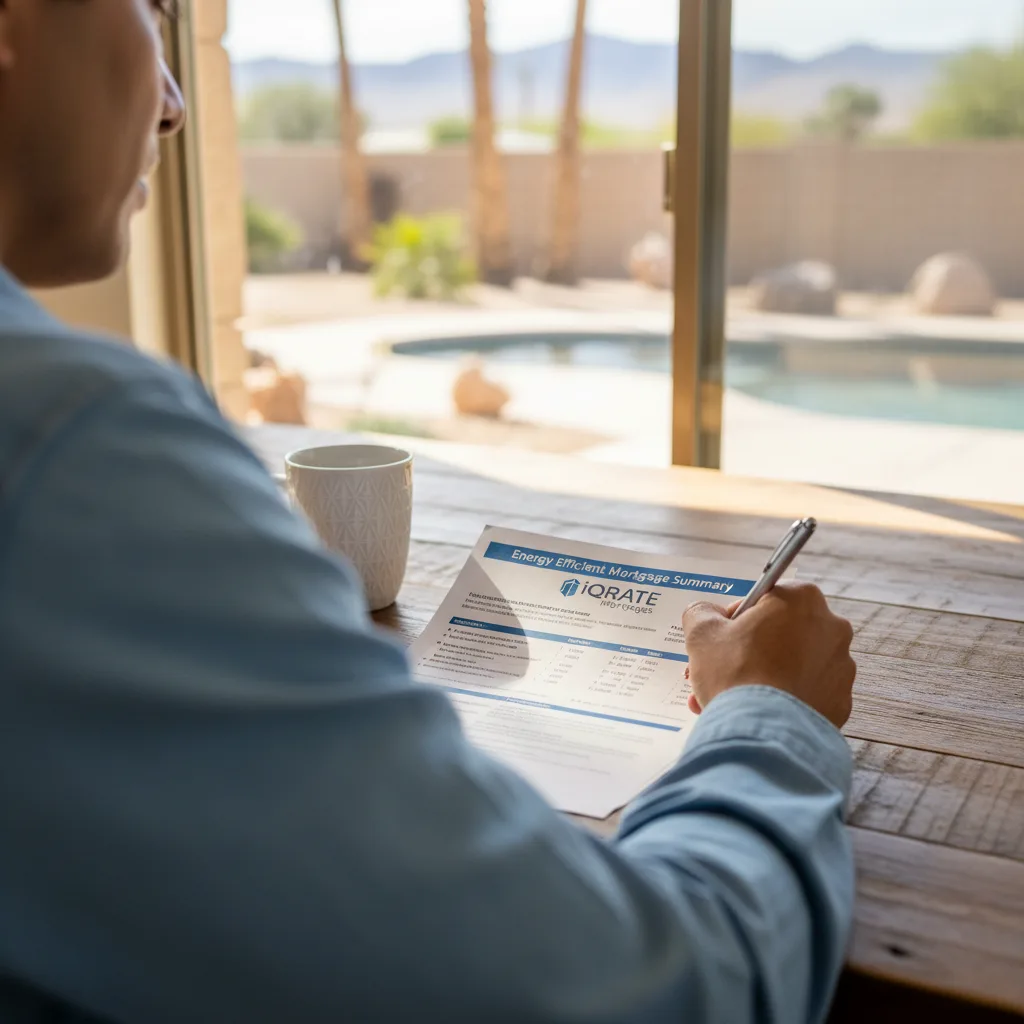
Yes, a professional home energy assessment is a mandatory part of the EEM process. You cannot simply get a contractor's quote and submit it to the lender. The assessment must be performed by a certified Home Energy Rating System (HERS) rater or a qualified energy consultant.
This specialist conducts a thorough inspection of the property to produce a detailed report that includes:
- The Home's Current Energy Rating: A baseline score of the home's efficiency.
- Recommended Improvements: A specific list of upgrades that will be cost-effective.
- Estimated Costs: The projected cost for each recommended upgrade.
- Projected Energy Savings: An estimate of how much money you will save on utility bills each month after the improvements are made.
This report is the key document the lender's underwriter uses to validate the upgrades and approve the additional financing. It provides an objective, third-party analysis of the project's financial viability.
How Does the Process Work with Contractors and Bids in Reno?
Once you have the energy assessment report, the process of financing and completing the work follows a clear, structured path. The funds are managed through an escrow account to protect you and the lender, ensuring the work is completed as promised.
Here is the step-by-step workflow for a homebuyer in Reno:
- Obtain the Energy Report: Hire a certified energy assessor to inspect the home and produce the official report.
- Get Contractor Bids: You must obtain bids from licensed and insured contractors for the exact scope of work outlined in the energy report. You cannot add extra projects.
- Submit to Lender: Provide your mortgage lender with the energy assessment report and the contractor bids along with your standard loan application materials.
- Closing and Escrow: At closing, the lender funds the main home loan. The portion designated for the energy upgrades is placed into a separate escrow account.
- Work Completion: After you officially own the home, the contractor begins and completes the work within a specified timeframe (usually 90 to 180 days). (The data, information, or policy mentioned here may vary over time.)
- Final Inspection: Once the work is finished, the energy assessor returns to inspect the upgrades and verify they were installed correctly and meet the projected efficiency goals.
- Release of Funds: After the successful final inspection, the lender releases the funds from the escrow account to pay the contractor in full.
Can This Be Combined with Both Conventional and FHA Home Loans?
Yes, Energy Efficient Mortgages are available for the most common types of home loans, though the rules and limits differ slightly between them.
EEMs with Conventional Loans
For conventional mortgages, the two primary programs are Fannie Mae's HomeStyle® Energy and Freddie Mac's GreenCHOICE Mortgage®. These programs allow borrowers to finance energy-related improvements up to 15% of the home's 'as-completed' appraised value. This option is often used by borrowers with stronger credit profiles and larger down payments.
EEMs with FHA Loans
The FHA's EEM program is very popular, especially with first-time homebuyers, due to its flexible credit requirements and low down payment options. The FHA has its own formula for calculating the maximum financing amount, which is based on a percentage of the property value or area home price medians. It's a powerful tool for making an older home more affordable and comfortable right from the start.
Are There Different Requirements for New Versus Existing Homes?
The application of an EEM differs significantly depending on whether you are buying an existing home or building a new one.
EEMs for Existing Homes
This is the most common use of an EEM. The process described above—assessment, bids, escrow, and post-closing installation—is the standard for retrofitting an existing property with energy-efficient features. The goal is to bring an older, less efficient home up to modern standards.
EEMs for New Construction
For new homes, the EEM works differently. If a builder constructs a home to meet or exceed ENERGY STAR® certification standards, the buyer may not need to finance upgrades. Instead, the lender can offer a 'stretch' on the borrower's qualifying ratios. Because a certified energy-efficient new home will have predictably lower utility costs, the lender may allow a higher debt-to-income (DTI) ratio. For instance, a lender might increase the DTI limit by 2%, allowing the buyer to qualify for a slightly larger mortgage because their overall monthly housing expenses (including utilities) will be lower. (The data, information, or policy mentioned here may vary over time.)
Does the Home's Appraised Value Need to Support the Upgrades?
Absolutely. The property's appraised value is a cornerstone of the EEM approval process. The appraiser is asked to determine two distinct values for the property:
- 'As-Is' Value: The value of the home in its current condition, before any upgrades.
- 'As-Completed' Value: The projected value of the home after all the proposed energy-efficient improvements have been installed.
The total loan amount—including the purchase price and the cost of the financed upgrades—cannot exceed the 'as-completed' appraised value. The appraiser must agree that the new solar panels, windows, or HVAC system add sufficient value to the home to justify the higher loan amount. If the 'as-completed' value comes in lower than the total cost, the borrower may need to reduce the scope of the project, pay for some of it out of pocket, or the loan may not be approved. If you're considering an Energy Efficient Mortgage in Nevada, understanding the specific requirements is the first step. A knowledgeable mortgage strategist can help you navigate the process, from the energy assessment to finding a lender with a competitive EEM program.
If making your home more affordable and energy-efficient sounds like the right path for you, the next step is to see what you qualify for. Apply now to explore your mortgage options.
Author Bio
David Ghazaryan is the expert mortgage strategist and founder behind iQRATE Mortgages. With a mission to fund home loans that traditional banks won't touch, David specializes in helping clients with unique financial situations, including those recovering from foreclosure or bankruptcy. He expertly crafts smart, strategic, and stress-free mortgages by leveraging a vast network of over 100 lenders to secure competitive rates for investors and homebuyers alike. Praised for exceptional customer service, David has helped hundreds of families with a 97% satisfaction rate, guiding them to the mortgage they deserve.
References
HUD | Energy Efficient Mortgage Program









