


What documents can substitute for United States tax returns for a Houston loan?
As a non-U.S. investor, you lack the standard documents American lenders require, such as W-2s or Form 1040 tax returns. This doesn't disqualify you; it simply means you must provide equivalent, verifiable documentation. Lenders specializing in foreign national loans have established protocols for this.
To secure an investor loan for a property in Houston, you will need to prepare a portfolio of alternative documents. These serve the same purpose as U.S. tax returns: to prove a stable and sufficient income stream.
Key substitutes include:
- Certified Public Accountant (CPA) Letter: A detailed letter from a licensed accountant in your home country verifying your income for the past two years. This is one of the most powerful documents you can provide.
- 12-24 Months of International Bank Statements: Lenders will analyze your personal and business bank statements to see consistent income deposits. Large, irregular deposits will require a written explanation.
- Letter from Foreign Employer: If you are an employee, a letter on official company letterhead is required. It must state your position, salary, start date, and be signed by a human resources representative. The lender will independently verify the company's existence and the letter's authenticity.
- Foreign Business Financials: If you are self-employed, you must provide professionally prepared financial statements for your business, such as profit and loss statements and balance sheets, for the last two years.
How do lenders verify the legitimacy of a foreign employer or business?
Lenders must perform due diligence to prevent fraud and ensure the income source is stable. They cannot simply take your documents at face value. Verification for a Houston or Katy investment property is a non-negotiable step.
Methods for verification include:
- Third-Party Verification Services: Lenders often use international services that can check business registrations, public records, and legal standing in your home country.
- Independent Online Research: Underwriters will search for your company online. A professional website, active social media profiles, and verifiable business listings are crucial. A non-existent or unprofessional online presence is a major red flag.
- Direct Communication: The lender may call or email your employer’s HR department or your accounting firm to confirm the information provided in your letters and financial documents.
Do my financial documents need to be translated into English?
Yes, absolutely. Every single document you submit that is not in English must be accompanied by a complete and accurate English translation. You cannot translate the documents yourself. The translation must be performed by a certified, independent third-party service. The translator will need to provide a signed statement attesting to the accuracy and completeness of the translation. The cost of this service is your responsibility as the borrower.
Can I use rental income from properties in another country to qualify?
Using foreign rental income to qualify for a U.S. mortgage is possible but adds another layer of complexity. If you own rental properties outside the United States, you must provide comprehensive documentation.
To use this income, you will need:
- Translated Lease Agreements: Copies of current, signed lease agreements for each property.
- Proof of Rent Payments: Bank statements showing consistent rental deposits for at least the last 12 months.
- Ownership Documents: Proof that you own the properties.
Be aware that lenders are often more conservative with this type of income. They may apply a higher vacancy factor or only count a percentage (e.g., 75%) of the gross rental income due to currency risk and the difficulty of verifying international market conditions. (The data, information, or policy mentioned here may vary over time.)
What is a certified public accountant letter and what must it include?
A CPA letter is a formal document from your accountant that validates your income, particularly if you are self-employed. For a U.S. lender, this is a cornerstone document that replaces a tax return. A generic letter will be rejected; it must contain specific information.
The letter must be on the accounting firm's official letterhead and include:
- The CPA's full name, license number, and complete contact information.
- A statement confirming you have been their client for at least two years.
- A clear breakdown of your income for the past two full years and the year-to-date.
- Confirmation that your business is currently active and in good standing.
- The CPA's original signature.
How do lenders handle currency exchange rates when calculating my income?
Lenders do not use the 'spot rate' from the day you apply. To mitigate the risk of currency fluctuations, they use a standardized and conservative approach. Typically, a lender will use an average exchange rate over the past 30, 60, or even 90 days from a reputable financial source.
Furthermore, many lenders apply a 'haircut' to the converted income. This means they will use a discounted value for qualification purposes. For example, after converting your income to U.S. dollars, they might only use 80-90% of that total when calculating your debt-to-income ratio. (The data, information, or policy mentioned here may vary over time.) This buffer protects them if your home currency weakens against the dollar, ensuring you can still afford your mortgage payment on your Houston property.
Example of Currency Conversion and Haircut
- Annual Foreign Income: €100,000
- Average Exchange Rate (EUR to USD): 1.08
- Converted USD Income: $108,000
- Lender's Haircut: 15%
- Qualifying Income Used: $108,000 x 0.85 = $91,800
This final figure is what the lender will use to determine your borrowing capacity.
Are the income qualifications different for a DSCR loan in Katy?
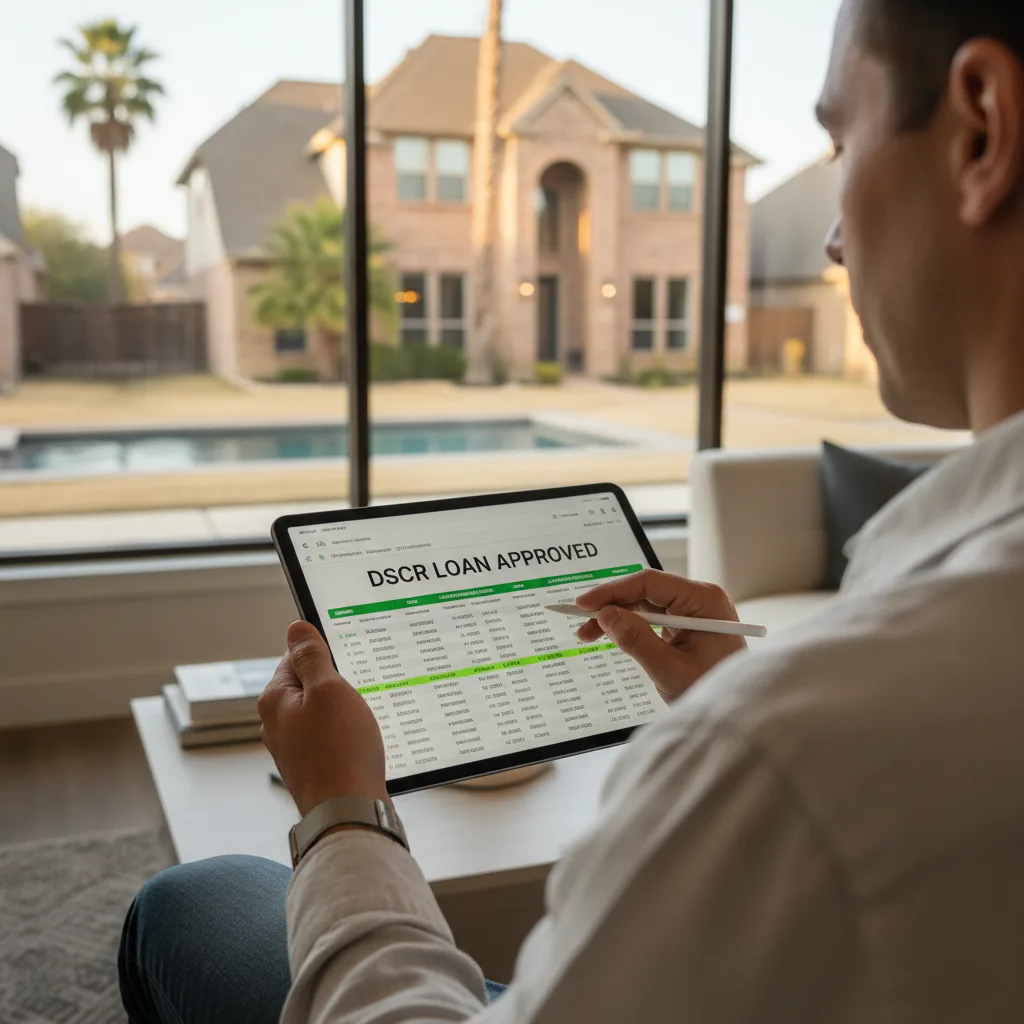
Yes, and this is a game-changer for many foreign investors. A Debt Service Coverage Ratio (DSCR) loan completely changes the qualification process. Instead of focusing on your personal foreign income, a DSCR loan qualifies based on the investment property's potential cash flow.
The lender's primary concern is whether the property can pay for itself. The core calculation is:
DSCR = Gross Monthly Rental Income / Total Monthly Housing Payment (PITI)

Most lenders require a DSCR of 1.25 or higher. (The data, information, or policy mentioned here may vary over time.) This means the property's expected rent must be at least 25% more than the mortgage payment, taxes, and insurance.
For an investor looking to buy a rental in Katy or Houston, a DSCR loan is often the simplest path forward because it eliminates the need for:
- Personal income verification
- CPA letters and employer letters
- Document translation
- Currency conversion calculations
How much of my foreign income can be used toward my debt ratios?
If you are using a traditional foreign national loan (not a DSCR loan), the amount of income used is the final figure after currency conversion and any applied haircuts. This adjusted income is then used to calculate your debt-to-income (DTI) ratio.
Your DTI compares your total monthly debt obligations (including the proposed new mortgage payment) to your gross monthly qualifying income. For example, if your qualifying income after conversion and haircuts is $7,650 per month ($91,800 / 12), and a lender's DTI limit is 45%, your total monthly debts cannot exceed $3,442.50. (The data, information, or policy mentioned here may vary over time.) This calculation directly determines the maximum loan amount you can afford. If you're a foreign investor navigating the complexities of securing a mortgage in Houston or Katy, understanding these alternative verification methods is the first step. For a clear strategy tailored to your international income, connect with an expert who specializes in non-traditional and foreign national financing.
Navigating the U.S. mortgage process as a foreign investor can be challenging. Our experts specialize in creating clear financial strategies for your Houston or Katy property investment. Apply now to get started with a team that understands your unique needs.
Author Bio
David Ghazaryan is the expert mortgage strategist and founder behind iQRATE Mortgages. With a mission to fund home loans that traditional banks won't touch, David specializes in helping clients with unique financial situations, including those recovering from foreclosure or bankruptcy. He expertly crafts smart, strategic, and stress-free mortgages by leveraging a vast network of over 100 lenders to secure competitive rates for investors and homebuyers alike. Praised for exceptional customer service, David has helped hundreds of families with a 97% satisfaction rate, guiding them to the mortgage they deserve.
References
CFPB - What is a debt-to-income ratio?
Fannie Mae - Non-U.S. Citizen Borrower Eligibility Requirements









