


Why am I getting so many IRRRL offers in Miami?
If you're a veteran with a VA home loan in Florida, your mailbox and voicemail are likely flooded with offers for an Interest Rate Reduction Refinance Loan (IRRRL), often called a 'streamline' refinance. This isn't a coincidence. Lenders actively target VA-backed loan holders because the IRRRL program is designed to be simple and fast, making it profitable for them.
The VA loan guaranty program allows lenders to access public records identifying homeowners with existing VA loans. In competitive, high-value real estate markets like Miami and Tampa, the sheer volume of VA-backed properties makes for a rich pool of potential refinance clients. Lenders know that veterans are disciplined and have a strong track record of on-time payments, making them low-risk borrowers.
The IRRRL process itself encourages this high volume of offers. Key features that make it attractive to lenders include:
- No Appraisal Required: Lenders don't need to order a new home appraisal, saving time and money.
- Limited Underwriting: The process typically doesn't require income verification or a deep dive into your credit history, as you've already been approved for a VA loan.
- Fast Closings: The streamlined nature means these loans can be processed much faster than a conventional refinance.
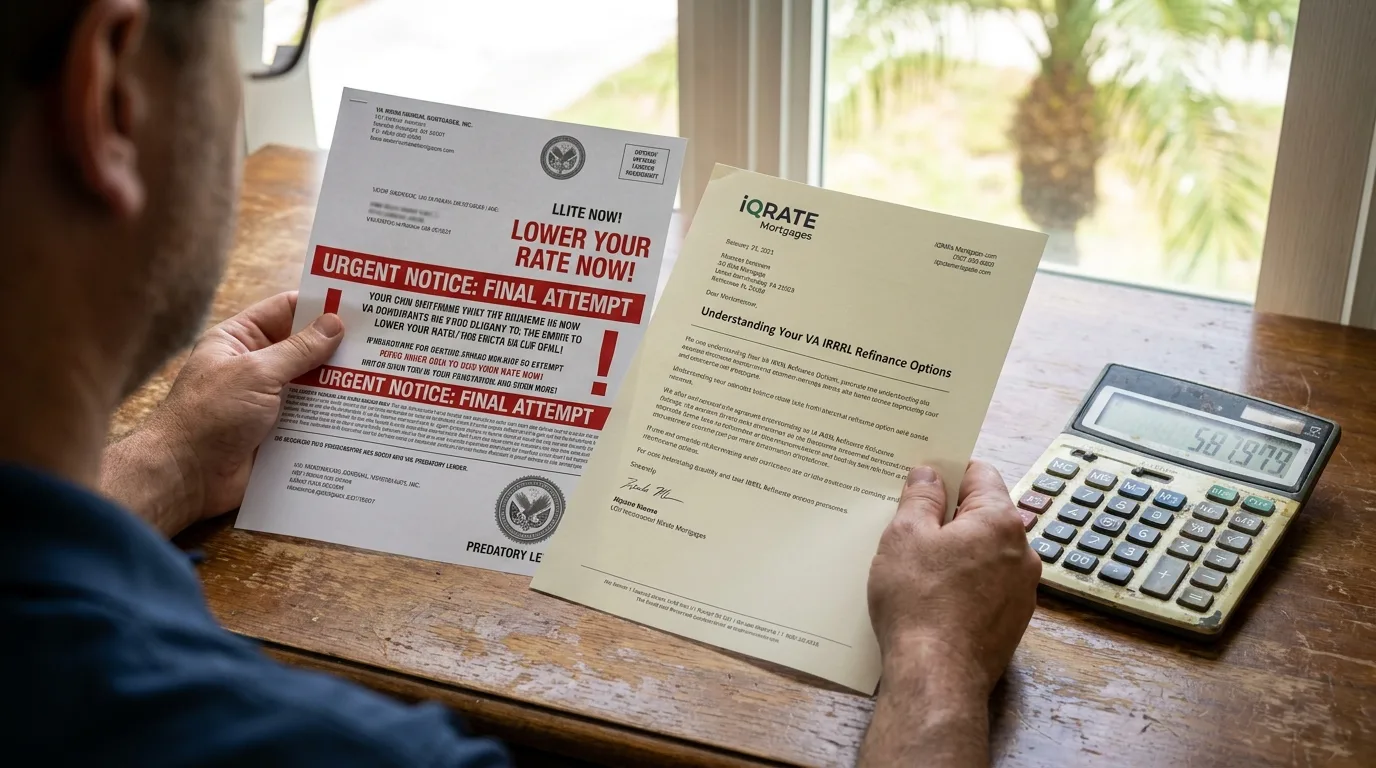
This ease of execution leads some lenders to engage in aggressive marketing campaigns, sending out official-looking mailers and making bold promises. Your status as a qualified VA borrower makes you a prime target for these solicitations, but not all offers are created equal.
What are the red flags of a predatory streamline refinance offer?
Predatory lenders use deceptive tactics to pressure veterans into refinances that benefit the lender more than the borrower. These offers often hide high fees and unfavorable terms behind attractive-sounding promises. Be vigilant for these specific red flags:
- Promises to Skip Mortgage Payments: This is a major warning sign. The lender might say, 'We'll let you skip two payments!' What they're actually doing is rolling those skipped payments, plus interest, into your new loan balance. You're not skipping anything; you're just financing the payment at interest for the life of the new loan.
- Aggressive or High-Pressure Sales Tactics: A reputable lender will give you time to consider the offer, review the Loan Estimate, and ask questions. A predatory lender may create a false sense of urgency, claiming an offer is 'for a limited time only' or pressuring you to sign documents immediately.
- 'Too Good to be True' Interest Rates: Unusually low interest rates advertised in bold print often come with hidden costs, such as high discount points. The Annual Percentage Rate (APR), which includes fees, is a much more accurate measure of the loan's true cost than the interest rate alone.
- Unsolicited Cash-Out Offers: A true VA IRRRL is strictly for reducing your interest rate and monthly payment. It typically cannot provide cash back to the borrower (only reimbursement for energy efficiency improvements up to $6,000 is permitted). If a lender is offering you a large sum of cash back, they are likely trying to switch you to a cash-out refinance, which has different rules, higher costs, and more stringent underwriting.
- Rolling Excessive Fees into the Loan: While it's common to finance closing costs with an IRRRL, be wary of lenders who pack the loan with junk fees, inflated administrative costs, or unnecessary services. The VA limits the fees a lender can charge, so you should demand a detailed breakdown of all costs. (The data, information, or policy mentioned here may vary over time.)

How do I calculate the true cost of a Tampa 'no-cost' refinance?
The term 'no-cost' refinance is one of the most misleading phrases in the mortgage industry. There is always a cost. The question is who pays it and how. In a so-called 'no-cost' or 'no-lender-fee' IRRRL, the lender covers the closing costs, but they recoup that money in one of two ways:
- By increasing your loan balance: They add the closing costs directly to your principal. While you don't pay cash at closing, your loan is now larger, and you'll pay interest on those rolled-in fees for years.
- By charging a higher interest rate: The lender offers you a rate that is slightly higher than the best market rate available. This higher rate, known as a 'lender credit', generates a premium that the lender uses to pay for your closing costs.
To understand the true cost, you must calculate the break-even point or recoupment period. This tells you how long it will take for your monthly savings to pay back the cost of the refinance.
Example for a Homeowner in Tampa:
- Current Loan Balance: $350,000
- Current Monthly P&I Payment: $1,863 (at 4.5% interest)
- New 'No-Cost' IRRRL Offer: A new loan with a 3.75% interest rate.
- Total Closing Costs (rolled into loan): $4,500
- New Loan Balance: $354,500
- New Monthly P&I Payment: $1,643 (at 3.75% interest)
Calculation:
- Monthly Savings: $1,863 (old payment) - $1,643 (new payment) = $220 per month
- Break-Even Point: $4,500 (total closing costs) / $220 (monthly savings) = 20.5 months
In this scenario, it would take you just over 20 months to recoup the closing costs. If you plan to stay in your Tampa home for longer than that, the refinance could be beneficial. However, if you might sell or refinance again within that period, you would lose money on the deal. (The data, information, or policy mentioned here may vary over time.)
Does a lower interest rate always mean I will save money?
No, a lower interest rate is not a guarantee of savings. Total cost over the life of the loan is what truly matters. Predatory offers often distract you with a low rate while obscuring other factors that can eliminate or even reverse your potential savings.
Consider these crucial elements:
- Closing Costs: As shown in the break-even calculation, high closing costs can take years to recoup. A loan with a slightly higher rate but significantly lower fees might save you more money if you don't plan to stay in the home for the long term.
- Loan Term Extension: A common tactic is to refinance your loan back to a new 30-year term, even if you've already paid on your original mortgage for several years. While this dramatically lowers your monthly payment, it also resets your amortization schedule. You could end up paying tens of thousands more in total interest over the life of the new loan. For an IRRRL to be beneficial, it should generally keep your loan term the same or shorten it.
- Discount Points: These are prepaid interest fees paid at closing to 'buy down' your interest rate. One point typically costs 1% of the loan amount. An offer with an extremely low rate may require you to pay thousands in discount points, drastically increasing your break-even period. (The data, information, or policy mentioned here may vary over time.)
Always compare the Loan Estimate from at least two different lenders. This standardized document makes it easier to compare APR, closing costs, and the total interest you'll pay over time.
What questions should I ask a lender about their IRRRL terms?
Arming yourself with the right questions forces lenders to be transparent and helps you make an informed decision. Before proceeding with any offer, demand clear answers to the following:
- What is the exact interest rate and the Annual Percentage Rate (APR)? The APR is the most important number, as it reflects the interest rate plus most of the fees.
- Can I see a detailed breakdown of all closing costs on a Loan Estimate? Ask them to explain every single fee, from the VA funding fee to underwriting and administrative charges.
- Will these closing costs be paid out-of-pocket or rolled into the new loan balance? If they are rolled in, ask for the new total loan amount.
- Based on these costs and my monthly savings, what is the exact recoupment period in months? Make them do the math for you and then verify it yourself.
- Is this refinance resetting my loan term to a new 30 years? If you are five years into your current mortgage, a beneficial IRRRL should ideally be for a new 25-year term, not a fresh 30 years.
- Are there any discount points included in this offer? How much do they cost, and how much do they lower the rate?
- Is there a prepayment penalty on this new loan? (Note: VA loans are not permitted to have prepayment penalties, but asking this question can reveal a lender's integrity).
Can an Interest Rate Reduction Refinance Loan hurt my credit score?
An IRRRL can have a minor, temporary impact on your credit score, but it is typically not a cause for concern. When you apply, the lender will perform a 'hard inquiry' on your credit report. This can cause a small, temporary dip of a few points. Multiple inquiries for the same type of loan within a short period (usually 14-45 days) are often treated as a single event by scoring models, minimizing the impact.
Once the new loan is opened and the old one is closed, your credit score may fluctuate slightly as the new account information is reported. However, the long-term effect is generally neutral to positive. By consistently making on-time payments on your new, more affordable mortgage, you will continue to build a strong payment history, which is the most important factor in your credit score.
The streamlined nature of the IRRRL means credit is not as heavily scrutinized as in other refinances, but a lender will still pull your credit to ensure you have a satisfactory payment history on your current mortgage.
When does it make sense to reject a streamline refinance offer?
Knowing when to walk away is just as important as knowing when to accept an offer. It's time to reject an IRRRL proposal if:
- The Recoupment Period is Too Long: If it will take you more than two to three years to break even on the closing costs, the risk may outweigh the reward, especially if you might move or sell your home in Miami or another Florida city in the near future.
- The Loan Term is Extended Unnecessarily: If a lender is pushing you to restart the clock on a 30-year term and the monthly savings are minimal, you will lose significant equity and pay far more in total interest. This is almost never a good deal for the veteran.
- The Lender Isn't Transparent: If a lender is evasive, won't provide a Loan Estimate promptly, or pressures you to make a quick decision, that's a clear signal to walk away.
- The Net Tangible Benefit is Unclear: The VA requires that the IRRRL provides a 'net tangible benefit' to the borrower, such as a significant reduction in the principal and interest payment. If the savings are negligible after accounting for fees, the refinance doesn't meet this crucial standard.
How do I report a lender for a misleading IRRRL advertisement?
If you believe you have received a misleading, aggressive, or predatory IRRRL offer, you have the power to report it. Taking action helps protect other veterans from falling victim to the same deceptive practices. You can file a formal complaint through the Consumer Financial Protection Bureau (CFPB).
Here's how:
- Gather Your Documentation: Collect the mailer, email, or any notes from a phone call with the lender. Note the lender's name, the specifics of the offer, and why you believe it is misleading.
- Visit the CFPB Website: Go to the CFPB's 'Submit a Complaint' page.
- File the Complaint: The online form will guide you through the process of describing the issue, what happened, and what you believe is a fair resolution. You can attach copies of the advertisement or any other relevant documents.
The CFPB will forward your complaint to the company for a response and work to get the issue resolved. By reporting bad actors, you contribute to a safer and more transparent mortgage marketplace for all veterans. If you're a veteran in Florida receiving IRRRL offers, don't navigate the fine print alone. Get a second opinion from a trusted mortgage expert who can verify the terms, calculate the true savings, and ensure the refinance truly benefits you and your family.
Navigating IRRRL offers can be complex, and you deserve a clear, honest assessment of your options. If you're ready for a no-pressure consultation with a mortgage expert who prioritizes your financial well-being, Apply now to ensure the next step is the right one for you.
Author Bio
David Ghazaryan is the expert mortgage strategist and founder behind iQRATE Mortgages. With a mission to fund home loans that traditional banks won't touch, David specializes in helping clients with unique financial situations, including those recovering from foreclosure or bankruptcy. He expertly crafts smart, strategic, and stress-free mortgages by leveraging a vast network of over 100 lenders to secure competitive rates for investors and homebuyers alike. Praised for exceptional customer service, David has helped hundreds of families with a 97% satisfaction rate, guiding them to the mortgage they deserve.
References
Consumer Financial Protection Bureau - What is a VA interest rate reduction refinance loan (IRRRL)?
U.S. Department of Veterans Affairs - VA IRRRL Facts for Veterans
Consumer Financial Protection Bureau - How to spot a home loan scam









