


What is an agricultural exemption in Austin and why do lenders care?
An agricultural exemption in Texas isn't a true tax exemption; it's a special valuation. The county appraisal district values the land based on its agricultural productivity rather than its market value. For a homebuyer in a high-value area like Austin, this can reduce the property tax bill by thousands of dollars annually. (The data, information, or policy mentioned here may vary over time.) For example, a 15-acre property might have a market value of $900,000 but an agricultural valuation of only $20,000.
This massive tax difference makes lenders nervous for two primary reasons:
- Misclassification Risk: Lenders see 'agricultural' and immediately think 'commercial farm'. A farm is a business, and financing a business is completely different from financing a primary residence. Commercial loans have higher interest rates, larger down payment requirements, and different underwriting standards. (The data, information, or policy mentioned here may vary over time.) They want to ensure they are funding a homestead, not an agricultural enterprise.
- Repayment Risk: The loan qualification process relies on stable, predictable expenses. If you lose the ag exemption, your property taxes could skyrocket, drastically increasing your monthly payment and potentially affecting your ability to repay the loan. Lenders must account for this worst-case scenario.
Will I lose the tax benefit if I buy the property?
Not necessarily. The agricultural valuation is tied to the land's use, not the owner. To keep the benefit, you must continue the qualifying agricultural activities that the previous owner was conducting. This could include beekeeping, raising livestock, growing hay, or maintaining a wildlife management plan.
However, if you stop the agricultural use, the county can levy 'rollback taxes'. This is a penalty for changing the land's use and requires you to pay the difference between the taxes you paid under the ag valuation and what you would have paid at market value for the previous five years, plus interest. (The data, information, or policy mentioned here may vary over time.)
Before purchasing, you must:
- Verify the property’s current ag status with the county appraisal district.
- Understand the specific requirements to maintain the valuation.
- Have a clear plan to continue the qualifying agricultural use without interruption.
How do I prove the San Antonio property is a residence, not a farm?
Successfully financing a home with an ag exemption hinges on your ability to prove the property’s primary purpose is residential. For a property outside San Antonio, your loan application must paint a clear picture of a family home that happens to have land with an ag use, not a farm with a house on it.
Here’s the essential documentation and evidence you'll need to provide:
- The Appraisal: This is the most critical document. The appraiser must clearly state the property's highest and best use is residential. The report should use comparable sales of similar residential homes on acreage, not commercial farms. The value should be primarily in the home itself, with the land and any outbuildings (like barns or sheds) being secondary.
- Affidavit of Primary Residence: You will sign a legal document at closing stating that you intend to occupy the home as your principal residence. This is standard for most mortgages but carries extra weight in this context.
- Photos and Descriptions: Provide clear photos of the property. Emphasize the residential features like the house, garage, and swimming pool. Downplay the agricultural aspects. For example, show that the 'barn' is used for storing a lawnmower and personal items, not commercial farm equipment.
- Letter of Intent: Write a clear, concise letter explaining your plans for the property. State that you will live there full-time and that any agricultural activity is minimal and for the sole purpose of maintaining the tax valuation, not for generating income.

How do lenders calculate property taxes for my loan qualification?
This is a critical point that surprises most buyers. For the purpose of calculating your debt-to-income (DTI) ratio, lenders are required by underwriting rules to use the full property tax amount based on the market value, not the lower amount from the ag valuation.
Let’s look at an example:
- Purchase Price: $850,000
- County Market Value: $850,000
- Standard Tax Rate: 2.2% (The data, information, or policy mentioned here may vary over time.)
- Full Annual Taxes: $850,000 x 0.022 = $18,700, or $1,558 per month.
Now, with the ag valuation:
- Ag-Valued Land + Home Value: $250,000
- Actual Annual Taxes Paid: $250,000 x 0.022 = $5,500, or $458 per month.
Even though your actual tax payment will be $458 per month, the lender must use the $1,558 figure when qualifying you for the loan. This means you need to have a low enough DTI to handle the much higher 'paper' payment. It protects the lender in case you lose the exemption and your taxes revert to the full market rate.
Does Federal Housing Administration or a conventional loan handle this better?
Generally, a conventional loan backed by Fannie Mae or Freddie Mac offers more flexibility for properties with agricultural exemptions.
Conventional Loans: Underwriters for conventional loans can often take a more common-sense approach. As long as the appraiser establishes the property is primarily residential and it conforms to the area, they are more likely to approve the loan, even on larger acreage. They are focused on the residential character of the property.
FHA Loans: The Federal Housing Administration (FHA) has stricter guidelines regarding business or income-producing activities on a property. An FHA appraiser may be required to attribute a portion of the property's value to its 'business use', which could make the property ineligible for FHA financing. FHA loans are designed for single-family residences, and any hint of commercial activity can be a deal-breaker.
For most buyers in this situation, a conventional loan is the smoother, more reliable path.
What are the minimum acreage rules for residential financing?
There is no universal, hard-and-fast rule on acreage. (The data, information, or policy mentioned here may vary over time.) The limit is determined by the lender's internal policies and, most importantly, the local market norms. An appraiser must be able to find comparable residential sales on similar-sized lots.
Here are some general guidelines:
- Under 10 Acres: Rarely an issue if the home is clearly the primary source of value.
- 10-40 Acres: This is a gray area. Financing is very possible, but the residential nature must be heavily documented. The loan may require an underwriter with specific experience in rural properties.
- Over 40 Acres: Becomes significantly more challenging for standard residential financing. At this point, many lenders will automatically classify it as a farm and require a commercial or 'farm and ranch' loan.
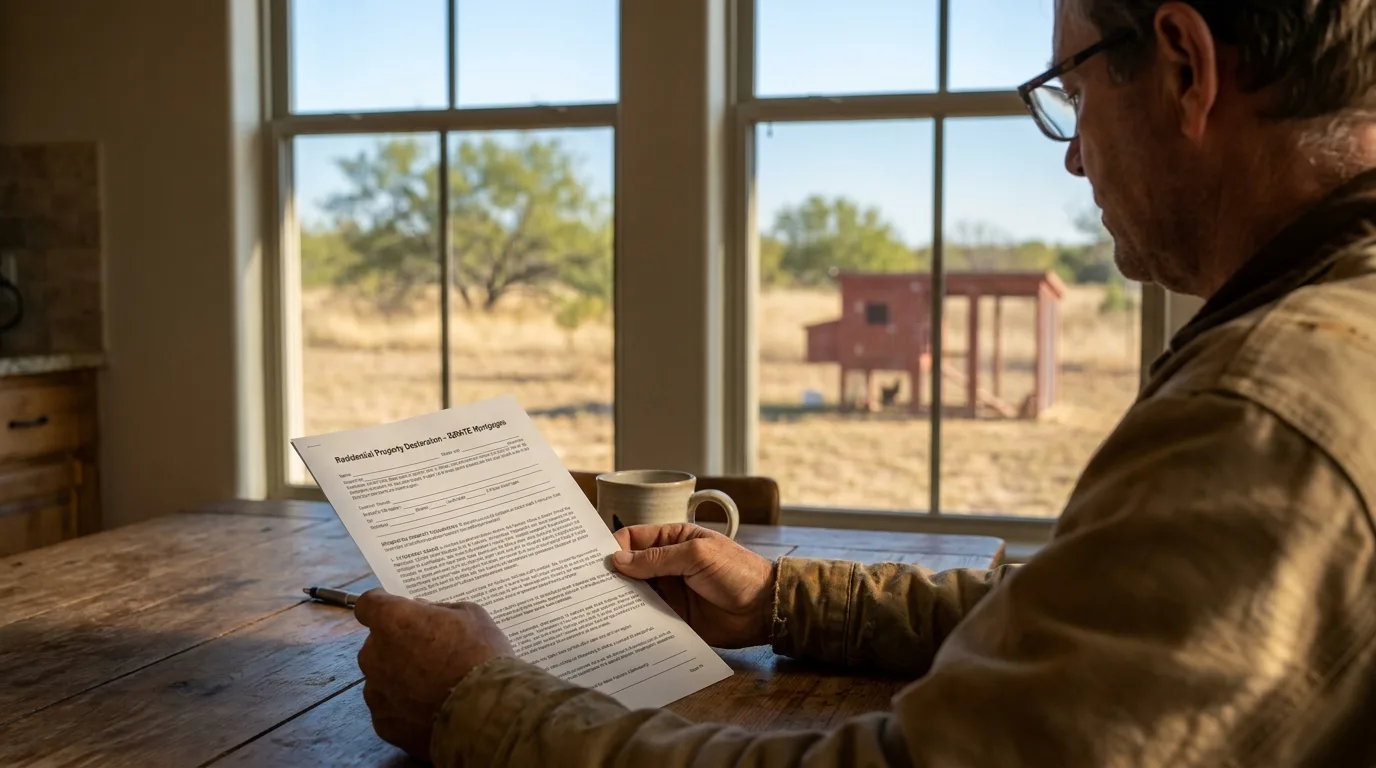
The key isn't a specific number but the ratio of the home's value to the land's value. A $1 million home on 25 acres is easier to finance than a $300,000 home on 25 acres.
How can I prepare my application to avoid delays?
Proactive preparation is essential to prevent your loan application from getting stalled or denied. Taking these steps can save you weeks of frustration.
- Work With an Experienced Broker: Partner with a mortgage broker or lender who has a proven track record of closing loans on Texas properties with ag exemptions. They will know which lenders have an appetite for these loans and how to package your file correctly from the start.
- Gather Documents Early: Have a copy of the property survey, the current owner’s tax statements showing the ag valuation, and any documentation related to the ag activity (e.g., beekeeping registration, cattle lease agreement).
- Explain Your Intentions: Write that letter of explanation upfront. Clearly state your intent to occupy the home as your primary residence and your plan for maintaining the ag valuation.
- Communicate with the Appraiser: Ensure the lender orders an appraisal from a professional with experience in valuing rural residential properties in the Austin or San Antonio areas. A bad appraisal can stop the entire process.
- Be Prepared for Higher DTI Calculation: Understand that your DTI will be calculated using the higher, non-exempt tax figure. Ensure your finances can support this higher theoretical payment before you even apply. If you're navigating the complexities of financing a Texas property with an ag exemption, partnering with an expert can make all the difference. A specialist can connect you with lenders who understand these unique properties, ensuring a smoother path to closing.
Financing a home with an agricultural exemption can feel complex, but you don't have to navigate it alone. Our team specializes in these unique Texas properties and is ready to help. If you're prepared to move forward, Apply for a Mortgage to partner with an expert who can streamline your path to approval.
Author Bio
David Ghazaryan is the expert mortgage strategist and founder behind iQRATE Mortgages. With a mission to fund home loans that traditional banks won't touch, David specializes in helping clients with unique financial situations, including those recovering from foreclosure or bankruptcy. He expertly crafts smart, strategic, and stress-free mortgages by leveraging a vast network of over 100 lenders to secure competitive rates for investors and homebuyers alike. Praised for exceptional customer service, David has helped hundreds of families with a 97% satisfaction rate, guiding them to the mortgage they deserve.
References
Texas Comptroller - Agricultural and Timber Exemptions









