
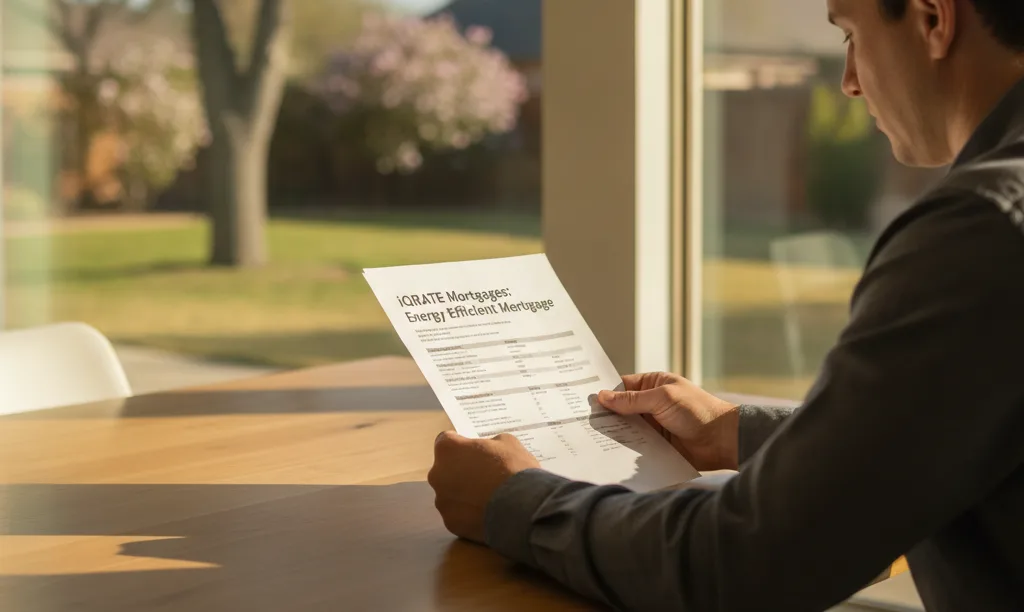

What is an Energy Efficient Mortgage and Who Qualifies?
An Energy Efficient Mortgage, or EEM, is a unique loan product designed to help you buy a more comfortable and cost-effective home. It allows you to roll the cost of energy-saving improvements into your primary mortgage at the time of purchase or refinance. Instead of taking out a separate, higher-interest personal loan for upgrades like new windows or a modern HVAC system, an EEM combines everything into one loan with one monthly payment.
The core idea is that the money you save on utility bills each month helps offset the slight increase in your mortgage payment. Lenders recognize this, making it a financially sound option for everyone involved.
Who is eligible for an EEM?
Generally, if you qualify for a conventional, FHA, or VA home loan, you can also qualify for an EEM. The main requirements include:
- Standard Mortgage Approval: You must meet the lender's credit, income, and down payment requirements for the primary mortgage.
- An Energy Audit: You must obtain a report from a certified energy assessor that details the home's current energy use and recommends cost-effective improvements.
- Cost-Effective Upgrades: The planned improvements must be deemed cost-effective, meaning the projected energy savings over the life of the improvement will be greater than its total cost.
This program is available for both existing homes that need upgrades and new construction homes built to high efficiency standards.
Can I Add Solar Panels to My Austin Home Loan?
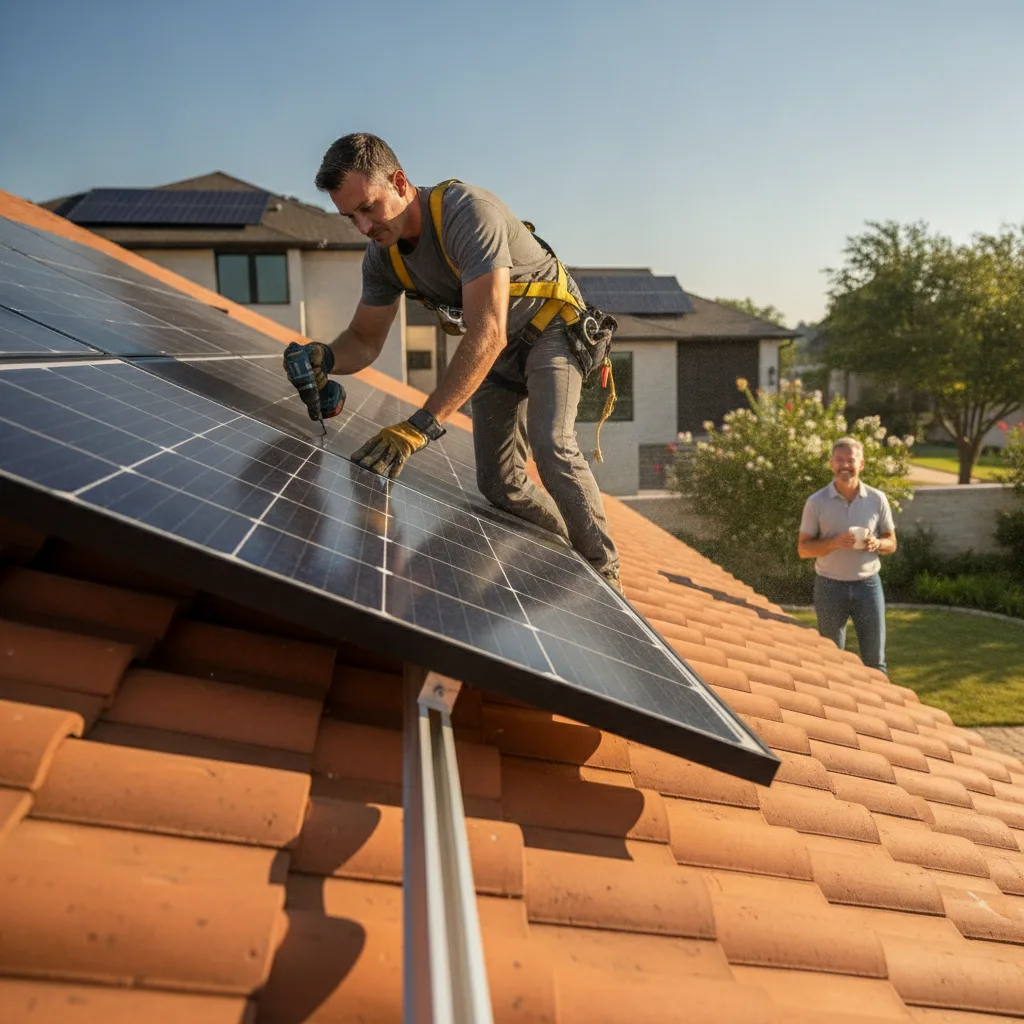
Yes, absolutely. Financing solar panels is one of the most popular uses for an Energy Efficient Mortgage, especially in sunny climates like Austin, Texas. Adding a solar energy system is considered a permanent, cost-effective improvement that directly lowers your monthly utility expenses, making it a perfect fit for the EEM program.

Imagine you're buying a home in Austin's popular South Congress neighborhood. You love the house, but you know the summer electricity bills will be significant. By using an EEM, you can finance a full solar panel installation as part of your purchase. The cost of the system is simply added to your total loan amount. Instead of paying a solar company tens of thousands of dollars out-of-pocket, you incorporate it into your mortgage, benefiting from a lower interest rate and a single, manageable payment.
This strategy not only makes solar power more accessible but also increases your home's value from day one.
The Required HERS Audit: Your First Step
The entire EEM process hinges on a professional energy assessment. This isn't just a suggestion; it's a mandatory step required by lenders to verify that your planned upgrades make financial sense. The industry standard for this is the Home Energy Rating System (HERS) Index.
What is a Home Energy Rating System (HERS) Audit?
A HERS audit is a comprehensive evaluation of a home's energy efficiency, conducted by a certified RESNET (Residential Energy Services Network) Home Energy Rater. The rater inspects the home from top to bottom, analyzing factors like:
- The amount and quality of insulation in walls and ceilings.
- Air leakage in the building envelope, including around windows and doors.
- The efficiency of the heating, ventilation, and air conditioning (HVAC) systems.
- The performance of windows and doors.
- The water heating system's efficiency.
After the inspection, the rater uses specialized software to generate a report. This report provides a HERS Index Score (a lower score is better) and, most importantly, a list of recommended upgrades, their estimated costs, and their projected annual energy savings.
How to Get a HERS Audit in Austin or San Antonio
To begin the process, you'll need to find a certified RESNET rater serving the Austin or San Antonio area. Your lender or real estate agent may have recommendations, or you can search the RESNET database directly. The rater will schedule a time to visit the property you intend to buy or refinance. Once the audit is complete, you will submit the rater's official report to your mortgage lender. This document is the key that unlocks the EEM financing, as it provides the third-party verification needed to approve the additional loan funds for the improvements.
How Much Extra Can I Borrow for Energy Upgrades?
The amount of money you can add to your mortgage for energy improvements is not unlimited. It's calculated based on specific guidelines that vary by loan program (FHA vs. conventional). The goal is to ensure the upgrades are cost-effective.
For an FHA Energy Efficient Mortgage, the maximum amount you can finance for upgrades is the lesser of several figures, including:
- The total cost of the improvements from the energy assessment.
- 5% of the property's value. (The data, information, or policy mentioned here may vary over time.)
For Conventional Loans, like the Fannie Mae HomeStyle Energy program, the rules are a bit different. Borrowers can typically finance improvements up to 15% of the home's 'as-completed' appraised value. The 'as-completed' value is an appraiser's estimate of what the home will be worth after all the energy-efficient upgrades are installed.
In both cases, the lender uses the HERS report to confirm that the value of the future energy savings will outweigh the cost of the upgrades. This protects both you and the lender from over-investing in improvements that don't provide a sufficient financial return.
Does an EEM Help Me Qualify for a Larger Loan?
Yes, this is one of the most powerful and often overlooked benefits of an EEM. Lenders can be more flexible with your debt-to-income (DTI) ratio when you use an EEM because they can account for your future energy savings.
The logic is simple: if your new, energy-efficient home will save you $200 per month on utility bills, that's $200 you don't have to spend elsewhere. A lender can add this projected savings to your qualifying income, which in turn increases your borrowing power.
For example, let's say you're trying to qualify for a home in San Antonio. Your DTI is slightly too high for the standard loan amount. However, the HERS report for the property shows that with $15,000 in upgrades (new HVAC and attic insulation), you'll save an estimated $175 per month. The lender can add that $175 to your monthly income for qualification purposes. This boost could be just what you need to qualify for the home you want, including the cost of the improvements.
Using an EEM for a Refinance in San Antonio
Energy Efficient Mortgages are not limited to home purchases. They are also an excellent tool for homeowners looking to refinance. If you already own a home in San Antonio and want to make energy-saving upgrades, you can use an EEM to refinance your current mortgage and roll the cost of the improvements into the new loan.
This is a smart strategy for several reasons:
- Lower Interest Rates: You finance the upgrades at a low mortgage interest rate instead of a high-rate credit card or personal loan.
- One Payment: You keep your finances simple with a single monthly mortgage payment.
- Immediate Savings: You start saving money on your utility bills as soon as the work is complete, which helps offset the new loan payment.
The process is nearly identical to a purchase EEM. You'll start with a HERS audit of your current home, get a quote for the desired improvements, and work with your lender to structure a refinance loan that includes the extra funds.
FHA vs. Conventional EEM Programs: Key Differences
While FHA and conventional EEMs share the same goal, they have different guidelines that may make one a better fit for you.
FHA EEM
- Best for: Borrowers with lower credit scores or smaller down payments.
- Down Payment: Typically requires as little as 3.5% down.
- Credit Score: More lenient credit score requirements.
- Funding Limit: The amount you can borrow for upgrades is based on a strict formula (e.g., the lesser of cost vs. specific value calculations).
- Mortgage Insurance: Requires both an upfront and an annual Mortgage Insurance Premium (MIP) for the life of the loan in most cases.
Conventional EEM (Fannie Mae HomeStyle Energy)
- Best for: Borrowers with strong credit and a larger down payment.
- Down Payment: Often requires 5% down or more.
- Credit Score: Requires a higher credit score, typically 620 or above.
- Funding Limit: Allows financing up to 15% of the home's as-completed value, which can provide more funds for extensive projects.
- Mortgage Insurance: Private Mortgage Insurance (PMI) is required for down payments under 20% but can be canceled once you reach 20% equity.
High-ROI Improvements for Your Texas Home
When using an EEM in a hot climate like Austin or San Antonio, some improvements provide a much better return on investment than others. Focus on upgrades that combat heat gain and reduce cooling costs:
- High-Efficiency HVAC Systems: Air conditioning is the largest energy expense for most Texas homes. Upgrading to a modern, high-SEER (Seasonal Energy Efficiency Ratio) unit can dramatically cut your summer electricity bills.
- Attic Insulation and Radiant Barriers: Heat builds up in the attic and radiates down into your living space. Adding insulation and a radiant barrier to the underside of the roof deck can significantly lower cooling demand.
- Energy-Efficient Windows: Old, single-pane windows are a major source of heat transfer. Replacing them with double-pane, low-E (low-emissivity) windows keeps the cool air in and the hot air out.
- Solar Panels: A solar panel system allows you to generate your own electricity, directly offsetting your usage from the grid and providing substantial long-term savings.
- Duct Sealing: Leaky air ducts can lose up to 30% of your conditioned air into the attic or crawlspace. Sealing them ensures that cool air gets where it's supposed to go. An Energy Efficient Mortgage can be a powerful tool for buying a home in Austin or San Antonio, but the guidelines can be complex. Discussing your options with a mortgage advisor who understands the specifics of FHA and conventional EEM programs can help you create a smart, cost-effective home financing strategy.
Ready to lower your utility bills and increase your home's comfort? An Energy Efficient Mortgage makes it possible. Apply now to see how you can finance energy-saving upgrades into your home loan and start saving from day one.
Author Bio
David Ghazaryan is the expert mortgage strategist and founder behind iQRATE Mortgages. With a mission to fund home loans that traditional banks won't touch, David specializes in helping clients with unique financial situations, including those recovering from foreclosure or bankruptcy. He expertly crafts smart, strategic, and stress-free mortgages by leveraging a vast network of over 100 lenders to secure competitive rates for investors and homebuyers alike. Praised for exceptional customer service, David has helped hundreds of families with a 97% satisfaction rate, guiding them to the mortgage they deserve.
References
HUD - Energy Efficient Mortgage Program









