
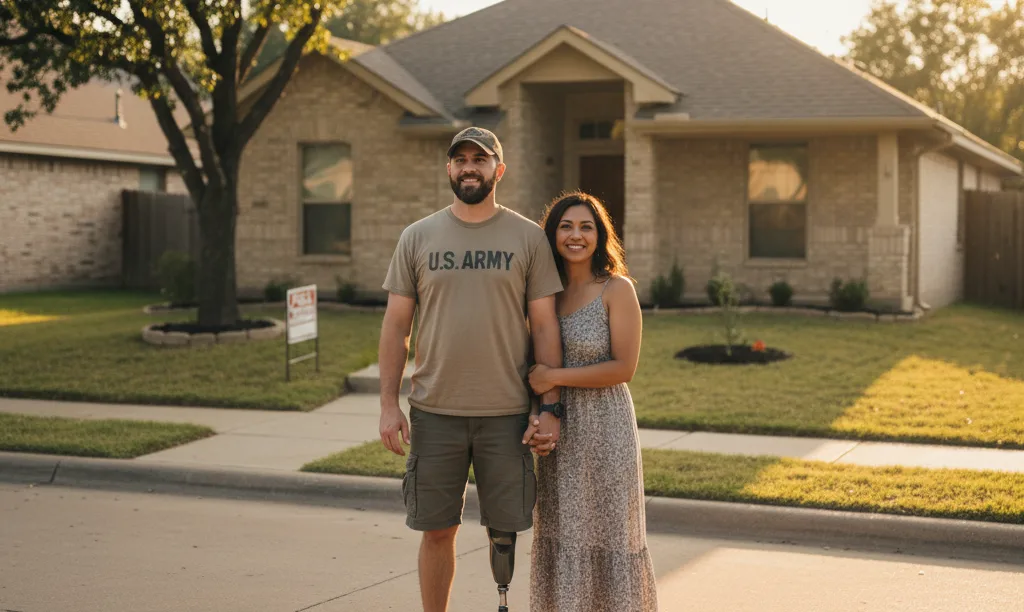

What Documents Do I Need for a Mortgage During Medical Retirement?
When you're transitioning out of service through medical retirement, your financial picture is unique. Lenders need specific documents to bridge the gap between your active duty pay and your future disability income. Having these items organized is the first step toward a successful home purchase in Killeen or the surrounding areas.
Your mortgage application checklist must include:
- DD-214 (Certificate of Release or Discharge from Active Duty): If you've already separated, this is essential. If you are still active, a Statement of Service from your commander will suffice.
- Certificate of Eligibility (COE): This official VA document proves you meet the minimum service requirements for a VA home loan. A lender can typically pull this for you in minutes with your Social Security number and date of birth.
- Leave and Earnings Statement (LES): Your most recent LES shows your current active duty income, which can be used in conjunction with your future disability pay.
- Forthcoming Benefit Letter: This is the most critical document. It must be an official letter from the Department of Veterans Affairs or the Department of Defense. It needs to clearly state two things: the exact monthly amount of your future disability compensation and the specific date it will begin. A vague letter or a simple benefits estimate will not work.
- Bank Statements: Typically, the last two months of statements are needed to verify assets for closing costs and any required reserves. (The data, information, or policy mentioned here may vary over time.)

How Do Lenders Verify Future Veteran Affairs Disability Income in Killeen?
Underwriters in Killeen must follow strict VA guidelines to verify income that hasn't started yet. They can't just take your word for it; they need irrefutable proof. The verification process centers on the official VA disability letter.
Here’s what the lender will look for in your documentation:
- Official Source: The letter must come directly from the VA or DoD. A printout from an online portal or a summary from a benefits counselor is not sufficient.
- Clear Start Date: The document must specify the date your payments will commence. This allows the lender to structure the loan closing around that timeline.
- Specific Dollar Amount: The letter must detail the exact, non-taxable monthly compensation you will receive. Terms like 'approximately' or 'estimated' will cause the underwriter to reject the income.
- Continuance: VA disability income is considered stable and likely to continue, a key requirement for any qualifying income. Lenders must document that the income is likely to continue for at least three years, which is inherent with permanent disability ratings.
For example, if you're buying a home in Temple, Texas, and your letter states you will receive $3,100 per month starting on August 1st, the lender can use that income for a loan closing in July. The key is that the first mortgage payment will be due after your income stream begins.
Can I Use My Final Active Duty Pay and Future Disability for One Loan?
Yes, you absolutely can. This is a common and effective strategy for medically retiring service members. Lenders can create a complete income profile by combining your current, verifiable active duty pay with your documented future disability pay. This 'income bridging' is essential for qualifying before your final out-processing date.
Here's how it works in practice:
Let's say your final day of active duty is July 15th, and your VA disability payments begin on August 1st. You find a home in Killeen and want to close on July 10th.
- Income Source 1 (Active Duty): The lender uses your LES to verify your current pay. This income is used to qualify you up to your separation date.
- Income Source 2 (VA Disability): The lender uses your forthcoming benefit letter to confirm your disability income begins shortly after your active pay ends.
By documenting both sources, the lender can see a continuous, uninterrupted stream of income, satisfying underwriting requirements. This allows you to close on the house while still on active duty, making for a much smoother transition to civilian life without the stress of a temporary housing situation.
What Is a Letter of Entitlement and How Does It Help My Fort Hood Loan?
It's important to distinguish between a Certificate of Eligibility (COE) and your VA disability benefit letter. Sometimes these terms are used interchangeably, but they serve different functions for your Fort Hood area loan.
- Certificate of Eligibility (COE): This document proves you have earned the VA home loan benefit through your service. It tells the lender how much entitlement you have available to guarantee the loan. It says nothing about your income or disability status. It simply confirms you are eligible for the program.
- VA Disability Benefit Letter (also called a 'Forthcoming Benefit Letter' or 'Award Letter'): This document is all about income. It verifies the specific dollar amount you will receive from the VA for a service-connected disability. This is the letter used for income qualification and debt-to-income ratio calculations.
Think of it this way: The COE gets you in the door, proving you can use the VA loan program. The disability benefit letter proves you have the income to afford the monthly mortgage payment. You need both for a successful loan approval when medically retiring.
Do I Need Reserves if My Disability Income Has Not Started Yet?
While the VA loan program is famous for not having a strict cash reserve requirement for most single-family home purchases, having reserves is a powerful compensating factor, especially when using future income. Reserves are funds you have left over after paying all closing costs.
When an underwriter sees that your primary qualifying income hasn't started yet, they look for other strengths in your file. Having a few months of mortgage payments in the bank shows you have a safety net and can handle the financial transition without risk of default.
- What is recommended? Aim for at least two to three months of total housing payments (Principal, Interest, Taxes, and Insurance or PITI) in a verifiable account.
- Example: If your total monthly payment on a new home in Temple is calculated to be $2,200, having $4,400 to $6,600 in reserves after closing would make your loan application significantly stronger. It reassures the lender that you are financially prepared for homeownership, even with an income stream that is about to begin. (The data, information, or policy mentioned here may vary over time.)
How Is My Debt-to-Income Ratio Calculated with Future Income?
Your Debt-to-Income (DTI) ratio is a critical part of your mortgage approval. It's calculated by dividing your total monthly debt payments by your gross monthly income. Because VA disability income is non-taxable, lenders are allowed to 'gross it up' to account for the tax savings.
Most lenders will increase your non-taxable income by 15% to 25% for calculation purposes. The standard is typically 25%.

Calculation Example:
- Documented Future Disability Income: Your VA letter states you will receive $3,200 per month (non-taxable).
- Gross-Up Calculation: The lender 'grosses up' this income: $3,200 x 1.25 = $4,000 (This is the income figure used for your DTI).
- Calculate Monthly Debts: Add up all your monthly obligations (car loan, credit card payments, student loans). Let's say this total is $1,600 per month.
- Calculate DTI: Divide total debts by the grossed-up income: $1,600 / $4,000 = 0.40 or 40% DTI.
This DTI is well within the acceptable range for most VA loans. Using the grossed-up income value provides a more accurate picture of your purchasing power and can be the difference between getting approved or denied. (The data, information, or policy mentioned here may vary over time.)
Should I Wait for My Disability Rating Before Applying for a Mortgage?
Ideally, no. Waiting for your final, official disability rating from the VA can take several months. This delay could cause you to lose out on a desired home, face rising interest rates, or be forced into a stressful short-term rental situation after separating.
The key is to obtain a proposed rating decision or a memorandum rating letter during your medical separation process. This pre-decision document is often sufficient for lenders, provided it meets the criteria mentioned earlier: it's on official letterhead and states the exact amount and start date.
By being proactive and working with your military transition and medical teams, you can secure this letter before your final day of service. This allows you to apply for your mortgage, get pre-approved, and go house-hunting in the Killeen area with confidence, ensuring you can close on your new home without a stressful waiting period. (The data, information, or policy mentioned here may vary over time.)
What Common Mistakes Delay Home Loans for Medically Retiring Veterans?
Navigating a mortgage during medical retirement requires careful attention to detail. Several common, avoidable mistakes can delay or even derail the process.
- Submitting an Unofficial Benefits Letter: Providing a benefits summary from eBenefits or an estimate from a VA counselor is not enough. You must have the official award letter that specifies the amount and start date.
- Not Having Your COE Ready: While a lender can usually pull this for you, having it on hand speeds up the initial application process. It confirms your eligibility from day one.
- Choosing an Inexperienced Lender: Many loan officers are unfamiliar with the specific VA guidelines for using future disability income. Work with a mortgage professional who specializes in VA loans and has a proven track record of handling these complex cases.
- Opening New Lines of Credit: Do not apply for new credit cards, finance furniture, or buy a new car during your transition and mortgage process. Any new debt will alter your DTI ratio and can put your approval at risk.
- Providing Incomplete Documentation: Respond to your lender's requests for documents promptly and completely. Delays in providing bank statements or other required paperwork will directly lead to a delayed closing. If you are a medically retiring veteran in Texas, navigating the use of future disability income can feel complex. Partnering with a mortgage expert who understands VA guidelines is crucial for a smooth transition into your new home. A specialist can help you gather the right documents and present your financial profile for a confident approval.
Your transition to civilian life marks a new chapter. If you're ready to secure a home with a mortgage team that truly understands the nuances of VA loans and medical retirement income, we're here to guide you. Apply now to get started with confidence.
Author Bio
David Ghazaryan is the expert mortgage strategist and founder behind iQRATE Mortgages. With a mission to fund home loans that traditional banks won't touch, David specializes in helping clients with unique financial situations, including those recovering from foreclosure or bankruptcy. He expertly crafts smart, strategic, and stress-free mortgages by leveraging a vast network of over 100 lenders to secure competitive rates for investors and homebuyers alike. Praised for exceptional customer service, David has helped hundreds of families with a 97% satisfaction rate, guiding them to the mortgage they deserve.
References
VA Home Loan Certificate of Eligibility (COE)
CFPB - What proof of income do I need to provide to get a mortgage?









