


Why Appraisal Gaps Are Common With Jumbo Loans in Reno
In desirable, high-value markets like Reno and Incline Village, Nevada, appraisal gaps on jumbo loans are becoming increasingly frequent. This isn't a random problem; it's a direct result of specific market dynamics. Rapid price appreciation, fueled by high demand and limited luxury inventory, often creates a disconnect between the agreed-upon purchase price and the property's appraised value. Lenders providing jumbo loans—mortgages that exceed the conforming loan limits set by the Federal Housing Finance Agency (FHFA)—are particularly cautious and rely heavily on the appraisal to validate their investment. (The data, information, or policy mentioned here may vary over time.)
The core issue lies in how appraisals are conducted. Appraisers must use historical sales data from comparable properties, often called 'comps'. In a fast-moving market like Reno's, where bidding wars can drive prices up week by week, the available comps from three to six months ago may not reflect the current reality. This lag creates a valuation that falls short of the contract price.
For example, imagine you make a $2.5 million offer on a home in Incline Village. Your offer is accepted based on current demand. However, the most recent comparable sale in that specific neighborhood was four months ago for $2.3 million. The appraiser, bound by professional standards, might value your target property at $2.35 million. This creates a $150,000 appraisal gap that the jumbo loan will not cover, leaving you to find a solution or risk losing the home.
What Is the First Step When the Appraisal Comes in Low?
Receiving the news that your appraisal is lower than your offer price can be stressful, but it's crucial to act methodically, not emotionally. The first few hours are critical for setting a strategy.
Contact Your Team Immediately: Before doing anything else, call your loan officer and your real estate agent. They are your professional guides and have likely navigated this exact scenario before. They can provide immediate context and help you understand the lender's specific policies.
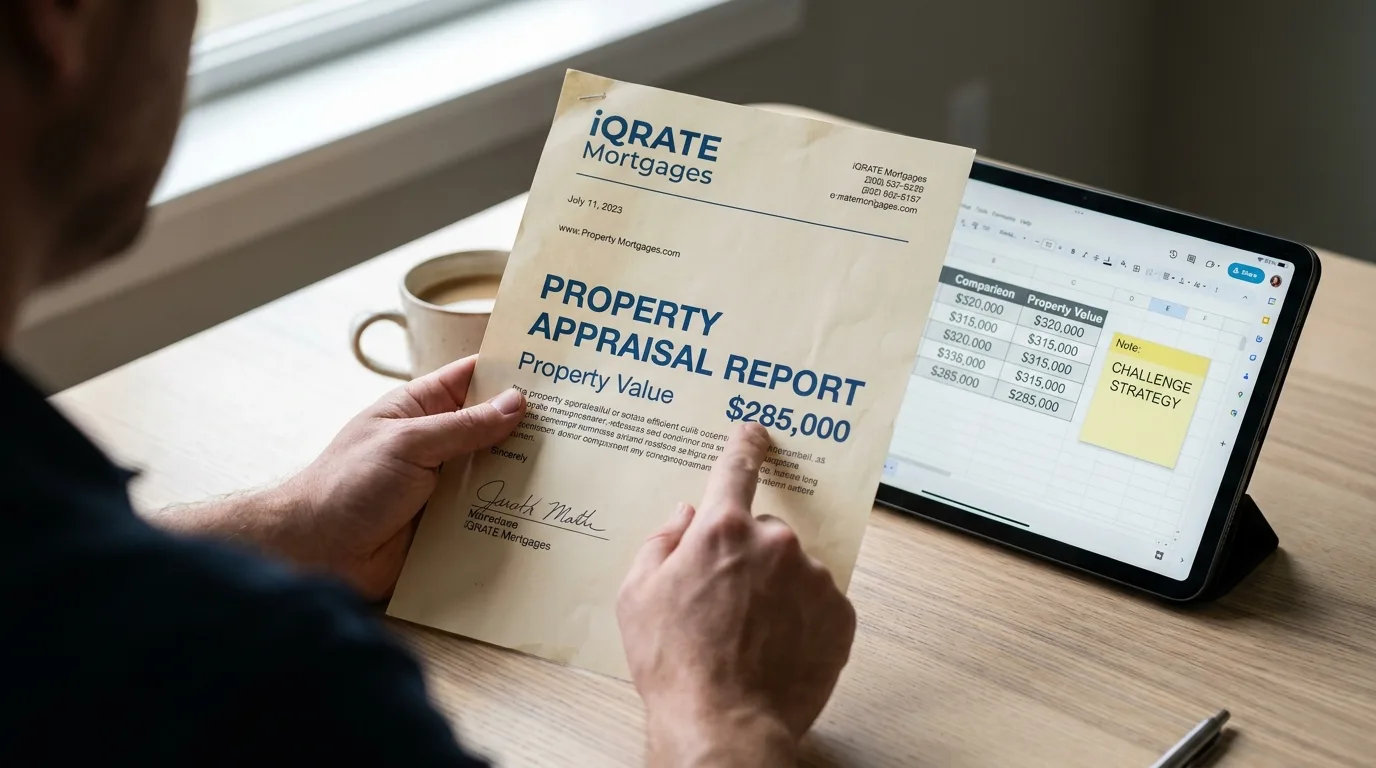
Request and Review the Full Appraisal Report: Don't rely on a verbal summary. Ask your lender for the complete appraisal report. Scrutinize it for any factual inaccuracies, no matter how small. Common errors include:
- Incorrect square footage
- Wrong number of bedrooms or bathrooms
- Failure to account for a finished basement or an accessory dwelling unit (ADU)
- Missing major upgrades like a recently renovated kitchen, a new roof, or a custom pool
Analyze the Comparable Sales: With your real estate agent, carefully review the comps the appraiser used. Are they truly comparable? Did the appraiser use a home from a less desirable location in Reno? Did they overlook a more recent, more relevant sale that supports your purchase price? Identifying weaker comps is the foundation for a potential rebuttal.

How to Formally Request an Appraisal Rebuttal in Incline Village
If you and your agent identify clear errors or superior comps, you can challenge the valuation through a formal process called a 'Reconsideration of Value' (ROV) or appraisal rebuttal. This isn't an argument; it's a data-driven request for the appraiser to review new information.
Gathering Evidence for Your Rebuttal
A successful rebuttal relies on objective, compelling evidence. Emotion and opinion have no place here. Your submission, prepared by your agent and loan officer, should include:
- A List of Factual Errors: Clearly and concisely point out any mistakes in the report, such as 'The report lists 4 bedrooms, but the property has 5' or 'The gross living area is listed as 3,200 sq. ft., but the building plans confirm it is 3,500 sq. ft.'.
- Stronger Comparable Sales: Provide at least three recent, relevant comps that the appraiser missed. For an Incline Village property, a comp with similar lake views is far more powerful than one without. The closer in proximity, size, condition, and sale date, the better.
- Context on Pending Sales: Information on neighboring homes currently under contract at prices that support your offer can also be persuasive, as it reflects the most current market sentiment.
- Documentation of Uncredited Features: If the appraiser undervalued unique features, provide proof. This could include invoices for a high-end kitchen remodel or a detailed explanation of a smart home system's value.
Submitting the Rebuttal
Critically, you as the buyer cannot contact the appraiser directly. All communication must go through your lender. The lender will review your evidence and formally submit the ROV request to the appraiser or the appraisal management company. The appraiser will then review the new data and decide whether to revise the valuation. While there's no guarantee of success, a well-documented rebuttal gives you the best possible chance of closing the gap.
Can You Get a Second Appraisal from a Different Lender?
Yes, pursuing a second appraisal is an option, but it's a significant decision that comes with its own set of pros and cons. This strategy involves applying for the same jumbo loan with a different lender, who will then order a new appraisal from a different professional.
Potential Advantages:
- A new appraiser might have deeper local knowledge of micro-markets within Reno or Incline Village.
- A different perspective could lead to a valuation that aligns with your purchase price.
Significant Disadvantages:
- Cost: You will have to pay for the second appraisal out of pocket, which can be $1,000 or more for a complex jumbo property. (The data, information, or policy mentioned here may vary over time.)
- Time: Starting a new loan application will delay your closing, potentially putting you in breach of your purchase contract.
- No Guarantees: The second appraisal could come in at the same value—or even lower—leaving you back where you started, but with less time and money.
This option is generally best reserved for situations where you are confident the first appraisal was deeply flawed and you have enough time in your contract to accommodate the delay of switching lenders.
Are There Loan Programs to Help Finance an Appraisal Gap?
Financing an appraisal gap with a loan product is challenging because traditional mortgages are based on the lesser of the purchase price or the appraised value. A jumbo lender will not simply increase the loan amount to cover your gap. However, some creative financing strategies may exist for well-qualified borrowers.
One potential, though less common, option is a 'piggyback' loan. This involves taking out the primary jumbo mortgage based on the appraised value and then a second, smaller mortgage to help cover the remaining amount. For instance, if your $2 million home appraises at $1.9 million, you might get a jumbo loan for 80% of $1.9 million and explore a Home Equity Line of Credit (HELOC) or a fixed-rate second mortgage to help bridge the remaining gap, combined with a larger cash down payment. These structures are complex, increase your total debt, and are only available from certain lenders for borrowers with excellent credit and low debt-to-income ratios. (The data, information, or policy mentioned here may vary over time.)
The Best Strategies for Renegotiating With the Seller in Reno
Often, the most effective solution is to go back to the negotiating table. The low appraisal provides you with powerful, third-party leverage. The seller now knows that any future buyer using financing will likely encounter the same valuation issue.
- Meet in the Middle: This is the most common outcome. If you have a $100,000 appraisal gap, you could offer to increase your down payment by $50,000 if the seller agrees to reduce the price by $50,000.
- Seller Pays All or Part of the Gap: In a buyer's market or if the seller is highly motivated, they may agree to lower the purchase price to match the appraised value. In a competitive market like Reno, this is less likely unless your offer was the only one they received.
- Request Seller Concessions: If the seller is unwilling to lower the price, ask if they will cover your closing costs. This can free up thousands of dollars of your own cash, which you can then redirect to cover the appraisal gap. (The data, information, or policy mentioned here may vary over time.)
Your real estate agent's negotiation skills are paramount here. How they frame the request will determine its success.
When Does It Make More Sense to Walk Away From the Purchase?
Sometimes, the wisest financial decision is to walk away. This is precisely why your purchase contract should include an appraisal contingency. This clause gives you the right to cancel the contract without penalty and have your earnest money deposit returned if the property fails to appraise at the purchase price.
It makes sense to walk away under these circumstances:
- The Gap is Financially Unmanageable: If the appraisal is $200,000 short and you do not have the liquid assets to cover it without jeopardizing your financial stability, forcing the deal is not prudent.
- The Seller Refuses to Negotiate: If the seller holds firm on the price and you are unwilling to cover the entire gap, the deal is at an impasse. Don't let emotion lead you to overpay for a property.
- The Appraisal Confirms You Were Overpaying: A low appraisal may not be an obstacle; it might be a warning. The appraiser's objective valuation could be saving you from making a poor investment. Thank the process and look for a property that is priced more appropriately for the market. An appraisal gap on a jumbo loan feels like a major setback, but it doesn't have to be the end of your deal. A mortgage strategist can help you analyze the appraisal, structure a rebuttal, and explore all financing options. Reach out for a clear plan tailored to your situation in the Reno or Incline Village market.
Navigating an appraisal gap on a jumbo loan requires a clear strategy. If you're facing this challenge in the Reno or Incline Village market, let's explore your options together. Apply now to get personalized guidance from a mortgage strategist.
Author Bio
David Ghazaryan is the expert mortgage strategist and founder behind iQRATE Mortgages. With a mission to fund home loans that traditional banks won't touch, David specializes in helping clients with unique financial situations, including those recovering from foreclosure or bankruptcy. He expertly crafts smart, strategic, and stress-free mortgages by leveraging a vast network of over 100 lenders to secure competitive rates for investors and homebuyers alike. Praised for exceptional customer service, David has helped hundreds of families with a 97% satisfaction rate, guiding them to the mortgage they deserve.
References
Consumer Financial Protection Bureau - What can I do if I disagree with the appraisal of a home?
Fannie Mae - B4-1.1-05, Appraisal Report Review, Reconsiderations of Value, and Appraisal Disputes









