
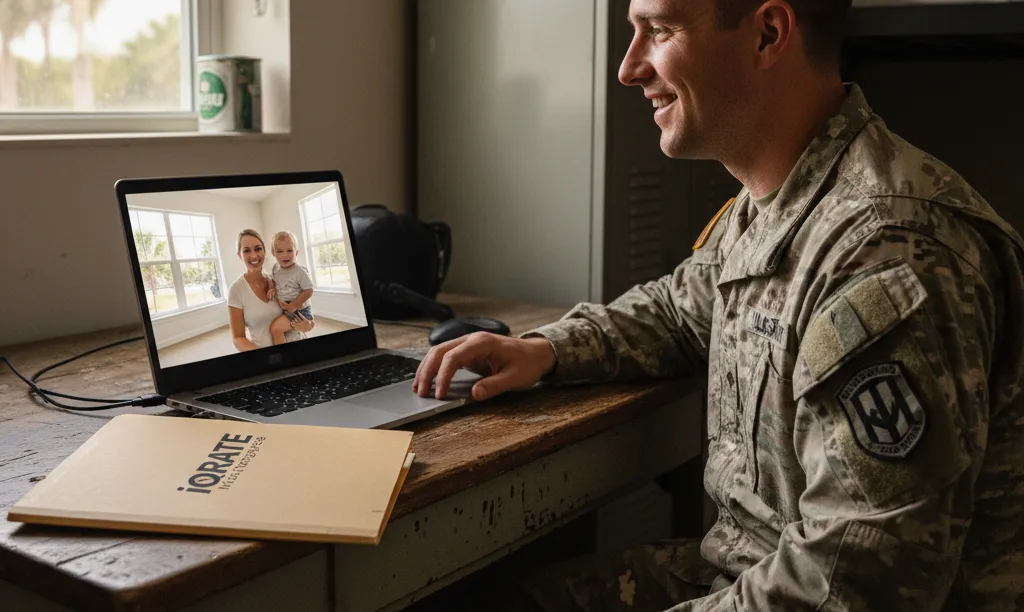

Proving Overseas Income for a VA Loan
When you're stationed overseas, your income structure looks different from a stateside civilian's, but it's completely verifiable for a mortgage. Lenders primarily rely on your Leave and Earnings Statement (LES). This document is the cornerstone of your application as it breaks down your base pay, Basic Allowance for Housing (BAH) or Overseas Housing Allowance (OHA), and other entitlements.
Here’s what you need to gather:
- Recent LES Statements: Typically, lenders require your last 30 days of LES statements. This shows consistent pay and allowances. (The data, information, or policy mentioned here may vary over time.)
- Federal Tax Returns: Two years of filed tax returns provide a broader picture of your financial history.
- Service Orders: Your official orders confirm your station, duration of service, and expected return date, which helps lenders understand your long-term stability.
Example: An E-6 stationed in Germany wants to buy a home in Jacksonville, Florida. Their LES shows base pay, OHA, and Cost of Living Allowance (COLA). The lender will use the base pay and may consider other non-taxable allowances as grossed-up income, increasing borrowing power. (The data, information, or policy mentioned here may vary over time.) The key is providing a complete LES so the underwriter can accurately calculate your debt-to-income ratio.
How Lenders Handle Overseas Allowances
Lenders familiar with military financing understand that OHA and COLA are part of your compensation package. While these allowances will cease when you return stateside, your BAH will begin. The lender will use the BAH rate for the location of the home you're buying, such as Naval Air Station Jacksonville or Naval Air Station Pensacola, to qualify you. They will verify these rates using the official Department of Defense BAH calculator.
Managing Time Zones in the Mortgage Process
Coordinating a mortgage from halfway around the world requires proactive communication. A ten-hour time difference between Florida and your duty station can delay document signing and communication if not managed properly.
Strategies for Success:
- Establish a Communication Plan: Work with your loan officer to set a specific time for weekly calls. Early morning in Florida often aligns with late afternoon or evening in Europe or the Middle East.
- Use Secure Digital Tools: Leverage secure online portals for uploading documents. This avoids delays from international mail and protects your sensitive information.
- Delegate on-the-ground tasks: Rely on your real estate agent and your designated Power of Attorney to handle time-sensitive local tasks.
Using a Power of Attorney for Your VA Loan Closing
A Power of Attorney (POA) is a legal document that lets you appoint another person, known as your 'attorney-in-fact', to act on your behalf. For an overseas service member, this is the most critical tool for closing on a VA loan. Without it, you cannot finalize the purchase from abroad.

There are two main types:
- General POA: Grants broad powers to your representative. Lenders often shy away from these for real estate transactions because they lack specificity. (The data, information, or policy mentioned here may vary over time.)
- Specific POA (or Special POA): This is what lenders and title companies require. It explicitly outlines the powers granted, limiting them to the specific real estate transaction for your new Pensacola home. It will list the property address, loan amount, and other precise details.
The VA requires the veteran to certify that they have read and understood the terms of the loan. With a POA, the attorney-in-fact signs the closing documents, but the veteran must still acknowledge the loan terms, often done through secure digital means beforehand.
Who Can Be Your Attorney-in-Fact?
Typically, service members choose their spouse, a trusted family member, or a close friend. This person must be physically present at the closing appointment in Florida. It's crucial to select someone reliable and capable of handling legal documents.
Lender Employment Verification from Abroad
Verifying employment for active duty military is more straightforward than for civilians. Lenders don't need to call a traditional HR department. Instead, they use your LES and service orders. To satisfy underwriting requirements, a lender may also need a Statement of Service letter. This letter is written on official letterhead and signed by your commanding officer. It confirms your name, rank, date of entry into service, and current duty status.
In some cases, lenders use the Servicemembers Civil Relief Act (SCRA) website for an additional layer of verification, confirming your active duty status online. This combination of documents provides a clear and undeniable record of your employment and income stability.
VA Occupancy Rules for Families in Pensacola
The VA loan program requires the veteran to certify that they intend to occupy the property as their primary residence. But what if you're deployed and won't be back for six months? The VA provides a major exception for active duty service members.

Your spouse can fulfill the occupancy requirement on your behalf. If your spouse and children move into your new Pensacola home while you complete your overseas tour, you have met the VA's occupancy rule. The VA generally requires the veteran to occupy the home within a 'reasonable time', which is typically considered to be within 60 days of closing. However, for an active duty service member on deployment, this timeline is extended until you return stateside after your tour is complete. You will need to provide a copy of your service orders to the lender to document this.
Handling Remote Appraisals and Inspections
You won't be there to walk through the property, so you must rely on your team. This is where a great real estate agent and a trustworthy attorney-in-fact are invaluable.
- The Appraisal: The lender will order the appraisal from a VA-approved appraiser. Your agent will coordinate access to the property. You will receive a digital copy of the appraisal report, which includes photos and a detailed analysis of the home's value and condition.
- The Home Inspection: This is separate from the appraisal and is highly recommended. Your agent can help you hire a licensed inspector. Ask the inspector to provide a highly detailed report with numerous photos and videos. You or your attorney-in-fact can also request a live video call walkthrough during the inspection to see any potential issues firsthand.
Foreign Addresses and Your U.S. Credit Report
Your physical location overseas does not negatively impact your U.S. credit file. Lenders will pull your credit report using your Social Security Number, which is tied to your U.S. credit history. An Army Post Office (APO) or Fleet Post Office (FPO) address is understood by lenders and credit bureaus as a military address and will not cause issues. The key is that all your credit history—credit cards, car loans, etc.—is based in the U.S. financial system.
Transferring Funds for Closing Costs from Overseas
For your down payment (if applicable) and closing costs, you will need to transfer funds to the title company or closing attorney in Florida. (The data, information, or policy mentioned here may vary over time.) An international wire transfer is the most common and secure method.
Best Practices:
- Verify Instructions: Always verbally confirm the wiring instructions with the title company before sending funds. Email hacking is a real threat.
- Account for Time: International wires can take 2-5 business days. Initiate the transfer well ahead of your closing date to avoid delays.
- Check for Fees: Be aware of transfer fees from your bank and any intermediary banks. Factor these into the total amount you send. Buying a home while serving overseas introduces unique challenges, but with the right guidance, it's entirely achievable. If you're preparing to purchase a home in Jacksonville, Pensacola, or anywhere in Florida, connect with a mortgage expert who understands the complexities of overseas military financing.
Ready to plant your roots back home in Florida? Navigating the mortgage process from overseas is our specialty. Start your application with a team that understands the details of military financing and is ready to guide you every step of the way.
Author Bio
David Ghazaryan is the expert mortgage strategist and founder behind iQRATE Mortgages. With a mission to fund home loans that traditional banks won't touch, David specializes in helping clients with unique financial situations, including those recovering from foreclosure or bankruptcy. He expertly crafts smart, strategic, and stress-free mortgages by leveraging a vast network of over 100 lenders to secure competitive rates for investors and homebuyers alike. Praised for exceptional customer service, David has helped hundreds of families with a 97% satisfaction rate, guiding them to the mortgage they deserve.
References
VA Loan Occupancy Requirements









