


Using Your VA Loan with a Home Builder in Houston
Securing a newly built home in bustling areas like Houston or Katy with a VA loan is an excellent way to leverage your hard-earned benefits. However, the path is different from buying a pre-owned property. You're not just buying a house; you're financing a project. This involves aligning three parties: you, the builder, and a VA-proficient lender. The key is ensuring the builder is registered and approved by the Department of Veterans Affairs.
Builder Eligibility and the VA Builder ID
A common misconception is that any home builder is automatically eligible to build a home for a veteran using a VA loan. This is not the case. The builder must be registered with the VA and have a valid VA Builder ID. This registration process ensures the builder meets specific VA standards for quality and financial stability.
- Lender Verification: Before your loan can be approved, your mortgage lender is responsible for verifying the builder's status with the VA. If the builder is not registered, they must complete the required paperwork, which includes providing their business license, financial information, and references.
- Finding an Approved Builder: Many large, reputable builders in the Houston area already have a VA Builder ID because they frequently work with veterans. However, when considering a smaller or custom builder, this is one of the first questions you should ask. Delays in this registration can jeopardize your closing timeline.
- Builder Willingness: Even if a builder can get registered, some may be hesitant to work with VA financing due to the specific inspection and appraisal process. It's vital to have this conversation upfront before signing any contract or paying a deposit.
Construction Loan vs. Permanent VA Loan Explained
Understanding the financing structure is critical. You are not getting one loan to buy land and pay for construction. Instead, the process typically involves two distinct financing phases, even if they are bundled together.
The Builder's Role: Construction Financing
In most new construction communities in Katy and Houston, the builder finances the construction themselves. They own the lot and use their own line of credit to pay for materials, labor, and all building costs. You are essentially under contract to purchase the home once it is complete. In this scenario, your VA loan is the permanent financing or 'end loan' that pays the builder off at closing. You will not make any mortgage payments until after the home is finished and you have officially closed on the loan.
The Veteran's Role: The Permanent VA Loan
Your VA loan is used to purchase the completed home from the builder. This is the most common and simplest method. A less common alternative is a VA construction-to-permanent loan, often called a 'one-time close' loan. This single loan funds the construction and then converts to your permanent mortgage. These are more complex, have stricter qualification requirements, and are not offered by all lenders. (The data, information, or policy mentioned here may vary over time.)
- Example: A builder in Katy is selling a new home for a total price of $450,000. You sign a contract and provide an earnest money deposit. The builder constructs the home over six months. During the final month, your lender finalizes your VA loan. At closing, your $450,000 VA loan funds, paying the builder in full, and you receive the keys. Your first mortgage payment is due the following month.
Responsibility for VA Inspections During the Build
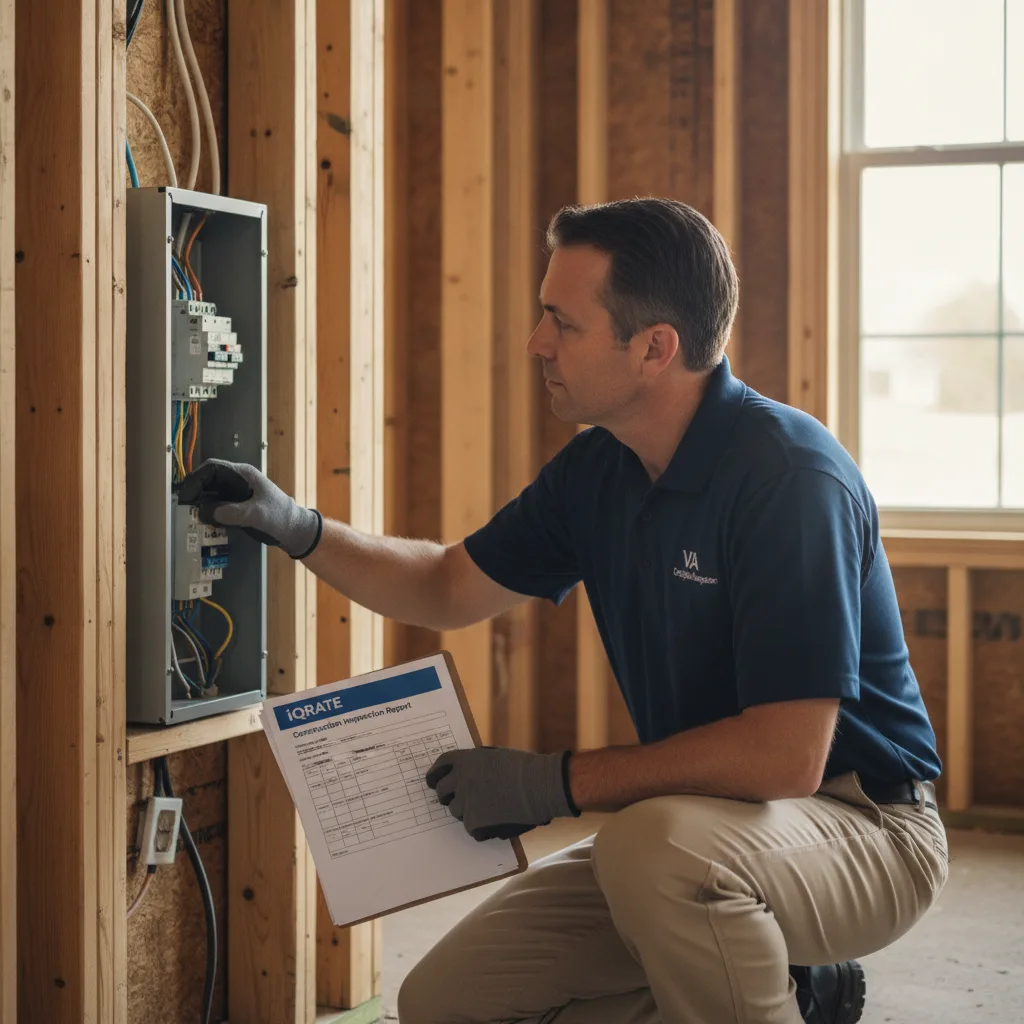
The VA requires a series of inspections during construction to ensure the home is being built to its standards, which often exceed local building codes. These inspections protect the veteran's interest and the VA's investment.

The Three Key VA Inspections
While the builder will have multiple municipal inspections, the VA specifically requires three inspections conducted by a VA-approved inspector or appraiser at critical stages:
- Foundation Stage: This inspection occurs before the concrete slab is poured to verify the site is properly prepared.
- Framing Stage: This happens when the framing, roofing, and sheathing are complete but before insulation or drywall is installed. The inspector checks the structural integrity.
- Final Inspection: This is the last step when the home is 100% complete. The VA appraiser conducts a final walkthrough to confirm the property was built according to the approved plans and meets VA minimum property requirements (MPRs). This is also when the final appraised value is determined.
Your lender is responsible for ordering these inspections at the correct times. However, effective communication is essential. You must act as the liaison, informing your lender when the builder is ready for each inspection to prevent costly delays in the construction schedule.
Locking Your Interest Rate for a Future Closing Date
With a construction timeline spanning several months, interest rate volatility is a major concern. You cannot use a standard 30-day rate lock. You need a specialized product to secure your rate for the long term.
Extended Rate Lock Programs
Most lenders who specialize in new construction financing offer extended rate lock programs. These allow you to lock in an interest rate for a longer period, such as 180, 270, or even 360 days. This provides peace of mind that your rate won't skyrocket while your home is being built.
- Cost: These extended locks typically require an upfront fee, often around 1% of the loan amount. Some lenders will refund this fee at closing or apply it as a credit toward your closing costs. (The data, information, or policy mentioned here may vary over time.)
- Float-Down Option: Ask your lender about a 'float-down' provision. This feature allows you to take advantage of lower rates if the market improves closer to your closing date. For example, if you lock at 6.5% and rates drop to 6.25% thirty days before closing, a float-down option lets you secure the lower rate.
For a home buyer in Houston facing a 9-month build, securing a 270-day lock with a float-down option is a crucial strategy for financial predictability.
Critical Clauses in the Builder's Contract
A builder's contract is a lengthy, complex legal document written to protect the builder. You must review it carefully with your real estate agent and mortgage lender. Pay close attention to these clauses.
The VA Amendatory Clause
This is a mandatory clause for all VA loans. It states that the veteran borrower cannot be penalized for backing out of the contract if the home's appraised value comes in lower than the sales price. You are not forced to purchase the home, and your earnest money must be returned.
Other Important Clauses
- Completion Date: The contract should specify an estimated completion date. Look for language detailing what happens if there are delays. Are there penalties for the builder? At what point can you terminate the agreement?
- Change Orders: How does the builder handle requests for changes or upgrades after the initial selections are made? The process and costs should be clearly outlined. Often, payment for change orders is due upfront and cannot be financed.
- Material Substitution: The contract may give the builder the right to substitute materials based on availability. Ensure the clause states that any substitutions must be of 'equal or better' quality.
Financing Upgrades and Closing Costs in Katy
One of the biggest advantages of new construction is customization, but upgrades can add up quickly. It's important to know what can be included in your VA loan.
How to Finance Upgrades
You can finance the cost of upgrades by adding them to the home's purchase price. For instance, if a home in Katy has a base price of $400,000 and you select $30,000 in upgrades (flooring, countertops, etc.), your new purchase price is $430,000. However, the critical rule is that the home must appraise for at least $430,000 with those upgrades included for the VA loan to be approved for that amount.
Covering Closing Costs
VA loans already limit a veteran's out-of-pocket closing costs. However, you can further reduce these expenses by negotiating builder concessions (also called seller concessions). The VA allows the builder to pay for up to 4% of the loan amount in concessions. (The data, information, or policy mentioned here may vary over time.) This can cover expenses such as:
- The VA Funding Fee
- Loan origination fees
- Appraisal and inspection fees
- Title insurance
Negotiating for the builder to pay 2-3% toward your closing costs can save you thousands of dollars at the closing table.
When the Final Appraisal is Lower Than the Price
Even with careful planning, sometimes the final appraisal value comes in below the contract price. This is known as an 'appraisal gap'. Thanks to the VA Amendatory Clause, you have several options and are not obligated to proceed.
Let's say you are under contract for a new home in Houston for $500,000, but the final VA appraisal is $485,000. Here are your choices:
- Invoke the Amendatory Clause: You can cancel the contract and the builder must return your earnest money deposit in full.
- Request a Reconsideration of Value (ROV): Your lender can formally challenge the appraisal. They must provide the appraiser with new, relevant comparable sales data that supports a higher value. Success with an ROV is not guaranteed.
- Negotiate with the Builder: You can ask the builder to reduce the sales price to the appraised value of $485,000. In a competitive market, builders are often willing to negotiate to save the deal.
- Pay the Difference in Cash: If the builder won't lower the price and you still want the home, you can choose to pay the difference in cash out of pocket at closing. The VA will only guarantee a loan up to the appraised value. Navigating a new construction VA loan requires an expert touch. If you're considering building a home in Texas, connect with a mortgage strategist to map out your financing strategy before you sign a builder's contract.
Building your dream home in Texas with a VA loan is within reach. Take the first step towards a solid financing strategy before you sign a builder's contract. Apply now to see what you qualify for.
Author Bio
David Ghazaryan is the expert mortgage strategist and founder behind iQRATE Mortgages. With a mission to fund home loans that traditional banks won't touch, David specializes in helping clients with unique financial situations, including those recovering from foreclosure or bankruptcy. He expertly crafts smart, strategic, and stress-free mortgages by leveraging a vast network of over 100 lenders to secure competitive rates for investors and homebuyers alike. Praised for exceptional customer service, David has helped hundreds of families with a 97% satisfaction rate, guiding them to the mortgage they deserve.
References
Consumer Financial Protection Bureau - What is a VA loan?
U.S. Department of Veterans Affairs - Lenders' Handbook, Chapter 11









