


What are the Veteran Affairs minimum property requirements in Florida?
The Department of Veteran Affairs (VA) guarantees home loans for eligible veterans, but it isn't just about your credit and income. The property itself must meet certain standards known as Minimum Property Requirements, or MPRs. These requirements are uniform across the country, applying to homes in Tampa, Orlando, and every other city in Florida. The core purpose of MPRs is to protect the veteran buyer and the VA from a risky investment. The home must be 'safe', 'sound', and 'sanitary'.
This isn't the same as a standard home inspection, which provides a detailed report on the home's overall condition. A VA appraisal focuses specifically on the property's value and its compliance with these fundamental livability standards. An appraiser is trained to identify deficiencies that could threaten the health and safety of the occupants or the structural integrity of the home.
Key areas a VA appraiser in Florida will scrutinize include:
- Structural Integrity: The foundation must be sound, and the structure must be free from significant defects, decay, or termite damage.
- Roofing: The roof must be in good condition and adequately protect the home from the elements.
- Utilities: The home must have functioning electricity, heating, and a safe water supply.
- Sanitation: A continuous supply of hot water and sanitary sewage disposal are mandatory.
- Safe Access: The property must have safe and adequate access from a public or private street.
- Hazard-Free Environment: This includes freedom from lead-based paint hazards, exposed wiring, and other immediate dangers.
If a home in Orlando doesn't meet these criteria, the appraiser will flag the issues in their report. The loan cannot close until these deficiencies are corrected and verified.
Will an older roof cause my Orlando home to fail a Veteran Affairs appraisal?
An older roof will not automatically cause a home in Orlando to fail its VA appraisal, but its condition is critical. The VA's primary concern is whether the roof can effectively protect the property and has a reasonable amount of 'remaining useful life'. While there isn't a strict age limit written in the guidelines, most appraisers look for a remaining life of at least three to five years.
A VA appraiser will visually inspect the roof for specific problems:
- Active Leaks: Any sign of a current leak is an automatic red flag and a mandatory repair.
- Missing or Damaged Shingles: A significant number of missing, curled, or deteriorated shingles suggests the roof is failing.
- Multiple Layers: A roof with more than two layers of shingles may be flagged as it can be too heavy for the structure and complicates future repairs.
- Deterioration: Evidence of widespread moss, decay, or significant granule loss on asphalt shingles points to a roof nearing the end of its life.
For example, imagine you're buying a 25-year-old home in an Orlando suburb with its original asphalt shingle roof. If the shingles are flat, intact, and show no signs of leaking, the appraiser might determine it still has a few years of life left and approve it. However, if a similar-aged roof on another property has visible water stains in the attic and multiple curled shingles, the appraiser will almost certainly require repairs or a full replacement before the loan can be funded.
Are cracked windows and peeling paint mandatory fixes for a Tampa loan?
Yes, in most cases, both cracked windows and peeling paint are mandatory fixes for a home in Tampa to pass a VA appraisal. These issues fall directly under the 'safe' and 'sound' components of the Minimum Property Requirements.
Peeling Paint
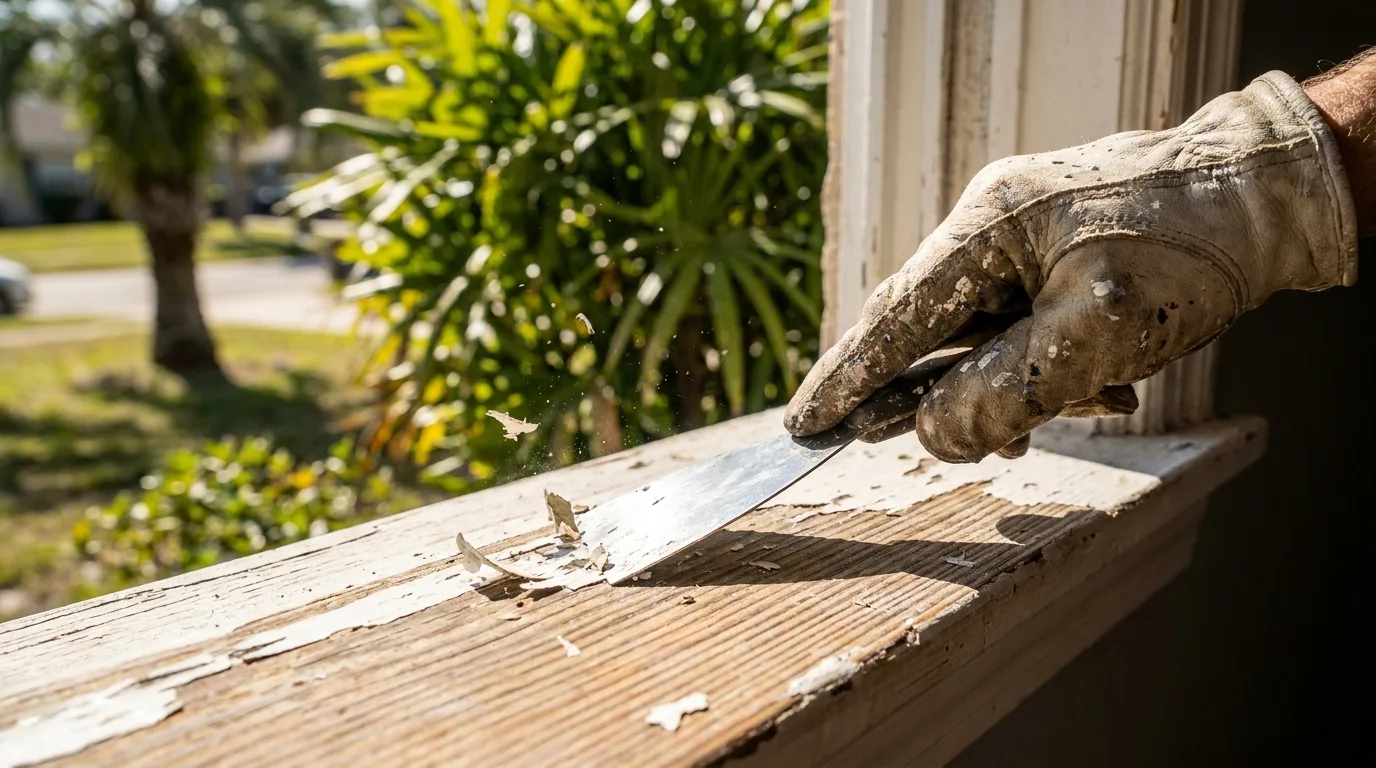
For any home built before 1978, peeling, chipping, or flaking paint is a significant concern due to the potential presence of lead-based paint. Exposure to lead is a serious health hazard, especially for children. A VA appraiser is required to note any defective paint surfaces on both the interior and exterior of the home, including outbuildings and fences. The required fix is not just painting over it; the defective paint must be properly scraped, and the surface must be repainted to eliminate the hazard.
For instance, if you're purchasing a historic 1950s bungalow in a Tampa neighborhood, the appraiser will meticulously check the window sills, door frames, and exterior siding. Any noted peeling paint will be listed on the appraisal report as a required repair before closing.
Cracked Windows
A broken or cracked window pane compromises the security and structural soundness of the home. It fails to protect the interior from weather and can be a safety risk. Therefore, a window with a broken pane is a mandatory repair. A small crack in a double-pane window where the seal has not been broken might be overlooked, but any significant crack or broken glass that affects the window's function or security will need to be replaced.
How do electrical and plumbing issues impact Veteran Affairs loan approval?
Functional and safe electrical and plumbing systems are fundamental to a home being considered 'sanitary' and 'safe' by the VA. Deficiencies in these areas are serious and will prevent a loan from closing until they are resolved.
Electrical Systems
An appraiser isn't an electrician, but they are trained to spot obvious electrical hazards. The system must be adequate for the home and considered safe. Common red flags include:
- Exposed or Frayed Wiring: Any exposed, uncapped, or damaged wiring is an immediate safety hazard and must be corrected.
- Outdated Systems: While not an automatic failure, systems like knob-and-tube wiring may be flagged for evaluation by a licensed electrician.
- Inadequate Power: The electrical service must be sufficient to power a modern household's lighting and equipment.
- Missing Fixtures: Every room must have a working light fixture or a switch-operated outlet.
For example, if a converted garage in a Tampa property has extension cords running along the walls as permanent wiring, an appraiser will require a licensed electrician to install proper outlets and wiring.
Plumbing Systems
An appraiser will verify that the plumbing system works correctly and does not pose a health risk. Key requirements include:
- Safe Water Supply: The property must have a reliable source of safe drinking water.
- Working Toilets and Sinks: All plumbing fixtures must be in working order without major leaks.
- Continuous Hot Water: A functional and safely installed water heater is mandatory.
- Proper Drainage: The property needs a sanitary and working sewage disposal system, whether it's a public sewer or a septic tank.
An appraiser in an Orlando home will turn on faucets to check for water pressure and look for active leaks under sinks. A water heater that doesn't produce hot water or a toilet that doesn't flush properly are both items that must be repaired.
Can I use a Veteran Affairs renovation loan to finance required repairs?
Yes, you can. If you find a property that is perfect in terms of location and size but requires significant work to meet VA MPRs, a VA Renovation Loan is an excellent solution. This specialized loan allows you to combine the purchase price of the home and the funds needed for repairs and upgrades into a single mortgage.
Here’s how it generally works:
- Find a Property: You find a home that needs repairs, whether they are VA-mandated or cosmetic upgrades you want to make.
- Get Contractor Bids: You must obtain detailed bids from a licensed and insured contractor outlining the scope of work and the total cost.
- Appraisal: The property is appraised based on its 'as-completed' value, meaning what it will be worth after all the planned renovations are finished.
- Loan Approval: The loan amount is based on the lower of the purchase price plus repair costs, or the as-completed appraised value.
- Closing and Repairs: After closing, the funds for the renovation are held in an escrow account. The money is released to the contractor in stages as work is completed and inspected.
This loan is more complex than a standard VA loan and involves more paperwork and coordination. However, it’s a powerful tool for buying a fixer-upper in a desirable Tampa neighborhood or financing expensive mandatory repairs, like a new roof or HVAC system, without paying out of pocket.
Who is responsible for paying for repairs flagged by the appraiser?
This is one of the most common questions in the VA loan process. The Department of Veteran Affairs does not dictate who must pay for the required repairs; it only mandates that the repairs must be completed before the loan can be guaranteed. The responsibility for payment is a point of negotiation between the buyer and the seller.
There are several possible outcomes:
- The Seller Pays: In many cases, the seller agrees to pay for all required repairs to ensure the sale goes through. This is common when the repairs are minor or in a balanced market.
- The Buyer Pays: A buyer who really wants the property might agree to cover the repair costs, especially in a competitive seller's market like those seen in parts of Florida.
- They Split the Cost: Buyer and seller can negotiate to share the cost of repairs. For example, a seller might agree to pay for half the cost of a new water heater.
- The Price is Renegotiated: The buyer might ask the seller to lower the purchase price to offset the cost of the repairs, which the buyer will then handle after closing (this is only possible if the buyer has the cash to do so).
- The Deal is Canceled: If neither party is willing to pay for significant repairs, the purchase agreement may be terminated, and the buyer can look for another property.
In a hot real estate market in Tampa, a seller might have multiple offers and refuse to pay for repairs. In that scenario, the veteran buyer must decide if they are willing and able to cover the costs themselves to secure the home.
How can I prepare my chosen Tampa property for the Veteran Affairs appraisal?
Being proactive is the best way to ensure a smooth VA appraisal process for your chosen Tampa home. A failed appraisal can cause significant delays, so preparation is key.
- Get a Pre-Offer Home Inspection: Before even making an offer, hire a qualified home inspector. They will identify most, if not all, of the issues that a VA appraiser would flag. This gives you leverage to negotiate repairs with the seller from the very beginning.
- Walk the Property with an MPR Mindset: Look for obvious red flags yourself. Check for peeling paint, broken steps, leaky faucets, missing handrails on stairways, and any visible signs of water damage.
- Ensure All Utilities Are On: The appraiser must test the electrical, plumbing, and heating systems. Verify with the seller that all utilities will be active during the appraisal inspection.
- Provide Clear Access: The appraiser needs unobstructed access to all areas of the home, including the attic, crawl space, garage, and any outbuildings. Make sure these areas are not locked or blocked by personal belongings.
By identifying and addressing potential issues before the appraiser even visits, you can significantly increase the chances of a clean report and an on-time closing.
What is the process for re-inspection after repairs are completed?
Once the appraisal report comes back with required repairs, the loan process pauses until those items are fixed. After the work is done, a re-inspection is required to verify completion.
The process is straightforward:
- Complete the Repairs: The negotiated party hires a qualified professional to complete all repairs listed on the VA appraisal report. It's crucial to use licensed contractors where required.
- Gather Documentation: Keep all invoices and receipts for the completed work. This documentation serves as proof of the repairs.
- Request a Re-Inspection: Your lender will formally request a re-inspection from the original appraiser.
- Appraiser Verifies Work: The appraiser returns to the property to visually confirm that all required repairs have been completed in a workmanlike manner. They will often take photos for their records.
- Update the Appraisal: The appraiser issues an updated report, often called a 'Notice of Value' (NOV), confirming the property now meets all Minimum Property Requirements.
- Proceed to Closing: With the updated appraisal, your lender can move the loan file forward to the final stages of underwriting and prepare for closing.
There is typically a fee for this re-inspection, usually ranging from $100 to $250, which is often paid by the buyer. (The data, information, or policy mentioned here may vary over time.) Ensuring the repairs are done correctly the first time is essential to avoid further delays and additional re-inspection fees. If you're concerned about a property's condition or have questions about the VA appraisal process in Florida, discussing it with a mortgage expert can provide clarity and help you prepare a strong offer.
Navigating the VA loan process and property requirements can feel complex. If you're ready to move forward with confidence, our mortgage experts are here to guide you every step of the way. Apply now to explore your options.
Author Bio
David Ghazaryan is the expert mortgage strategist and founder behind iQRATE Mortgages. With a mission to fund home loans that traditional banks won't touch, David specializes in helping clients with unique financial situations, including those recovering from foreclosure or bankruptcy. He expertly crafts smart, strategic, and stress-free mortgages by leveraging a vast network of over 100 lenders to secure competitive rates for investors and homebuyers alike. Praised for exceptional customer service, David has helped hundreds of families with a 97% satisfaction rate, guiding them to the mortgage they deserve.
References
VA Minimum Property Requirements









