


What is a Non-Warrantable Condo and Why Does It Affect Jumbo Loans?
When you apply for a mortgage to buy a condo, the lender underwrites two things: you and the property. While your credit and finances are crucial, the health of the entire condominium project is equally important, especially for a jumbo loan. This is where the term 'warrantable' versus 'non-warrantable' comes into play.
A warrantable condo is a project that meets the strict guidelines set by Fannie Mae and Freddie Mac, the government-sponsored enterprises that buy most conventional mortgages. These guidelines are designed to ensure the project is financially stable, well-managed, and a low-risk investment.
Conversely, a non-warrantable condo is one that fails to meet one or more of these key criteria. Even though jumbo loans are, by definition, too large to be sold to Fannie Mae or Freddie Mac, most jumbo lenders still use these guidelines as a baseline for assessing risk. A non-warrantable status is a major red flag that can stop a jumbo loan approval in its tracks.
Common reasons a condo project is deemed non-warrantable include:
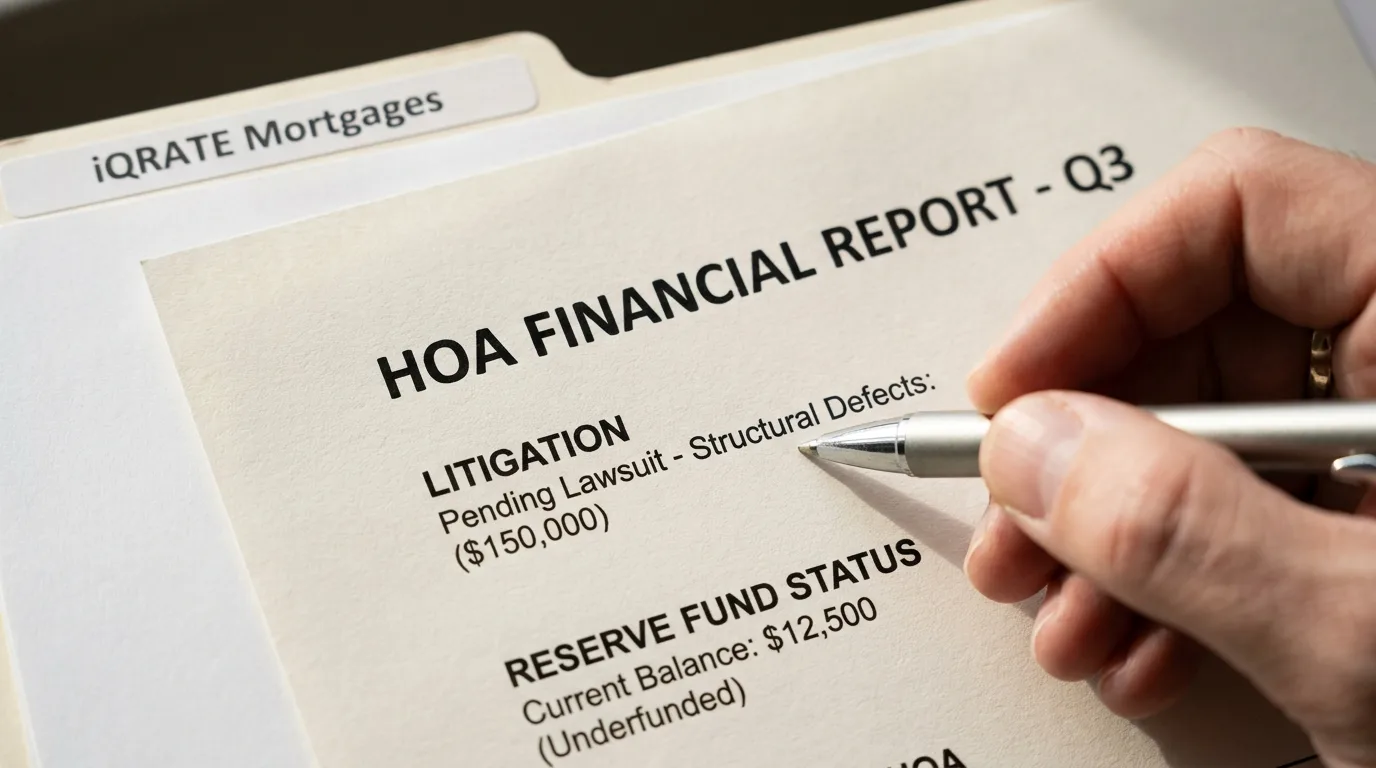
- Pending Litigation: The homeowners association (HOA) is involved in certain types of lawsuits.
- Inadequate Reserves: The HOA's savings for future repairs are too low.
- High Investor Concentration: Too many units are owned by investors rather than owner-occupants.
- Single-Entity Ownership: One person or company owns too many units in the building.
- Delinquent HOA Dues: A significant number of owners are behind on their payments.
- Insufficient Insurance: The building's master insurance policy does not meet lender requirements.
For a homebuyer in a competitive market like Miami, discovering your dream high-rise is non-warrantable after you're already under contract can be a costly and frustrating ordeal.
How Lenders Scrutinize an HOA's Budget and Reserve Funds in Miami
Lenders see a condo's HOA budget as a direct reflection of its stability. A poorly managed budget with insufficient savings signals future problems, such as deferred maintenance and the potential for large, unexpected costs passed on to homeowners. In a market like Miami, where older buildings may face significant repair needs, the financial health of the HOA is paramount.

The 10% Reserve Rule
A critical benchmark for lenders is the reserve fund. This is essentially the HOA's savings account, set aside for major capital expenditures and replacements that occur over time, such as roof replacement, elevator modernization, or concrete restoration. Lenders want to see that the HOA is proactively saving for these future expenses.
Most lenders require that a minimum of 10% of the HOA's annual operating income be allocated to the reserve fund each year. (The data, information, or policy mentioned here may vary over time.) If an HOA is not meeting this threshold, the building will likely be flagged as non-warrantable.
Example: A luxury condo building in Miami has an annual operating budget of $1,200,000. To meet the lender's requirement, the HOA must transfer at least $120,000 into its reserve fund for that year. If the budget shows only $50,000 being allocated, a jumbo lender will see this as a sign of financial mismanagement and will likely deny the loan.
Low reserves increase the likelihood of a 'special assessment', a large, one-time fee levied on all homeowners to cover a necessary repair that the HOA cannot afford. Lenders view these potential assessments as an additional risk to the borrower's ability to pay their mortgage.
Reviewing the Condo Questionnaire
To get this financial data, your lender will send a detailed 'condo questionnaire' to the HOA's management company. This document asks specific questions about the project's finances, legal status, and ownership structure. One of the key questions concerns delinquencies. If more than 15% of the unit owners are 60 days or more delinquent on their HOA dues, the project is automatically considered non-warrantable. (The data, information, or policy mentioned here may vary over time.) High delinquency rates can cripple an HOA's ability to operate and maintain the building, creating a massive risk for the lender.
Can One Lawsuit Against the Homeowners Association Stop My Mortgage?
Yes, a single lawsuit can absolutely derail your jumbo loan application. However, not all litigation is created equal in the eyes of a lender. They are primarily concerned with lawsuits that threaten the structural or financial integrity of the condominium project.
A minor lawsuit, such as a slip-and-fall claim in the lobby that is fully covered by the HOA's liability insurance, may not be an issue. The underwriter will review the details, but it often won't kill the deal.
The real deal-breakers are lawsuits related to construction defects or structural integrity. If the HOA is suing the developer over faulty wiring, leaking windows, or crumbling concrete, a lender will not finance a loan in that building. Such litigation implies that the building may require millions of dollars in repairs, and the value of the collateral (your condo unit) is uncertain.
Example: Imagine you want to buy a condo in a beautiful new tower in Palm Beach. During underwriting, the lender's questionnaire reveals the HOA is in active litigation against the builder for significant water intrusion issues in the garage and around windows. No jumbo lender will approve a loan until that litigation is resolved and all repairs are completed, as the potential cost and impact on property values are unknown.
What Is Investor Concentration and Why Does It Worry Palm Beach Lenders?
Investor concentration refers to the percentage of units in a condominium project that are owned by investors who rent them out, as opposed to owners who live in them as their primary residence. Lenders in markets like Palm Beach pay close attention to this ratio because it is a strong indicator of project stability.
Most lenders require a project to have an owner-occupancy rate of at least 50%. (The data, information, or policy mentioned here may vary over time.) If more than 50% of the units are owned by investors, the building is typically classified as non-warrantable.
Why does this matter so much to lenders?
- Higher Default Risk: Historically, investors are more likely to default on their mortgage and HOA dues during an economic downturn than primary homeowners.
- Property Condition: Owner-occupants are generally perceived to take better care of their property and the common areas, preserving the value of the entire building.
- Community Stability: A high concentration of renters can lead to more transient occupancy, less community engagement, and potentially more wear and tear on the building's amenities.
Another related red flag is single-entity ownership. If one individual or company owns a large number of units (typically more than 10%), it can also make the project non-warrantable. (The data, information, or policy mentioned here may vary over time.) This concentration of ownership gives one entity too much control over HOA voting and poses a risk if that single owner defaults on their dues.
What Specific Questions Should I Ask an HOA Before Making an Offer?
To avoid wasting time and money on a condo that is unfinanceable, it's crucial to perform your due diligence on the HOA before you make an offer. Ask your real estate agent to help you obtain the HOA documents and find answers to these critical questions:
- 'Can I review the most recent annual budget and the current year-to-date financial statement?'
- 'What percentage of the annual budget is allocated to the reserve fund? Has a reserve study been conducted recently?'
- 'What is the current delinquency rate? How many owners are more than 60 days late on their dues?'
- 'Is the association involved in any active or pending litigation? If yes, please provide details on the nature of the lawsuit.'
- 'What is the current percentage of owner-occupied units versus investor-owned units?'
- 'Does any single individual or entity own more than 10% of the units in the project?'
- 'Are there any large special assessments currently planned or being discussed for the near future?'
- 'May I review the minutes from the last six months of HOA board meetings?' (These can reveal discussions about problems not yet disclosed elsewhere).
Getting clear, documented answers to these questions can uncover major red flags and help you and your mortgage advisor determine if a jumbo loan is feasible for a particular property.
How Can a Building's Master Insurance Policy Impact My Jumbo Loan?
The building's master insurance policy is another critical component of the condo approval process. This policy covers the entire structure, including common areas, and protects the project from catastrophic damage.
A lender will not issue a loan if this insurance is inadequate or has lapsed. The policy must meet several requirements:
- Hazard Coverage: Must cover 100% of the insurable replacement cost of the project.
- General Liability Insurance: A minimum of $1 million in coverage for accidents or injuries in common areas. (The data, information, or policy mentioned here may vary over time.)
- Fidelity Bond Insurance: This is essential. It protects the HOA against financial loss from theft or fraud by board members, management company employees, or anyone else handling HOA funds. The required coverage amount is based on the HOA's total funds.
If the insurance is insufficient, the deal will be put on hold until the HOA board corrects the policy. This can cause significant delays and potentially lead to a loan denial if the issue isn't resolved promptly.
Are There Special Loan Programs for Non-Warrantable Condos in Miami?
Securing financing for a non-warrantable condo is challenging, but not always impossible. While most major banks will immediately decline the loan, some lenders specialize in these more complex scenarios.
These are typically portfolio lenders—often private banks or specialized mortgage companies—that plan to keep the loan on their own books rather than selling it. This gives them the flexibility to set their own underwriting guidelines and take on risks that traditional lenders avoid.
What to Expect with Non-Warrantable Condo Loans
If you find a lender willing to finance a non-warrantable condo in Miami, you should be prepared for different terms:
- Higher Down Payment: Expect to put down at least 20-30%, and sometimes as much as 40%. (The data, information, or policy mentioned here may vary over time.)
- Higher Interest Rates: The interest rate will be higher than what you would get for a comparable loan on a warrantable property.
- Additional Scrutiny: The lender will still conduct a thorough review of the HOA, but their risk tolerance for certain issues, like investor concentration, might be higher.
Navigating this niche lending space requires expertise. Working with a mortgage broker who has established relationships with portfolio lenders is often the only way to find a financing solution for a non-warrantable property. If you're considering a luxury condo in Miami or Palm Beach, understanding the building's health is as important as the unit itself. Partnering with a mortgage expert who specializes in Florida's unique condo market can help you identify potential HOA issues early and navigate financing for even non-warrantable properties. Let's review your options before you make an offer.
Navigating the complexities of Florida's condo market requires expert guidance. If you're ready to explore your mortgage options for a Miami or Palm Beach property and want a clear path forward, our specialists can help. Apply now to assess your qualifications and proceed with confidence.
Author Bio
David Ghazaryan is the expert mortgage strategist and founder behind iQRATE Mortgages. With a mission to fund home loans that traditional banks won't touch, David specializes in helping clients with unique financial situations, including those recovering from foreclosure or bankruptcy. He expertly crafts smart, strategic, and stress-free mortgages by leveraging a vast network of over 100 lenders to secure competitive rates for investors and homebuyers alike. Praised for exceptional customer service, David has helped hundreds of families with a 97% satisfaction rate, guiding them to the mortgage they deserve.
References
Fannie Mae: Condo, Co-op, and PUD Eligibility









