What does a mortgage broker do for a Boulder City home buyer?
A mortgage broker compares loans from many wholesale lenders for you. Then the broker runs the file from application to closing. In Boulder City, most sales are older single-family homes. Many buyers are retirees or veterans. So picking the right program and lender often matters more than any one rate quote.
I am David Ghazaryan. I run iQRATE Mortgages out of Las Vegas. I work with buyers, owners and investors across Clark County. Boulder City is one of the most unusual towns in it. It has a growth cap on new homes. The city owns most of the land around it. Gambling is banned inside city limits. Short-term rentals are banned too. Each rule shapes which homes come up for sale, who buys them, and which loans work. This guide walks through all of it in plain words. Each number has a source.
My job is simple to describe. You tell me your goal, your income, your savings and the home you want. I look at the loan programs that fit and the lenders that offer them. I show you the trade-offs side by side. Then I run the file. That means the application, the disclosures, the appraisal, the underwriting conditions and the closing. You deal with one person the whole way. Say one lender says no. I can often move the same file to a lender that says yes. You do not start over from zero.
How is a broker different from a bank or a direct lender?
A bank or a direct lender can only offer its own loans. If its rules do not fit your file, the answer is no. Or you get a loan that is not a good match. A broker is not tied to one set of rules. Here is how the choices compare:
- A retail bank: offers its own loan menu and its own pricing. That helps if you want it all at one branch. But you only see one lender's view of your file.
- A direct lender or online lender: also lends its own money on its own rules. Some are fast. Few handle unusual income or older homes well.
- A credit union: can be a fit for members with simple files. Programs are often narrower than the wider market.
- A mortgage broker: shops your one file across many wholesale lenders. You get several options. You also get a backup lender. That helps if the first one balks at your income, your credit or the home.
That backup matters in a town like Boulder City. About half the homes here were built before 1980. One in ten is a mobile or manufactured home, based on Census data I cover below. Some lenders are strict on older homes and manufactured homes. Others are not. Knowing which is which is a big part of what a broker does.
How are mortgage brokers paid?
Federal rules limit how a loan originator is paid. The pay cannot be based on your loan's terms, such as the rate (12 CFR 1026.36). The same rule bars a broker from double pay. A broker cannot be paid by both you and the lender on one loan. So the broker is paid by the lender or by you. The amount is printed on your Loan Estimate. Ask me which one it is on any quote I give you. Then compare the total cost of each option. Do not look at just the rate.
A lender has to send your Loan Estimate fast. It must go out no later than the third business day after you apply. You also have to get the Closing Disclosure early. It must reach you at least three business days before you sign (12 CFR 1026.19). Those two forms are where you check your fees. The fees you were promised should be the fees you pay.
This short video is from David Ghazaryan's team on the iQRATE Mortgages YouTube channel: "Why Your Agent’s Lender Choice Is Costing You." Use it as a quick guide to choosing a lender, then check the fees on your Loan Estimate and Closing Disclosure.
How do I check a mortgage broker's license in Nevada?
Mortgage brokers in Nevada are licensed under NRS Chapter 645B. The Nevada Division of Mortgage Lending regulates them. Each company and each loan officer also has a number in the national registry. You can look up both on NMLS Consumer Access. iQRATE Mortgages is NMLS 1862492. My own number is NMLS 1486726. Check any broker you talk to. Do it before you send a pay stub or a Social Security number. For a wider look at how I work across the state, see my Nevada mortgage broker guide.
Next step: Want one broker to compare lenders for your Boulder City purchase? Get a quote or call (702) 766-3744.
What makes buying a home in Boulder City different from the rest of Clark County?
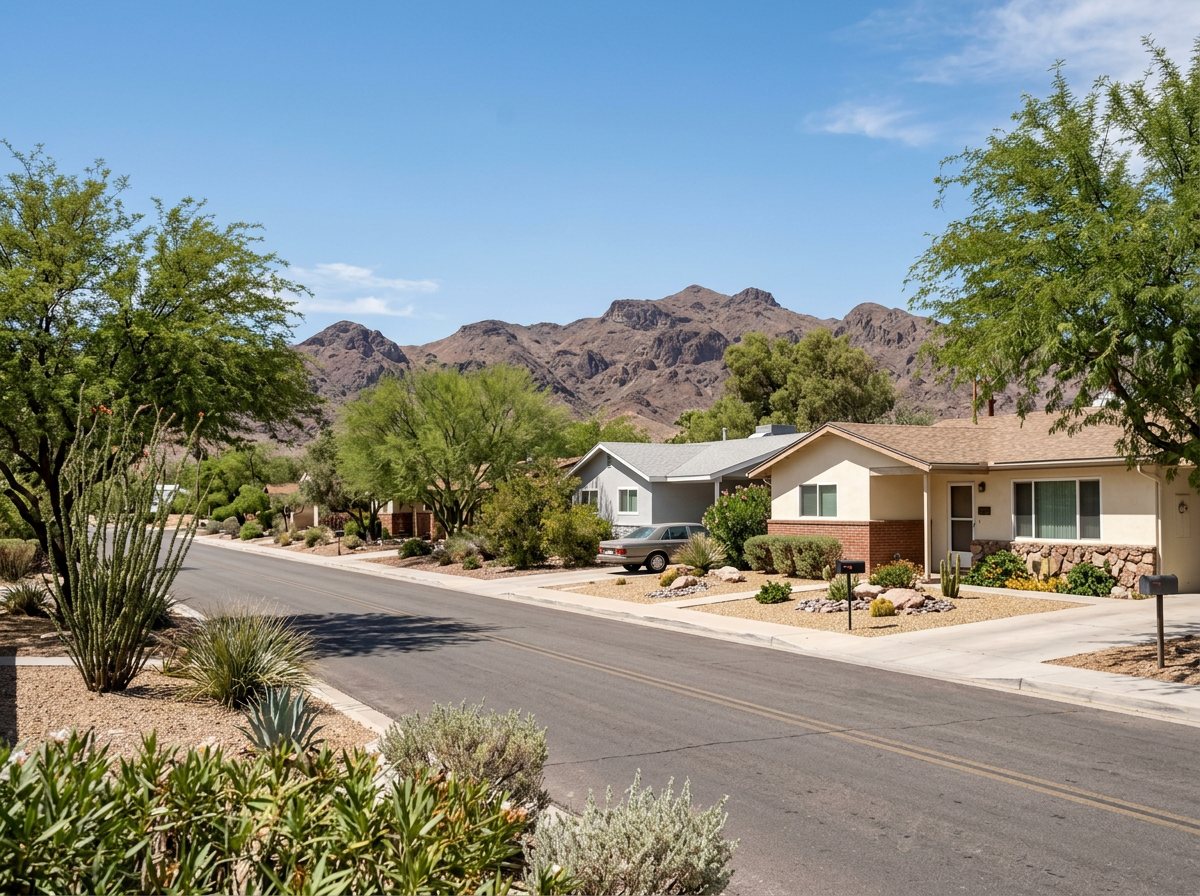
Boulder City limits how many new homes can be built each year. It owns most of the land around it. And it bans both gambling and short-term rentals. Those rules keep the homes older and the supply tight. That changes how you shop, how a home appraises and which loans make sense.
Most of Clark County grew fast and outward. Boulder City did the opposite on purpose. If you are moving here from Henderson or Las Vegas, the buying steps will feel the same. But the market under them runs on its own rules. Here is what I tell buyers before they make an offer.
Why was Boulder City built, and why does that still matter?
The city exists because of Hoover Dam. The city's own history page says the Boulder Canyon Project Act was signed on December 21, 1928. Saco Rienk DeBoer then planned the town to house the workers who built the dam. For decades the town sat on federal land. The Bureau of Reclamation held title. The Boulder City Act of 1958 moved about 33 square miles to local control. The city incorporated in January 1960.
That history is still visible in the housing. The oldest homes sit near the original town plan. They are around the historic district by the Boulder Dam Hotel and Nevada Way. Many are small, older homes on modest lots. Buyers love the character. Lenders and appraisers look hard at the condition. If you buy an older home, plan for a careful inspection. The appraisal may also note repairs. I cover how I handle that later in this guide.
The dam and the lake still drive the local economy and lifestyle. Hoover Dam is run by the Bureau of Reclamation. Lake Mead National Recreation Area is run by the National Park Service. Many buyers here want quick access to the lake, the trails and the open desert. That is part of why some homes draw strong interest. Those are homes with lake views or near the golf courses.
How does the Boulder City growth ordinance limit new homes?
Boulder City caps new home building through a growth ordinance. It is in Title 11, Chapter 41 of the city code (Boulder City Municipal Code, growth control). The first construction year under it was 1979-80. The Boulder City Review noted in 2023 that the rule passed almost 45 years earlier. The key limits:
- 120 new homes a year: the city allots no more than 120 dwelling units per construction year. That year runs from July 1 to June 30 (sections 11-41-2 and 11-41-6).
- 35 hotel rooms a year: a separate cap applies to new hotel and motel rooms (11-41-6).
- 30 per development: one development can receive no more than 30 allotments in a year. One developer can hold no more than 90 units or reservations at a time (11-41-11).
- Use it or lose it: an allotment is taken back if no building permit is issued in time. The limit is one year. It is also taken back if the permit expires (11-41-13).
- Owner-builders: a person building their own home can get one dwelling every three years. Also, 30 allotments are set aside for owner-builders in the first six months of each year (11-41-14).
The code also leaves some homes uncounted. Up to 50 low-income or senior dwellings in any five-year period do not count (11-41-14). Lots that already existed when the rule took effect are excluded (11-41-15). A seven-member Allotment Committee reviews requests. Applications that rate under 70% go to the City Council with a recommendation to deny (11-41-11).
What this means for you: new homes are rare. When they come, they come slowly. In October 2025 the Boulder City Review reported that the council approved allotments for Liberty Ridge. That subdivision has 122 homes approved. The builder asked for 30 allotments a year. That was for each of the construction years ending June 30, 2025 and 2026. At 30 a year, a project that size takes several years to build out. So most of what you can buy here is resale.
For financing, that is a real difference. A new build often comes with a builder's preferred lender. It also gets a fresh appraisal based on new homes. A resale in an older neighborhood gets compared with nearby older sales. The appraiser will comment on age and condition. I plan the loan around that from day one.
Why does Boulder City own so much land, and how is it sold?
The city bought about 200 square miles of the Eldorado Valley in the 1990s. Part of it is now used for solar projects, says the same Boulder City Review explainer. The Boulder City Charter sets tight rules on selling city land. Section 140.1 says city land is sold by ordinance. A parcel over one acre needs voter approval. It also says land must sell at or above appraised value. Section 92.1 says city parks cannot be sold without a vote.
Here is the takeaway for buyers. The city does not simply release big tracts to builders when demand rises. Land release goes through the council and often the voters. That keeps open space around town. It also keeps supply tight. That is one reason prices here sit near the county level. And that is even though the homes are older on average.
Does the Boulder City gambling ban affect home buyers?
Section 128.1 of the Boulder City Charter bans any game, slot machine, pinball machine or other gambling device inside the city. Section 128.3 carves out a few exceptions. Examples are social games in a private home and some charitable events.
The ban does not change your loan. But it does shape the town. There are no casinos, and no slot machines in the grocery store. Many buyers move here for that quiet feel. It also means local jobs are tied less to the resort trade. They are tied more to the city, the dam, tourism, small business and commuting. The Census puts the average commute for Boulder City workers at 23.2 minutes. I cover the Census data in the next section.
What kinds of homes and neighborhoods are in Boulder City?
Boulder City is mostly owner-occupied, older single-family housing, with a large share of retirees. The 2020-2024 American Community Survey (DP04) and its companion profiles give a clear picture:
- Size: about 14,919 residents and 7,309 housing units, with 6,574 of them occupied. About 10.1% of units were vacant at survey time.
- Ownership: 77.9% of occupied homes are owner-occupied and 22.1% are rented. That owner rate is well above Clark County's 57.8%.
- Value and rent: the median owner-occupied value is $435,600. The median gross rent is $1,427 a month.
- Age of homes: about 48.4% were built before 1980. The biggest groups were built in the 1970s (24.8%) and the 1980s (23.5%). Only 2.0% were built in 2020 or later. And 8.6% were built in 1939 or earlier.
- Type: 68.8% are one-unit detached homes, and 10.1% are mobile homes.
- Who lives here: the median age is 53.5, and 29.6% of residents are 65 or older. About 1,353 residents are veterans. That is 10.9% of adults, based on the ACS social profile (DP02).
- Income: the median household income is $74,757. About 46.2% of households get Social Security income. And 35.8% get retirement income, per the ACS economic profile (DP03).
Those numbers explain a lot of the loan requests I see here. They tell me who is buying. Many buyers are retirees using Social Security, pensions or savings. Many are veterans. Many are buying a 1970s or 1980s home that needs some updating. And a fair number are looking at a manufactured home.
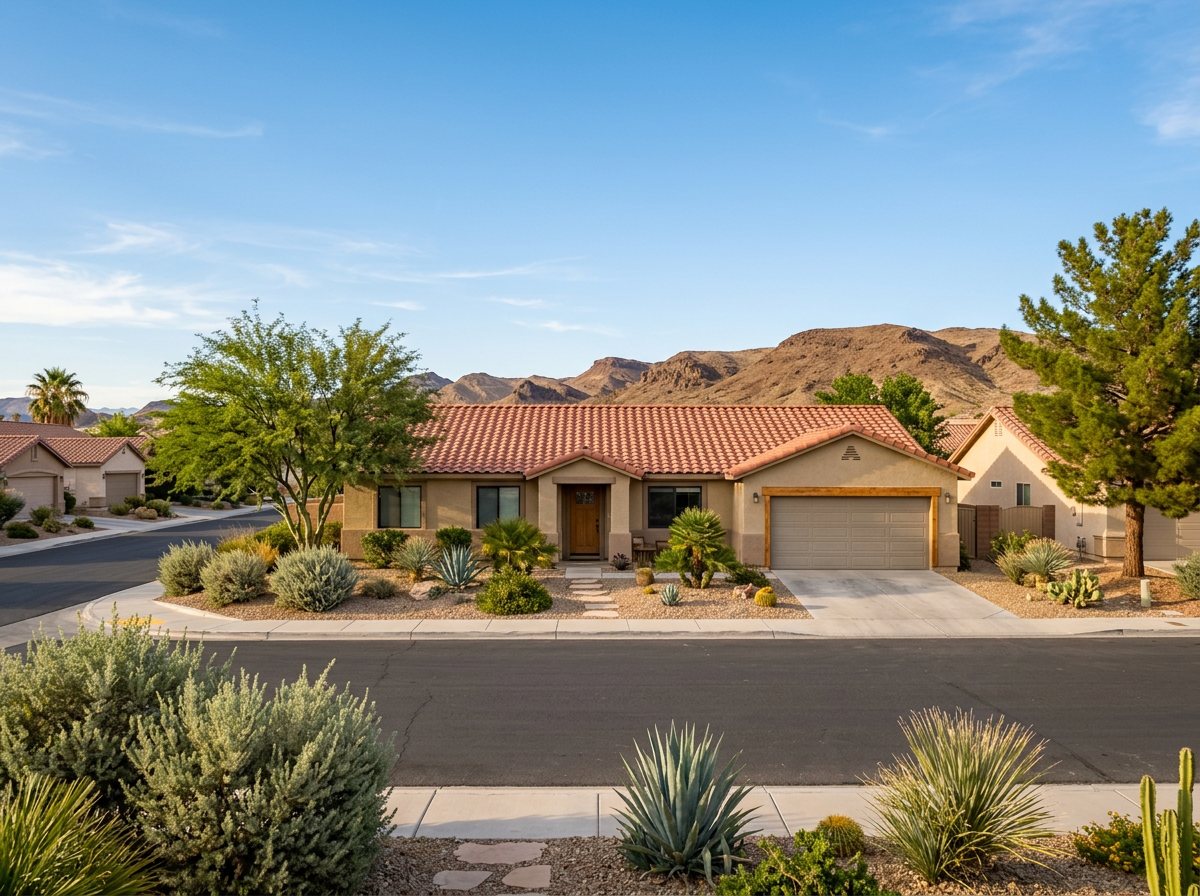
Buyers usually think about Boulder City in a few areas. The historic district near the Boulder Dam Hotel and Nevada Way has the oldest homes. It also has the walkable downtown. The streets around Del Prado and Lakeview hold many mid-century and 1970s homes. Homes near Boulder Creek Golf Club and the municipal golf course draw a certain buyer. That buyer wants a golf-course setting. Hillside homes with Lake Mead views sell to buyers who want the view. Those buyers will pay for it. The Eldorado Valley to the south is mostly city-owned open land and solar sites. It is not a place of neighborhoods. All of Boulder City uses ZIP code 89005. Each area has its own mix of age, size and HOA status. So the same loan program can fit one street and not the next.
How does Clark County compare with other counties near Boulder City?
Clark County charges the highest transfer tax of the counties around Boulder City. Its 2026 conforming and FHA loan limits match Nye County and Mohave County, Arizona. Washoe County, around Reno, has a higher FHA limit. It also has higher home values and a higher HUD rent benchmark.
Buyers who look at Boulder City often look at Henderson or Pahrump in Nye County. Some look across the river in Mohave County, Arizona. Some are moving from Reno. The table below lines up the numbers that change a loan. Boulder City is shown first. Then come Clark County as a whole and three other counties. The home values and owner rates are Census survey medians, not sale prices.
| Area | Owner-occupied (ACS) | Median home value (ACS) | Median gross rent (ACS) | 2026 conforming limit, 1 unit | 2026 FHA limit, 1 unit | HUD FY2026 3-bedroom FMR | Transfer tax per $500 | 2026-27 rental tax cap |
|---|---|---|---|---|---|---|---|---|
| Boulder City (in Clark County) | 77.9% | $435,600 | $1,427 | $832,750 | $541,287 | $2,210 (ZIP 89005 small area FMR) | $2.55 | 8.0% |
| Clark County, NV | 57.8% | $431,000 | $1,626 | $832,750 | $541,287 | $2,413 | $2.55 | 8.0% |
| Nye County, NV (Pahrump) | 77.8% | $290,900 | $1,181 | $832,750 | $541,287 | $1,690 | $1.95 | 5.4% |
| Washoe County, NV (Reno) | 59.9% | $539,900 | $1,608 | $832,750 | $638,250 | $2,539 | $2.05 | 8.0% |
| Mohave County, AZ (Kingman, Bullhead City) | 74.1% | $281,000 | $1,091 | $832,750 | $541,287 | $1,897 | None (Ariz. Const. art. 9, sec. 24) | Not Nevada; Arizona rules differ |
Here are the sources for the table. Home values, rents and owner rates come from the ACS 2020-2024 five-year DP04 tables. Loan limits come from the FHFA 2026 county list and the HUD 2026 FHA county list. Rent benchmarks come from the HUD FY2026 fair market rent file and the FY2026 small area file. Transfer tax rates come from the Nevada Department of Taxation. The tax caps come from its 2026-27 tax cap file.
A few things stand out. First, the 2026 conforming limit of $832,750 is the same in each county in the table. So a Boulder City buyer and a Reno buyer hit jumbo pricing at the same loan size. Second, look at FHA limits. In Clark, Nye and Mohave they sit at the national floor of $541,287 for one unit. Washoe's FHA limit is higher at $638,250. Third, HUD's small area rent benchmark for ZIP 89005 is lower than the Clark County metro figure. It is $2,210 for three bedrooms, against $2,413. That matters if you buy a rental. Some programs and some tax rules use those benchmarks. Fourth, Clark County charges $2.55 per $500 of value in transfer tax. That is the highest in the table.
Here are the full HUD small area figures for ZIP 89005 in FY2026. They are $1,190 for a studio, $1,330 for one bedroom, $1,580 for two, $2,210 for three and $2,560 for four. The Las Vegas-Henderson metro figures are $1,333, $1,478, $1,735, $2,413 and $2,764. Are you comparing Boulder City with Henderson? My Henderson mortgage broker guide covers that city's rules in the same detail.
Which loan programs can I use to buy in Boulder City?
Through iQRATE, Boulder City buyers can choose conventional, FHA, VA, jumbo, DSCR, bank statement, P&L and asset depletion loans. Other non-QM options are open too. The right one depends on three things. Will you live in the home? How do you earn your income? And how much can you put down?
Most of my Boulder City files land in one of three groups. Here they are. Veterans and active-duty buyers lean toward VA. Retirees with savings but modest monthly income look at conventional loans or asset depletion. Self-employed buyers and investors look at bank statement and DSCR loans. First-time buyers often start with FHA. Or they start with a conventional loan paired with down payment help. The table below compares the programs side by side. It does not list rates. Rates change daily and depend on your file.
| Program | Best fit | Lowest down payment | Insurance or fee | Occupancy | How income is shown |
|---|---|---|---|---|---|
| Conventional | Steady income, solid credit, loans up to $832,750 | 3% on a 1-unit primary home (first-time rules apply) | Private mortgage insurance under 20% down; can be removed later | Primary, second home or investment | Pay stubs, W-2s, tax returns |
| FHA | Smaller down payment or credit still being rebuilt | 3.5% with a score in the high-500s or above | 1.75% upfront plus an annual premium | Primary home only | Pay stubs, W-2s, tax returns |
| VA | Eligible veterans, service members, some surviving spouses | 0% with full entitlement | One-time funding fee, waived for many disabled veterans | Primary home only | Pay, retirement or VA benefits, plus residual income test |
| Jumbo | Loans above $832,750, such as larger lake-view homes | Varies by lender | Usually no monthly mortgage insurance | Primary, second home, some investment | Full documents and larger reserves |
| DSCR | Investors buying long-term rentals | Varies by lender; larger than owner loans | No mortgage insurance; some loans carry a prepayment penalty | Investment only | The property's rent, not your personal income |
| Bank statement | Self-employed buyers whose tax returns show low income | Varies by lender | No mortgage insurance in most cases | Primary, second home or investment | 12 or 24 months of bank deposits |
| P&L | Business owners with a clean profit and loss statement | Varies by lender | No mortgage insurance in most cases | Primary, second home or investment | A P&L, often prepared by a tax professional |
| Asset depletion | Retirees and others with savings but little monthly income | Varies by lender | No mortgage insurance in most cases | Primary, second home or investment | Bank, brokerage and retirement account balances |
The conventional and FHA rules come from Fannie Mae and HUD. The VA rules come from the VA. Each lender sets the non-QM rows, such as DSCR, bank statement, P&L and asset depletion. So the down payment and terms vary. That is where shopping many lenders pays off most.
How does a conventional loan work in Boulder City?
A conventional loan is not backed by the government. Most follow Fannie Mae or Freddie Mac rules. In 2026 the one-unit conforming limit in Clark County is $832,750. The two-, three- and four-unit limits are $1,066,250, $1,288,800 and $1,601,750 (FHFA 2026 limits). A loan above the one-unit limit on a single-family home is a jumbo loan.
Conventional loans are the most flexible on occupancy. You can use one for a primary home, a second home or an investment property. Boulder City has plenty of all three. But as I explain below, the city bans short-term rentals. So an investment home here is a long-term rental. You can learn more in my guide to conventional loans.
How does an FHA loan work in Boulder City?
FHA loans are insured by HUD and are for homes you will live in. Here are the 2026 Clark County FHA limits. They are $541,287 for one unit, $693,050 for two, $837,700 for three and $1,041,125 for four (HUD Mortgagee Letter 2025-23). The Census median value in Boulder City, $435,600, sits well under the one-unit limit. So FHA can cover a typical home here.
FHA lets a buyer with a credit score in the high-500s or above put down 3.5%. A buyer with a score lower in the 500s needs 10% down. FHA can also work on a two- to four-unit home. You must live in one of the units. Rent from the other units may help you qualify. FHA appraisals also check that the home meets HUD's minimum property standards. That matters on older Boulder City homes. I explain that trade-off in FHA vs. conventional appraisals for older Nevada homes. See my main FHA loans page for the full rules.
Can I use a VA loan in Boulder City?
Yes, for a home you will live in. About 1,353 Boulder City residents are veterans. So VA loans come up often here. For a borrower with full entitlement, VA says there is no loan limit. You still need income that supports the payment. The lender must also meet the VA's residual income test in 38 CFR 36.4340. That test checks how much money is left each month after the mortgage, taxes and other bills.
Most VA buyers pay a one-time funding fee. The VA funding fee page sets it this way for a purchase:
- Less than 5% down: 2.15% of the loan for first use. It is 3.3% after first use.
- 5% to under 10% down: 1.5%.
- 10% or more down: 1.25%.
- Exempt buyers: veterans who receive VA compensation for a service-connected disability do not pay the fee. Other groups listed on the VA page are exempt too.
Example (hypothetical), arithmetic only. Take a $400,000 VA loan with no money down for a first-time user. It has a fee of $400,000 × 0.0215 = $8,600. Most buyers add it to the loan. The same loan for a repeat user has a fee of $400,000 × 0.033 = $13,200. The VA also caps seller concessions at 4% of the home's reasonable value. But normal closing costs paid by the seller do not count toward that cap. Read more about VA loans.
When do I need a jumbo loan in Boulder City?
You need a jumbo loan when the loan is too big for the limit. In 2026 that means more than $832,750 on a one-unit home. Most Boulder City homes sell well under that. The exceptions tend to be larger custom homes and view homes in the hills. Some homes near the golf courses are too. Jumbo lenders set their own rules on down payment, credit and reserves. They often want to see several months of payments saved after closing. The rules vary a lot. So on a jumbo file, comparing lenders can change the outcome. See my jumbo loans page for how I shop them.
Can I buy a Boulder City rental with a DSCR loan?
Yes, as long as it is a long-term rental. A DSCR loan qualifies you on the home's rent compared with its monthly payment. It does not use your tax returns. DSCR stands for debt service coverage ratio. The lender divides the monthly rent by the monthly principal, interest, taxes, insurance and HOA dues.
Example (hypothetical), arithmetic only. Say a home rents for $2,200 a month and the full payment is $2,000. Then the DSCR is $2,200 ÷ $2,000 = 1.10. A ratio of 1.00 means the rent just covers the payment. Each lender sets its own minimum ratio, down payment and reserve rules. Boulder City's short-term rental ban matters here. A DSCR lender will use long-term rent, not nightly rates. My DSCR loans page explains the program in more depth.
What if I am self-employed or retired with savings?
A bank statement loan uses 12 or 24 months of deposits to figure your income. It does not use your tax returns. It helps business owners who write off a lot of expenses. A P&L loan uses a profit and loss statement instead. An asset depletion loan turns your savings, brokerage or retirement balances into a monthly income figure. That can help a retiree with a large nest egg and a small pension. These are non-QM loans. That means they fall outside the federal qualified mortgage rules. Lenders still have to make a good-faith judgment that you can repay. That comes from the ability-to-repay rule in 12 CFR 1026.43. See bank statement loans and asset depletion loans in Nevada for details.
Next step: Not sure which program fits your income? Get pre-approved or call (702) 766-3744 and I will compare them for you.
How much do I need for a down payment, and how high can my LTV go?
Most Boulder City buyers need between 0% and 25% down. It depends on the program and how the home will be used. Loan-to-value, or LTV, is the loan amount divided by the home's value. So 3% down means 97% LTV.
Fannie Mae's Eligibility Matrix sets the top LTV for standard conventional loans. A one-unit primary home with a fixed rate can go to 97%. That is 3% down. That 97% option has first-time buyer rules unless it is a HomeReady loan. A two- to four-unit primary home can go to 95%, which is 5% down. A one-unit second home can go to 90%, so 10% down. A one-unit investment property can go to 85%, so 15% down. A two- to four-unit investment property can go to 75%, so 25% down. Fannie defines each occupancy type in Selling Guide B2-1.1-01.
FHA's minimum is 3.5% with a credit score in the high-500s or above. VA can be 0% down with full entitlement. Jumbo and non-QM loans are set by each lender and usually need more down.
Example (hypothetical), arithmetic only. Take a home priced at $435,600, the Census median value for Boulder City:
- Conventional, 3% down: $435,600 × 0.03 = $13,068 down, for a loan of $422,532.
- FHA, 3.5% down: $435,600 × 0.035 = $15,246 down, for a base loan of $420,354.
- Conventional second home, 10% down: $43,560 down, for a loan of $392,040.
- Conventional investment, 15% down: $65,340 down, for a loan of $370,260.
The down payment is not the only cash you need. You also need closing costs, any prepaid taxes and insurance, and sometimes reserves. I cover closing costs in their own section below. Down payment help can cover part of it if you qualify. I cover the state program in the first-time buyer section.
What credit score and debt-to-income ratio do I need for a Boulder City mortgage?
Most conventional loans need a credit score in the low-600s or higher. FHA can work with a score in the high-500s for 3.5% down. Your debt-to-income ratio is your DTI. It usually needs to stay at or below about 45% to 50% of your gross monthly income. The exact limit depends on the program and the rest of your file.
Credit and DTI work together. A higher score can let a lender accept a higher DTI. More savings after closing can do the same. That is why I look at the whole file first. Then I tell you if a program will or will not work.
How is debt-to-income ratio figured?
DTI is your monthly debt payments divided by your monthly income. Use your gross income, before taxes (CFPB: What is a debt-to-income ratio?). The debts include the new house payment with taxes, insurance and HOA dues. They also include car loans, student loans, credit card minimums and other loans. Daily costs like food and utilities do not count.
For conventional loans, Fannie Mae's Selling Guide B3-6-02 sets a top DTI of 36%. That is for a loan underwritten by hand. It allows up to 45% if the borrower meets the credit score and reserve rules. Loans run through Fannie's automated system can go up to 50%.
Example (hypothetical), arithmetic only. A buyer earns $6,000 a month before taxes. The new house payment would be $2,300, and they have a $400 car payment. Total debts are $2,700. DTI is $2,700 ÷ $6,000 = 45%.
How does income for retirees count toward DTI?
Social Security, pensions and steady retirement account withdrawals can all count as income. They must be documented and expected to continue. That matters a lot in Boulder City. Here 46.2% of households get Social Security income, and 35.8% get retirement income. Some Social Security income is not taxed. Many lenders can "gross up" untaxed income. That raises the income figure used for DTI. The exact rule depends on the program. Say your monthly income is low but your savings are large. Then an asset depletion loan may qualify you where a standard loan cannot.
What did a Miami file teach me about credit and business funds?
This is an out-of-area example. It was a DSCR file in Miami, Florida, not Boulder City. One of my clients was a repeat fourplex investor. She bought another fourplex for $800,000. She put $280,000 down, which is 35%, and took a $520,000 DSCR loan. The loan funded in summer 2024.
Two things almost got in the way. First, a recent car loan had pulled my client's credit score down. On a DSCR loan, her own debt-to-income ratio did not decide if she qualified. But the score still set her price. So my client paid down her credit cards. A rapid rescore then raised her score. She qualified for a lower rate.
Second, the down payment came from her beauty salon business funds. The lender asked what taking that money out would do to the salons. A CPA letter showed the salons' costs ran well below their revenue. It also showed they could keep running. The lender accepted the funds. Do you plan to use business money for a Boulder City down payment? You may get the same question. A letter from your tax pro can answer it.
How do PMI and FHA mortgage insurance work on a Boulder City loan?
Private mortgage insurance, or PMI, applies to conventional loans with less than 20% down. It can be removed as you build equity. FHA mortgage insurance, called MIP, has an upfront charge and an annual charge. Most FHA loans work this way. With less than 10% down, the annual charge lasts for the life of the loan.
Both kinds of insurance protect the lender, not you. They are the price of a small down payment. The difference is in how long you pay and how you get rid of it.
When does PMI come off a conventional loan?
Under federal law, you can ask to cancel PMI at a set point. That is when your loan balance is scheduled to reach 80% of the home's original value. It must end on its own when the balance is scheduled to reach 78%. You just have to be current (CFPB: When can I remove PMI?). Paying extra principal can get you there sooner. The cost of PMI depends on your credit score, your down payment and the insurer. So I quote it with each option rather than guess.
How much is FHA mortgage insurance?
HUD Mortgagee Letter 2023-05 sets the upfront premium at 1.75% of the base loan. Take a 30-year loan of $726,200 or less. The annual premium is 0.55% if you put down less than 5%. It is 0.50% if you put down 5% or more. If you put down less than 10%, the annual premium lasts for the life of the loan. With 10% or more down, it lasts 11 years.
Example (hypothetical), arithmetic only. On a $435,600 home with 3.5% down, the base loan is $420,354. The upfront premium is $420,354 × 0.0175 = $7,356. Most buyers add it to the loan. The annual premium is $420,354 × 0.0055 = $2,312 a year. That is about $193 a month on top of the payment. Many FHA buyers later refinance into a conventional loan once they have 20% equity. That drops the premium. I run that math with you before you choose FHA. That way you know the exit plan up front.
What closing costs should I expect when buying in Boulder City?
Boulder City closing costs include lender fees, title and escrow fees, and prepaid taxes and insurance. They also include Clark County's real property transfer tax of $2.55 per $500 of value. Your Loan Estimate lists each of those costs within three business days of applying. So you can compare offers line by line.
Closing costs fall into a few groups. Lender charges cover the work of making the loan. They also cover any points you choose to pay. Third-party charges cover the appraisal, credit report, title insurance, escrow and recording. Prepaids cover the first homeowners insurance premium and some property tax. They also cover interest from your closing date to the end of the month. Then there are government charges, such as recording fees and the transfer tax.
How much is the transfer tax in Boulder City?
Nevada charges a real property transfer tax when a deed is recorded, under NRS Chapter 375. In Clark County the rate is $2.55 for each $500 of value. That is a $1.95 base rate plus an added $0.60, says the Nevada Department of Taxation. Washoe County is $2.05, and Nye and Lincoln Counties are $1.95. Your purchase contract sets who pays it. Ask your agent how it is split.
Example (hypothetical), arithmetic only. On a $450,000 sale, the value divided by $500 is 900. The tax is 900 × $2.55 = $2,295. The same sale in Nye County would be 900 × $1.95 = $1,755.
Across the river, Arizona's constitution bars any new tax on real property transfers. The bar covers any such tax that did not exist on December 31, 2007 (Arizona Constitution, article 9, section 24). Say a buyer compares Boulder City with Bullhead City or Kingman. That buyer will see a different cost line at closing.
How can I lower my cash to close?
There are a few ways. You can negotiate a seller credit toward your closing costs. Each program caps how much the seller can pay. On VA loans, some seller help does not count toward the 4% concession cap. Normal closing costs paid by the seller are left out. You can take a lender credit in exchange for a higher rate. You can use down payment help if you qualify. And you can compare lender fees. That is where a broker earns the fee. The CFPB Loan Estimate guide explains each line. For a state-by-state look, see my closing costs by state page.
When you compare Loan Estimates, get them on the same day. Get them for the same loan amount, program and lock period. Compare the APR, the points and the lender credits. Then compare section A origination charges and the cash to close. A low rate with high points is not always the better deal. That is true if you might sell or refinance in a few years.
Next step: Want to see your real cash to close on a Boulder City home? Get a quote or call (702) 766-3744.
How are property taxes figured on a Boulder City home?
Boulder City's main tax districts carry a combined rate of $2.6097 per $100 of assessed value. That rate is for fiscal year 2027. Assessed value is 35% of the county's taxable value. Nevada also caps how fast your tax bill can rise each year. The cap is 3% for a primary home.
What is the Boulder City property tax rate?
The Nevada Legislature's Fiscal Analysis Division publishes each district's rate. Its fiscal year 2027 table, dated August 25, 2026. It lists Boulder City districts 50, 51, 52, 55, 57, 58 and 59. Their total is $2.6097 per $100 of assessed value. That total includes $0.1700 for the state, $1.3034 for the school district and $0.6541 for Clark County. The rest goes to the city and library. Districts 60 and 61 total $2.5017.
That is lower than many places nearby. The same table lists Henderson at $2.9613, Las Vegas at $3.2782, North Las Vegas at $3.3544 and Mesquite at $2.7737. In northern Nevada, Reno is $3.3750 and Sparks is $3.2402. Pahrump Town in Nye County is $3.6600, which is the state's combined cap.
How do I estimate the tax on a home?
Nevada sets the assessed value at 35% of taxable value (NRS 361.225). Taxable value is figured under NRS 361.227. It is the land value plus the cost to replace the building, less depreciation. Because of that, the taxable value often differs from the price you pay.
Example (hypothetical), arithmetic only. Say the assessor's taxable value is $400,000. The assessed value is $400,000 × 0.35 = $140,000. At $2.6097 per $100, the tax is $140,000 ÷ 100 × $2.6097 = $3,653.58 a year. That is about $304 a month in your payment. The same home at Henderson's $2.9613 rate would be $4,145.82. At the Las Vegas rate of $3.2782 it would be $4,589.48.
How do the Nevada tax caps work?
Nevada caps the yearly increase in your tax bill, not your value. For a primary home, the cap is 3% a year under NRS 361.4723. Other property, including most rentals, falls under the general cap in NRS 361.4722. For 2026-27, the Nevada Department of Taxation set that general cap at 8.0% in Clark County. It is based on an 8.1% moving average and a 2.7% CPI factor. The same file lists Nye at 5.4%, Washoe at 8.0% and Lincoln at 5.4%.
Example (hypothetical), arithmetic only. Use the $3,653.58 bill above. A primary home's bill can rise to no more than $3,653.58 × 1.03 = $3,763.19 the next year. A rental's bill could rise to as much as $3,653.58 × 1.08 = $3,945.87.
There is a catch for buyers. The Clark County Assessor's abatement page explains a key risk. A newly recorded ownership document can remove the 3% owner cap. Will you live in the home? Then claim your primary residence with the assessor after you close. There is also a lower cap for some landlords. Under NRS 361.4724, some rentals can qualify for the 3% cap. The rent must be at or below HUD's fair market rent.
Taxes in Nevada follow a July 1 fiscal year. The bill is due the third Monday in August. You can pay in four installments under NRS 361.483. Most lenders collect the tax monthly in an escrow account and pay it for you.
What should I check about HOAs and special assessments in Boulder City?
Before you buy a Boulder City home in an HOA, read the resale package and the budget. Also read the rules on renting and any planned special assessments. Also check the title report and tax bill for a local improvement district lien. Those assessments stay with the home.
Many older Boulder City homes have no HOA at all. Newer subdivisions, townhome and condo projects, and some golf-course and view communities do. Nevada HOAs are governed by NRS Chapter 116. Three parts of it matter most to a buyer:
- The resale package: under NRS 116.4109, the seller must give you the HOA's resale documents. They include the budget, fees and any unpaid amounts. You can cancel the contract within five days after you receive them. The base fee for the package is capped at $185. Rush delivery can add up to $100. The statute lets those caps rise with inflation, up to 3% a year.
- Unpaid dues: under NRS 116.3116, an HOA can have a lien for up to nine months of unpaid assessments. That lien can come ahead of the first mortgage. That is why lenders want proof the dues are current at closing.
- Rental limits: under NRS 116.335, an HOA can limit or restrict renting homes in the community. If you might rent the home later, read that part of the rules before you buy.
HOA dues count in your debt-to-income ratio and in a DSCR calculation. So I need the monthly amount early. A special assessment from the HOA can also change your cash needs. It might be for a roof or a pool. Ask the seller and the HOA whether one is planned.
Separate from HOAs, Nevada cities and counties can create local improvement districts under NRS Chapter 271. These pay for streets, sewers and similar work. The cost is charged to the lots in the district. I am not aware of a published Boulder City list I can point you to. So the safe step is to check two places. Look at the title report and the county tax bill for any assessment on the parcel. If there is one, find out what happens to it. It may be paid off at closing, or it may stay with the home.
How do I get pre-approved for a Boulder City mortgage, and what documents do I need?
To get pre-approved, you apply and let the lender pull your credit. Then you send documents that prove your income, assets and identity. A pre-approval letter is stronger than a pre-qualification. That is because a lender has looked at real documents, not numbers you typed in.
The CFPB explains that the two terms are used loosely. What matters is what the lender actually checked. When I issue a pre-approval, I have pulled credit and checked income and assets. I have also run the file through the program's rules. In a town with few new listings, a seller wants to know your loan will close. A solid pre-approval helps you compete.
Here is what most lenders ask for. Your file may need more or less. I tell you up front exactly what yours needs.
| Document | Who usually needs it | Why the lender wants it |
|---|---|---|
| Government photo ID | Each borrower | Confirms who you are |
| Recent pay stubs covering about 30 days | Salaried and hourly workers | Shows current pay and year-to-date income |
| W-2s for the last two years | Salaried and hourly workers | Shows income history |
| Federal tax returns | Self-employed buyers, landlords, some others | Shows business and rental income |
| Two months of bank and investment statements | Each borrower | Proves down payment, closing funds and reserves |
| Social Security award letter and pension statements | Retirees | Proves retirement income and that it will continue |
| Retirement and brokerage statements | Asset depletion borrowers | Lets the lender turn savings into an income figure |
| Certificate of Eligibility | VA borrowers | Shows VA entitlement and funding fee status |
| 12 or 24 months of business or personal bank statements | Bank statement borrowers | Used to figure income from deposits |
| Profit and loss statement | P&L borrowers | Used to figure business income |
| Lease or market rent estimate | DSCR and rental buyers | Sets the rent used to qualify |
| Gift letter | Buyers using gift funds | Confirms the money is a gift, not a loan |
| HOA contact and homeowners insurance quote | Each buyer once under contract | Sets dues and insurance in the payment |
Once you are under contract, the lender orders the appraisal and the title report. Then the underwriter reviews the full file. The underwriter may ask for a few more items, called conditions. Answering them fast is the best way to close on time. I track each condition and tell you exactly what is needed and why.
Next step: Ready to make offers in Boulder City? Get pre-approved or call (702) 766-3744 to start your file today.
What happens if an older Boulder City home needs repairs before the appraisal clears?
When an appraiser flags safety or condition issues, the lender usually wants the repairs finished first. Then the appraiser confirms them, and only then can the loan fund. Plan for that early. Get the seller to agree on who fixes what. That keeps an older-home purchase on track.
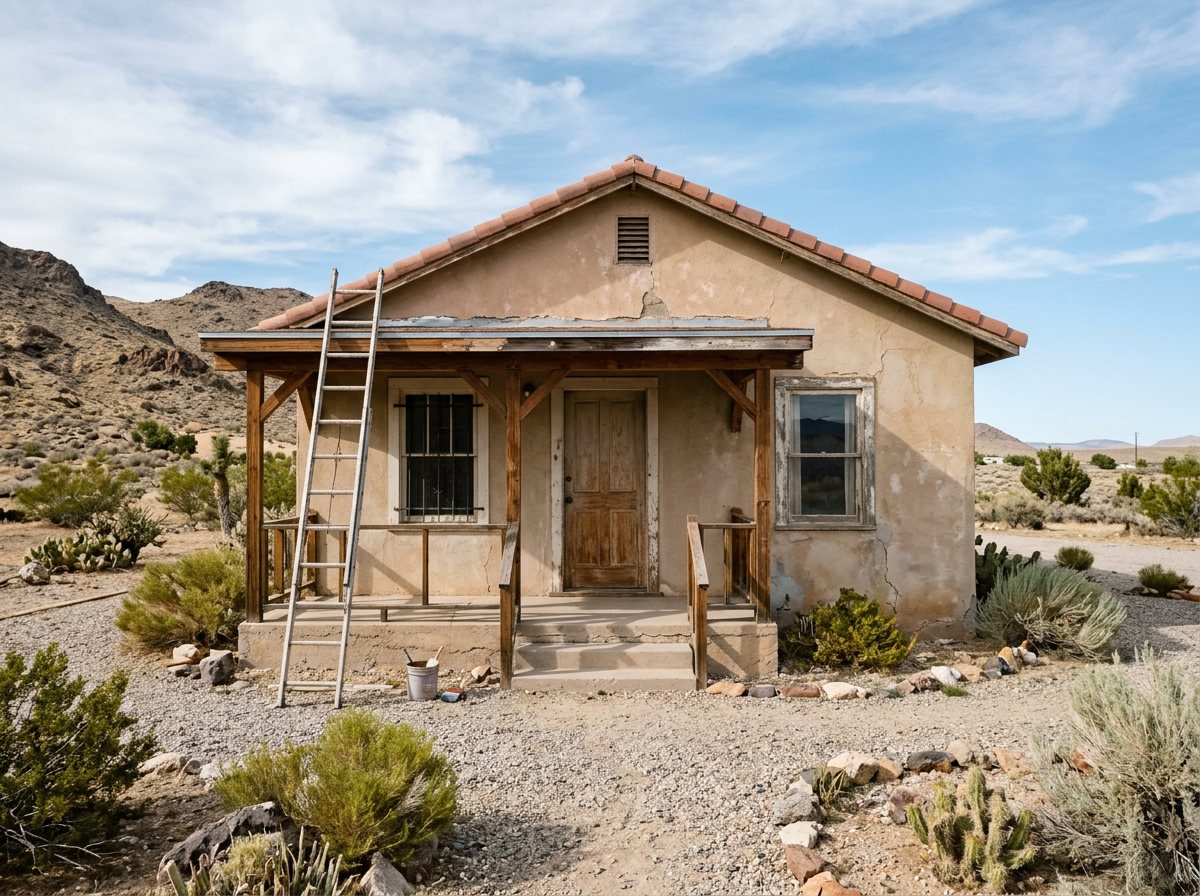
With about half of Boulder City's homes built before 1980, I see condition questions often. Common ones on older homes are worn floors and old electrical work. Others are missing smoke detectors and plumbing that does not work. Roofs near the end of their life come up too. Some are cosmetic and do not hold up a loan. Others are health and safety items that do. FHA and VA appraisals check the home against their own property standards. Conventional appraisals also note condition. A lender will not fund if a safety issue is open.
The fix is usually simple, if you plan for it. The seller makes the repairs. Or the repairs are made before closing with the seller's consent. The appraiser comes back for a final inspection and confirms the work. Then the loan funds.
One real file of mine shows how this works. It is an out-of-area example from Oakland, California, not Boulder City. It was a small, older, one-story single-family home in very worn-down condition. It was listed as cash only. My client bought it for $700,000 with $210,000 down, which is 30%. My client used a $490,000 DSCR loan that funded in April 2025. The appraisal came in at $700,000 as-is. Before funding, the lender required five repairs. Carpet had to go over bare cement floors. Open electrical outlets had to be covered. A toilet that would not flush had to be replaced. The GFCI outlets and smoke detectors had to be replaced too. The seller's side handled them. The appraiser then made a second visit to confirm every repair. Here is my own read. Renovated homes on the same street were in the $900,000 to $1 million range. But the loan was based on the as-is value. The investor plans to renovate and lease the home long term. You can read more about that market on my Oakland DSCR loans page.
The lesson carries over to Boulder City. A "cash only" or "needs work" listing does not always mean a loan is impossible. It means the repairs must be scoped, agreed and finished in the right order. I start that conversation with your agent before the appraisal is even ordered.
Can I rent out a Boulder City home I buy?
Yes, but only as a long-term rental. Boulder City bans rentals of fewer than 30 consecutive days. A lender will use long-term rent to qualify a Boulder City rental. That is true on a conventional or a DSCR loan.
The city's short-term rental page says any rental for less than 30 consecutive days is prohibited. The City Council voted 4-1 on March 26, 2024. Violations can bring fines of up to $500 a day. Residents can report a suspected rental through the city's See Click Fix tool. The city can do this because of how Nevada's state short-term rental rules work. Those rules, in NRS Chapter 268, apply only to big places. They cover cities of 25,000 or more people in counties of 700,000 or more (NRS 268.09791). Boulder City, at about 15,000 residents, is under that line.
So plan a Boulder City rental around a 12-month lease. The Census median gross rent in town is $1,427 a month. HUD's FY2026 small area fair market rent for a three-bedroom in ZIP 89005 is $2,210. Neither one is a rent estimate for any single home. The appraiser's rent survey, often on Fannie Mae Form 1007, sets the rent a lender will use. Nevada's landlord-tenant rules are in NRS Chapter 118A. They apply to each long-term lease.
Two more checks before you buy a rental here. First, if the home is in an HOA, read its rental rules. NRS 116.335 lets an HOA limit renting. Second, think about the tax cap. A rental usually falls under the 8.0% general cap in Clark County for 2026-27. There is one exception. You may charge at or below HUD's fair market rent and qualify for the lower cap. Want a wider look at Clark County rental math? See my notes on DSCR in the program section above.
What did a Katy, Texas rental file teach me about timing?
This is an out-of-area example from Katy, Texas, not Boulder City. Still, the lessons fit any long-term rental. My client bought a newly built four-bedroom single-family rental through an LLC for $325,000. My client put $97,500 down, which is 30%, and took a $227,500 30-year fixed DSCR loan. The credit score band was the high 600s.
The ratio moved during the file. The first lender approval showed a DSCR of 1.253. The new approval two days later showed 1.004, and the loan still qualified. The December 15, 2025 pre-closing worksheet put the full payment, or PITIA, at $2,221.32. That was $1,494.51 of principal and interest, $499.97 of taxes, $129.67 of insurance and $97.17 of HOA dues. Reserves were three months of PITIA, about $6,664. The loan had a prepayment penalty of 3% in each of the first two years. That was up to $6,825 on the original balance.
Closing had its own steps. The lender asked for Form SSA-89, which lets the Social Security Administration confirm a Social Security number. It asked even though my client gave a Social Security card. My client had also closed another mortgage about two months before. Title updated the property tax prorations near closing. A Texas attorney had to review the file before documents were released. A mobile signing was used. The loan funded in late December 2025, 32 days after application.
Then came the rent gap. The first payment was due February 1, 2026. The home was listed for rent at $2,550 a month, cut to $2,400, and leased in March 2026. So my client carried one or two full payments before any rent came in. In Boulder City, each rental must be a lease of 30 days or more. So I plan for that gap in your reserves from day one.
Should I refinance or take cash out of my Boulder City home?
A refinance makes sense when it lowers your total cost or removes mortgage insurance. It can also make sense when it changes your loan term. Or it can turn equity into cash for a clear purpose. The best choice depends on how long you will keep the home. It also depends on how the new costs compare with the savings.
Many Boulder City owners have held their homes for years and built real equity. Here are the refinance types I see most often.
A rate-and-term refinance replaces your loan with a new one at a new rate or term. You do not take cash out. A cash-out refinance replaces your loan with a bigger one and pays you the difference. Cash-out loans have lower LTV limits than purchases on the Fannie Mae Eligibility Matrix. So you keep some equity in the home. Some FHA borrowers now have 20% equity. They often refinance into a conventional loan to drop the annual premium. A home equity loan or line keeps your first mortgage in place and adds a second loan. That can make sense if your first mortgage has a low rate you want to keep.
Veterans have two VA options. A VA Interest Rate Reduction Refinance Loan, or IRRRL, has a funding fee of 0.5%. A VA cash-out refinance has a fee of 2.15% for first use and 3.3% after (VA funding fee page). Veterans who get disability compensation are exempt.
Example (hypothetical), arithmetic only. On a $300,000 VA IRRRL, the fee is $300,000 × 0.005 = $1,500. On a $300,000 VA cash-out refinance for a first-time user, the fee is $300,000 × 0.0215 = $6,450.
To judge any refinance, divide the total closing costs by the monthly savings. That gives you the number of months it takes to break even. If you plan to stay past that point, the refinance may be worth it. See my refinance page for the full process.
Can retirees and second-home buyers get a mortgage in Boulder City?
Yes, and they make up a large share of Boulder City buyers. Retirees can qualify with Social Security, pension, retirement withdrawals or savings. Second-home buyers can use a conventional loan with as little as 10% down on a one-unit home.
The median age is 53.5, and 29.6% of residents are 65 or older. That makes Boulder City one of the older towns in Clark County. I often work with retirees. Some are moving from out of state. Some are downsizing from a bigger home in Henderson or Las Vegas. Others are buying a place near the lake to use part of the year.
For retirees, the main question is how to show income. Social Security and pension income can count. You need an award letter or statement showing it will continue. Regular withdrawals from an IRA or 401(k) can count too. You need enough in the account to keep them going. Is your monthly income small but your savings large? Then an asset depletion loan may work. Some retirees choose to put a larger down payment down to keep the loan small. Others keep their cash and finance more. Both can be fine. I show you the numbers each way.
For second homes, Fannie Mae's rules in Selling Guide B2-1.1-01 set three tests. The home must be one unit. You must live in it for part of the year. And it cannot be run as a rental business. The Eligibility Matrix allows up to 90% LTV on a one-unit second home. Boulder City's short-term rental ban lines up with that. You could not rent it by the night anyway. Lenders also price second homes a little differently from primary homes. So I quote both if you are not sure how you will use it.
Mobile and manufactured homes are 10.1% of the housing here. Many retirees look at them. Financing depends on the land. The home may be on land you own and be classed as real property. Or it may sit on rented land in a park. Rules are stricter than for site-built homes. Fewer lenders offer them. Tell me early if you are looking at one. Then I can match you with a lender that does them.
What help is there for first-time home buyers in Boulder City?
The Nevada Housing Division's Home Is Possible programs offer down payment help of 2% to 5% of the loan. The help comes as a no-interest, no-payment second mortgage. Some versions do not require you to be a first-time buyer. The programs have income limits and price or loan limits. They also have a credit score floor in the mid-600s.
The Nevada Housing Division runs Home Is Possible. Based on the program's rate page as of November 20, 2026, the main options are:
First-time buyer programs for FHA, VA and USDA loans offer help of 2% or 4%. A first-time conventional option offers 2% or 4%. It is for buyers with income at or below 80% of the area median. It covers homes priced up to the lesser of the agency limit or $570,000. The broader HIP-DPA program offers 3% or 5% on government loans and on conventional loans. It is not limited to first-time buyers. It lists an income limit of $165,000 and a cap of $832,750. In most versions, the help is a 30-year second mortgage with no interest and no monthly payment. It is not forgiven. It is paid back when you sell, refinance or pay off the first loan. There is also HIP for Teachers. It offers $7,500 that is forgiven a little each year over five years.
The program also sets credit and DTI limits. The minimum credit score is in the mid-600s, with a higher floor for manufactured homes. The top DTI is 50% for scores in the high-600s and up. It is 45% below that. Program terms change. So I confirm the current version on the day you apply.
Help like this can make a real difference on a Boulder City home. Example (hypothetical), arithmetic only. On a $420,354 FHA loan, 4% help would be $420,354 × 0.04 = $16,814. That is more than the 3.5% down payment on a $435,600 home. You would still need some funds for closing costs and prepaids. See my first-time home buyer guide for how I pair these programs with FHA and conventional loans.
Do I need flood insurance on a Boulder City home?
You need flood insurance in one case. That is if your lender finds the home is in a FEMA Special Flood Hazard Area. You may want it even if the home is not. Desert storms can send fast water through washes. So check the flood map before you make an offer.
Boulder City is in the Clark County Regional Flood Control District. That district builds and keeps up flood channels and basins across the valley. To check a specific address, use the FEMA Flood Map Service Center. Your lender will order a flood zone check for the loan. But it is better to know before you sign a contract.
Timing matters. The Nevada Division of Insurance 2026 flood guide notes a key point. A new flood policy can have a waiting period of up to 30 days before it takes effect. If a lender requires flood coverage, plan it with your closing date in mind. Homeowners insurance does not cover flood damage. So if the home is near a wash, ask for a flood quote. Do it even if the home is outside a mapped zone. Insurance costs go into your monthly payment and your DTI. So I need the quotes early.
Next step: Have a Boulder City address in mind? Get pre-approved or call (702) 766-3744 and I will run the full payment with taxes, insurance and dues.
How does working with iQRATE on a Boulder City loan work?
You start with a short application and a call. Then I compare programs and lenders for your exact file before you make an offer. From contract to closing, I manage the disclosures, appraisal, conditions and closing. You hear from me at each step.
Here is how a typical Boulder City purchase runs with me. First, we talk about your goal, your timeline and the kind of home you want. I pull credit with your okay and check your income and assets. Then I pre-approve you for the program that fits. I give you the payment for your price range. It has Boulder City's tax rate, likely insurance and any HOA dues built in.
When you find a home, I check the home type, the HOA and the flood zone. I also check for anything in the listing that could slow the appraisal. I send your Loan Estimate within three business days of your application. Once the appraisal is in, I handle any repair items with your agent and the seller's side. I clear the underwriter's conditions. I make sure your Closing Disclosure arrives at least three business days before you sign. Then you close and get the keys.
Before you call, it helps to have these ready:
- Your goal: will you live in the home? Will you use it part of the year, or rent it long term?
- Your numbers: rough income, monthly debts, savings for down payment and closing, and your credit band.
- Your documents: pay stubs or retirement letters, and two months of statements. Add a VA certificate if you are a veteran.
Ready to see which loan fits your Boulder City home? Apply with iQRATE or call (702) 766-3744.
The payment, tax, fee, insurance and down payment examples in this guide are arithmetic, not a quote. Program rules vary by lender and change often. This guide is general information, not a loan offer, a rate quote, or legal or tax advice. All loans are subject to credit, property and underwriting approval. iQRATE Mortgages is an Equal Housing Opportunity lender. NMLS #1862492.
Author Bio
David Ghazaryan is a mortgage broker and the owner of iQRATE Mortgages, NMLS 1862492. His personal NMLS number is 1486726. He helps buyers and investors across Nevada, including Boulder City, choose and close home loans. That runs from first homes and VA loans to DSCR rentals and jumbo purchases.
References
Boulder City rules and history
- Boulder City Municipal Code, Title 11, Chapter 41, growth control (sections 11-41-2 to 11-41-15)
- City of Boulder City: Allotment Committee
- Boulder City Charter (sections 92.1, 128.1, 128.3, 140.1)
- City of Boulder City: Our history
- City of Boulder City: Short-term rentals prohibited
- Boulder City Review: Understanding the growth ordinance (October 5, 2023)
- Boulder City Review: Council approves allotments for Liberty Ridge (October 30, 2025)
- Bureau of Reclamation: Hoover Dam
- National Park Service: Lake Mead National Recreation Area
Census data
- ACS 2020-2024 DP04, Boulder City
- ACS 2020-2024 DP05, Boulder City
- ACS 2020-2024 DP02, Boulder City
- ACS 2020-2024 DP03, Boulder City
- ACS DP04, Clark County
- ACS DP04, Nye County
- ACS DP04, Washoe County
- ACS DP04, Mohave County, Arizona
Loan limits and rents
- FHFA: Conforming loan limit values for 2026
- FHFA: 2026 county loan limit list
- HUD Mortgagee Letter 2025-23
- HUD: 2026 FHA forward loan limits by county
- HUD User: FY2026 fair market rents
- HUD User: FY2026 small area fair market rents
Loan program rules
- Fannie Mae Eligibility Matrix
- Fannie Mae Selling Guide B2-1.1-01: Occupancy types
- Fannie Mae Selling Guide B3-6-02: Debt-to-income ratios
- HUD Mortgagee Letter 2023-05: FHA annual mortgage insurance premiums
- VA: Funding fee and closing costs
- VA: Loan limits
- 38 CFR 36.4340: VA underwriting standards
Federal consumer rules
- 12 CFR 1026.36: Loan originator compensation
- 12 CFR 1026.19: Loan Estimate and Closing Disclosure timing
- 12 CFR 1026.43: Ability to repay
- CFPB: Loan Estimate explainer
- CFPB: What is a debt-to-income ratio?
- CFPB: When can I remove PMI?
- CFPB: Prequalification vs. preapproval
Nevada taxes and property law
- Nevada Legislature, Fiscal Analysis Division: Property tax rates by district, fiscal year 2027 (August 25, 2026)
- NRS Chapter 361 (361.225, 361.227, 361.4722, 361.4723, 361.4724, 361.483)
- Nevada Department of Taxation: 2026-27 tax cap factors
- Clark County Assessor: Tax abatement
- Nevada Department of Taxation: Real property transfer tax
- NRS Chapter 375: Real property transfer tax
- Arizona Constitution, article 9, section 24
- NRS Chapter 116 (116.3116, 116.335, 116.4109)
- NRS Chapter 271: Local improvements
- NRS Chapter 268 (268.09791, 268.09795)
- NRS Chapter 118A: Landlord and tenant
Flood
- Clark County Regional Flood Control District
- FEMA Flood Map Service Center
- Nevada Division of Insurance: 2026 Flood Insurance Consumer Guide
Home buyer help
Licensing